Who’s that knocking at my door?

great crested grebe

this lodging has a door
unknown
to the call of the kuina (water rail)

this lodging
is not even known
to the kuina’s knock

this hut
can the water rail find
its door

kono yado     wa kuina mo shiranu      toboso kana

この宿    は水鶏も知らぬ       扉かな

great crested grebe

Late Spring and early Summer, 1694

“Tyick, tyick, tyick,” who is that knocking at my door? Death would come knocking for Matsuo Bashō, but not until until November.

In the spring of 1694 Matsuo Bashō set out on his last journey to visit friends, making a trip home to his birthplace at Ueno, to Kyoto where he spent time as a student, and around beautiful Lake Biwa visiting shrines.

This haiku was supposedly written to Kosen (Fujimura Izu?), a Shinto priest who lived on the outskirts of Otsu, and, we may presume from the haiku, in a marshy area near Lake Biwa. The house was so remote it was unknown even to the marsh bird, known as kuina in Japanese, translated into English as a water rail.

The courtship cry of the kuina is a tyick-tyick-tyick, like the sound of one tapping (tataku) on a wooden door. The breeding season dates from late March into June.

Source, Matsuo Basho Archives

Notes on Japanese and Pinyin

Language can be an in-artful thing.

Arriving late and greeting his host, Kosen, Matsuo Bashō might have  apologized by composing this haiku, explaining that he heard the familiar tyick-tyick-tyick of the kuina bird, but couldn’t discover its secretive nest, i.e. his host’s lodgings somewhere along the shore of Lake Biwa.

The sound of “kono… kuina… kana” imitates the kuina’s call to its mate.

Shiranu 知らぬ , not knowing, as in the proverb, Shiranu ga hotoke (知らぬが仏), meaning ignorance is bliss, literally,  not knowing is Buddha.


Autumn’s End – aki no kure

Like a crow landed
on a withered branch
autumn ends

a withered branch
a perched crow
autumn ends

kare eda ni
karasu no tomarikeri
aki no kure

枯朶に   烏 のとまりけり   秋の暮

crow on a withered branch basho

Autumn of 1680*

At least six of Matsuo Bashō’s haiku contain the phrase aki no kure. And of those that can be dated, they bear a date that falls within the last 10 days of the 9th lunar month (thus, the end of autumn). These haiku are thus a contemporaneous accounting of the poet’s feelings at that time of year.

This well-known haiku was written in the autumn of 1680. Bashō had left Edo and just moved to Fukagawa on the east bank of the Sumida River, to escape the city’s din and the bright lights of Nihonbashi, the theater district. Basho is now 36 years old and has 14 years of life before his death.

In Asian countries, there is a festival celebrated on the 9th day of the 9th lunar month. As the number nine in Japan is yang, this is double yang, thus, an inauspicious date. In Japan, the festival is known as Chōyō or as the Chrysanthemum Festival. The festival wishes for a long life and observed by drinking chrysanthemum sake.

Matsuo Bashō’s haiku adds a dose of reality to the frivolity.

Notes on translation

kare eda ni may mean both a withered branch or a leafless branch. The haiku’s imagery is similar to  William Butler Yeats’ “tattered coat upon a stick”.

Karasu no tomarikeri, Basho’s crow karasu has come to rest for the moment.

Aki no kure, a familiar kigo phrase signifying the end of autumn, and winter’s approach.

Sources

As this is one of Basho’s oft repeated haiku there are many sources and interpretations.

A Crow on a Bare Branch by Elin Sütiste, a scholarly comparison of translations.

A Crow on a Withered Branch, my own prior post on the same haiku.

*Another source dates the haiku to the spring of 1681.

Compare

Tang dynasty Chinese poet, Zhang Ji, Mooring at Night by Maple Bridge

The moon sets, crows weep, and frost fills the sky.
In the maple trees by the riverside, the lights of a fishing boat, a troubled sleep.
At Gusu city, Hanshan Temple

William Shakespeare’s description of Autumn in Sonnet 73:

That time of year thou mayst in me behold
When yellow leaves, or none, or few, do hang
Upon those boughs which shake against the cold,
Bare ruin’d choirs, where late the sweet birds sang.

Kawanabe_Kyosai_Crow-bkg

Autumn Nightfall – aki no kure

Along this way / no one goes, but I / autumn nightfall

Kono michi ya / yuku hito nashini / aki no kure

この道や     行く人なしに      秋のくれ

hike-boardwalk

The Way

“Master, what is the Way?” a student might ask of the enlightened. It is a discussion Matsuo Basho’s disciples might have had with him in Edo where Basho fame was established for all of Japan.

In the fall of 1689, Matsuo Basho was finishing up his epic journey to the north which would become a well known book. Most of the journey, he was accompanied by a companion Kawai Sora, who kept his own journal. Towards the end of their journey, the two separated and Basho was for a while, alone.

A poet writes and rewrites his poem a thousand times. The writing process is a lonely one. A reader may read a poem a hundred times, finding something new each time the poem is read.

More is the pity, there are many places I have been to but once, and all alone.

Notes on translation

Aki no kure  (秋のくれ) has several English meanings – autumn (秋), autumn twilight, autumn night fall, and depending upon context, autumn’s end. It is the subject of several Bashō haiku, suggesting many things including impending death. See Gabi Greve’s discussion in WKD – Matsuo Basho Archives.

Bashō composed the haiku during the fall of 1694, not long before his death.

Seagull – Kamome

Cold water / hard for even a seagull / to sleep

Cold water / could a seagull sleep / I wonder

Mizu samuku/ neiri kane taru / kamome kana

水寒く     寝入りかねたる     鴎かな

seaguls-herring-gul

Dedicated to the priest Genki

Most translators add the following information to this haiku, that it was written in Edo in honor of the Buddhist priest Genki (元起) on the occasion of his presenting Basho with a bottle of Saki, no doubt to help get through a long winter’s night.

Perhaps the two of them had been to see a Noh play in the theater district. Perhaps they were walking back to Bashō ‘s hut across the Sumida River. Perhaps they were discussing the similarity of the art of Zen and haiku, delving into the subtle difference of meditation and sleep when Genki stopped to buy a bottle of saki from a street vendor. Perhaps Basho caught the sight if a seagull in the near frozen river water and wondered how it would sleep through the night.

Kana! I wonder!


Notes on translation

Misu samuku 水寒く, cold water

Neiri kane taru 寝入りかねたる,  can’t sleep

Kamome kana 鴎かな, kamome seagull (鴎) plus kana (かな), I wonder

A dream within a dream, 夢のまた夢

As the dew appears
As the dew disappears
Such is my life, that Naniwa
Is a dream within a dream.

露と落ち     露と消えにし     我が身かな       難波のことは      夢のまた夢
tsuyu to ochi / tsuyu to kienishi / waga mi kana / naniwa no koto wa / yume no mata yume

[Death haiku of Toyotomi Hideyoshi (1536-1598)]

Toyotomi-Hideyoshi-3


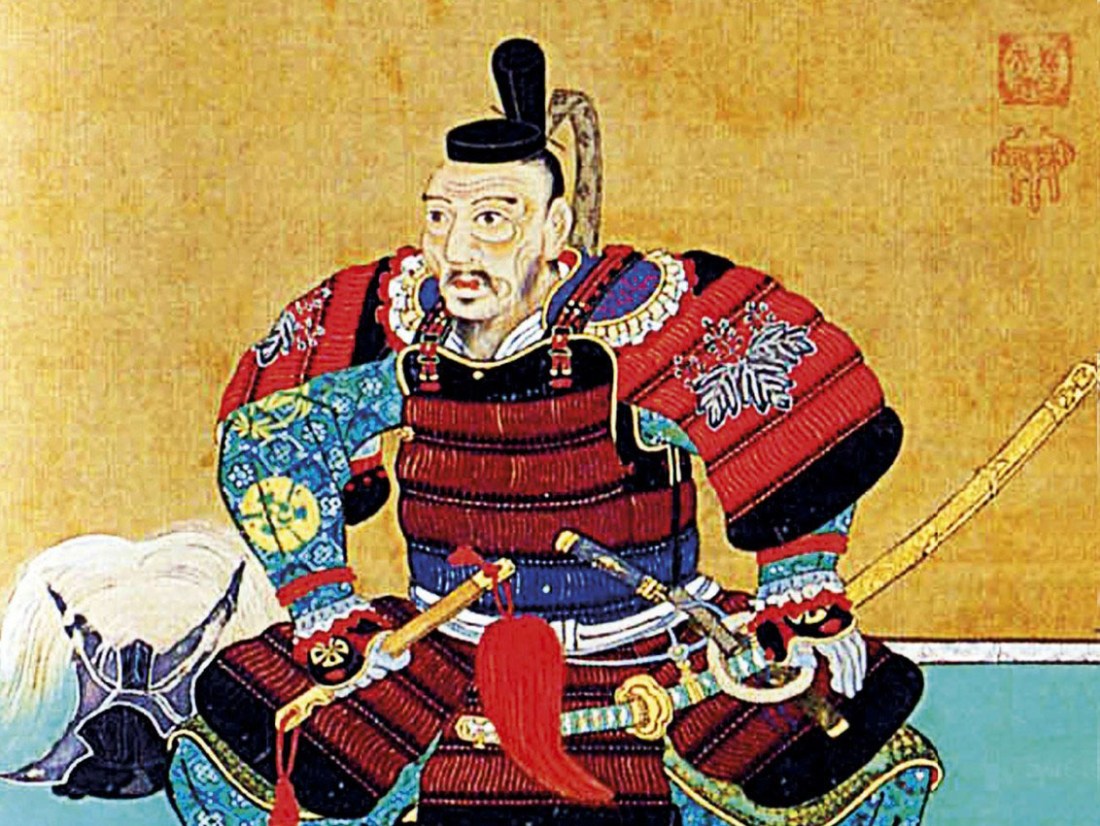
Toyotomi Hideyoshi, 豊臣 秀吉

The author of this dream poem is Toyotomi Hideyoshi (1536-1598), a military general in the late Warring States who succeeded in unifying much of Japan, and the precursor to the Tokugawa Shogunate. Hideyoshi died in 1598, but the final end to the Warring States came 15 years later at the siege of Osaka (大坂の役 Ōsaka no Eki), Hideyoshi’s dream castle called Naniwa.

Gentle reader, you are no doubt scratching the back of your neck, wondering why I have chosen to repeat Hideyoshi’s death haiku in a blog about Matsuo Bashō.

First, there is the obvious connection to Bashō’s own death haiku.

Second, I have wondered, as other scholars have, about Bashō’s claim to samurai status. Little is known. Little can be gleaned from Bashō’s own writings. We do know that Matsuo Bashō was born in 1644, near Ueno, in Iga Province. His brothers became farmers. Bashō became a servant to the samurai Tōdō Yoshitada, who had acquired the haikai name of Sengin. After Tōdō Yoshitada’s death, Basho traveled to Kyoto and studied haiku in earnest.

I have not come across a statement by Bashō himself that his father was of samurai status. He wrote about military battles often, and had a fondness for generals who died in battle. But the proof certain of his samurai status is not there.

There are at least two scenarios. First, that Bashō’s father Matsuo Yozaemon,or his grandfather fought for on the winning side with Tokugawa Ieyasu. Peace being established, the many armies were disbanded and low level samurai were given land to farm instead of swords to wield. It is also possible that the Matsuo clan fought with the opposing forces, with General Toyotomi Hideyoshi, who was based in Osaka, then called Naniwa. Osaka and Naniwa is near Ueno in Iga province, and Iga castle where he served the samurai Tōdō Yoshitada.

We will never know and I do not know that it matters. The poetry is beautiful; and, after all, life is what we make it.

Toyotomi Hideyoshi (1536-1598)

Life as a dream

Life as a dream is a common metaphor. What are we to make of this?

William Shakespeare wrote plays about it. Lewis Carroll wrote about it in the delightful Alice in Wonderland. The 17th century Spanish poet and playwright, Pedro Calderón de la Barca, wrote a poem saying, “Man dreams the life that’s his,” and ending with “dreams themselves are dreams.” A dream within a dream.

Even a children’s nursery rhyme speaks of life as a merry illusion:

Row, row, row your boat,
Gently down the stream.
Merrily, merrily, merrily, merrily,
Life is but a dream.

Autumn Gales

Banana tree in a fierce autumn gale
I wonder if I can hear
Rain in the tub, tonight!

Bashō nowaki shite
Tarai ni ame o
Kiku yo kana

芭蕉  野分   して盥に雨を聞く夜哉

Autumn 1681

In the winter of 1680 Bashō moved  from central Edo across the Sumida River to the rural Fukagawa district. His patrons and disciples had prepared a cottage with a thatched roof for him in the midst of a grove of banana trees. In the spring of 1681, one disciple gave him a house warming gift, a new banana plant (Bashō, hence the name Bashō-an).

Away from the distractions of Edo, Bashō had more time to collect his thoughts and compose haiku.

Summer came, and then fall, and with fall the fierce storms and typhoons that strike Japan every year.

Bashō’s Explanation

A sleepless Basho composed the above haiku. Alone, he was wondering if he could withstand the night. Bashō’s explanatory notes provide some insight:

Sleeping alone in a thatched hut

The elder Du (Fu) wrote a poem about a thatched hut blowing (tearing) in the wind. Then the old man Su Shi wrote verse about a leaking cottage. Now I listen to their rain pounding my banana leaves, lying alone in my thatched cottage.

Du Fu is a poet of the Tang dynasty, much admired by Basho. The poem he refers to is Song of My Cottage Unroofed By an Autumn Gale. Du Fu’s poem is much longer, and more involved, but it begins much like Basho’s haiku:

“In the eighth month, autumn’s fierce winds angrily howl,
And sweep three layers of thatch from off my home.
The straw flies over the river, and scatters,
Some hangs high up in the tree,
Some floats down and sinks in the ditch…”

Some three centuries later, Su Shi of the Song dynasty composed a poem with a similar thought, “My thatched roof torn by the autumn wind…”

banana-trees


Smoke! kemuri kana

At the festival of the spirits
And even at the crematory
Smoke!

Tama matsuri/ kyō mo yakiba no/ kemuri kana

玉祭り    今日も焼場の    煙哉

fire

I am writing this post on Halloween, an American festival celebrated with costumes, masks, and candy for the trick or treaters. It has become popular in Japan, but it has no true Japanese equivalent, since its roots are in Christianity. Halloween being a corruption of Allhalloween or All Hallows’ Eve, the day before All Saints Day.

Obun festival

A Japanese counter part could be Okuribi (送り火).

It is the culmination of the Obon festival (matsuri) on August 16. In Kyoto, five giant bonfires are lit on mountains surrounding the city giving off both light and smoke. The fires signify the moment when the spirits of deceased family members, who visit the real world during O-Bon, return to the spirit world—thus the name Okuribi, roughly meaning  “send-off fire”.

In some parts of Japan, smaller okuribi fires are lit before the home to send off the ancestors’ spirits. Smoke fills the air. Incense called senko is added to the mix of smoke and fire. Sky lanterns are also sent into the night sky.

Probably, not Matsuo Basho’s best work, but a nod to the crematories who do their work daily sending souls to the spirit world.

Notes on translation

Tama matsuri  (玉祭りTama (玉) Spirit. Soul. Particularly, a pure, lofty soul. Tama matsuri is a festival held to pray to, give thanks to, and appease the souls of the dead. Matsuru is the verb form meaning to celebrate.


chinese-lanterns

Cape Irago – Iragosaki

A solitary hawk
I am happy to find
Cape Irago

鷹一    つ見付てうれし   いらご崎

taka hitotsu / mitsukete ureshi / Iragosaki

Cape Irago Iragosaki, hawk flying

1687

On the 25th day of the tenth moon, Matsuo Bashō, now 43 years old, is ready to set out on another journey. This time he would travel south and west, to the regions of Iga (his boyhood home), Ise, Aichi and Nagoya, Yoshina, Nara, and Suma.

The account, called Oi No Kobumi (Knapsack Journals), would not be published until 15 years after his death.

From Nagoya it is 70 miles or so to the Atami peninsula, and another 30 miles down the promontory to Cape Irago. Today, the peninsula is home to the Mikawa-Wan Quasi National Park, and some of Japan’s most beautiful sandy coastlines and spectacular Pacific Ocean views (above image Google Maps).

The meeting

Bashō was going to meet Tsuboi Tokoku (坪井杜国), who had been exiled for financial speculations, from Nagoya to the rocky promontory. Hobi (Hobicho) the tiny village where Tokoku lived was a mile or two from the end point on the cape. One can picture a tired Bashō standing at the very tip of the cape, spotting a hawk circling above, when happily Tokoku appears.

Tokoku would die three years later while Bashō was still compiling the memories of his journey.

The meaning

Poetry by its nature is ambiguous and capable of different interpretations. This is even more true of haiku, which often intends to surprise. Tokoku could have been the solitary hawk that Basho was in search of. Or, it could have been that Basho was the hawk, happy to find Tokoku. This seems to me the more likely interpretation. After the meeting, Tokoku would join Basho for part of Basho’s journey.

It is a stretch, not a long one, and perhaps just coincidence, but I wonder if the Iragosaki is a play on words with Irago and Sake, rice wine. Various sources allude to Tokoku’s financial speculations as a grain merchant. Perhaps it involved Sake.

Notes on translation

Taka hitotsu. A combination of taka , meaning hawk; and hitosu 一, meaning one or solitary.

Mitsukete ureshi  つ見付てうれし, a combination of the verb mitsuke, to find, and and adjective/adverb ureshi, happy, happily

Iragosaki いらご崎, Cape Irago,  Iragomisaki, 伊良湖岬. Saki translates to rough, or cape.

hawk-clear

Many Sources including:

World Within Walls: Japanese Literature of the Pre-modern Era, Volume 1, By Donald Keene, giving an account of Bashō’s relationship with Tsuboi Tokoku.

WKD – Matsuo Basho Archives, gives Tokuko’s age as 34 at the time of his death. It explains that he was a grain merchant in Nagoya, before his financial disgrace, moving to the tiny village of Hobi (Hobicho),  on the Akami peninsula.

Matsuo Bashō’s Death Haiku

旅に病んで 夢は枯野を かけ廻る
tabi ni yande/ yume wa kareno wo/ kakemeguru

sick on my journey,
my dreams go wandering
on this withered field

Matsuo Basho, Death Haiku, 1694
milky-way-sea

The Death of Matsuo Bashō

The end came abruptly in November of 1694.

Bashō had left Edo (Tokyo) for the last time in the summer of 1694, spending time in Ueno, his birthplace, and Kyoto, where he studied as a youth, then arriving in Osaka, where he had many friends and disciples when an old familiar stomach illness came back.

It is said that Basho delivered this haiku on his deathbed to 60 of his disciples who had gathered to say a final goodbye. Four days later, he died, age 50.

Fittingly, this was to be his final haiku.

Lake Biwa, Otsu on the western shore, artist Hiroshige, ca. 1835, The Met

Burial in Otsu

Pursuant to his last wishes, his disciples took his body to Otsu, next to beautiful Lake Biwa. And he was buried at the Buddhist temple of Gichū-ji. This temple was dedicated to Minamoto no Yoshinaka, a general of the Minamoto clan. Yoshinka was killed by his cousins at the Battle of Awazu in 1184. According to a play in the Theater of (Noh), his spirit wanders about.

If Basho’s spirit wanders about Lake Biwa, it is fitting for he often visited this area.

Notes on translation

Tabi ni yande 旅に病んで,  sick on my journey; tabi 旅, meaning trip, travel, or journey

Yume wa kareno wo 夢は枯野を,  “like dreams on a withered field”. A second interpretation – the dream withers or dies on this field. Basho juxtaposes differing interpretations of death. In one scenario. life is extinguished and the dream dies. In the second, as in the Theater of , the spirit of the deceased wanders about.

Basho had the second idea in mind as he had discussed with his friends his wish to be buried near Yoshinaka, who was killed in battle, and was himself the subject of a play in the Theater of Nō where his spirit wandered about.

Kakemeguru かけ廻る, to run or rush about.

A Quail Sings – naku uzura

the hawk’s eyes now, dim that it is dark, so the quail sings

鷹の目も今  や暮れぬと  鳴く鶉

taka no me mo / ima ya kurenu to /   naku uzura

kids-glasses

1691

Early in 1691 Matsuo Bashō stayed for a time in Saga (southern Japan, near Nagasaki), with his disciple Mukai Kyorai, who like Bashō had been born into a Samurai family. In late fall or early winter, he returned to Edo to stay in his third banana hut. The anthology, Monkey’s Raincoat (Sarumino 猿蓑) is published.

Another Hawk haiku

In 1678, on a visit to the Atsumi peninsula and Cape of Irago (Iragosaki), Basho wrote this haiku:

By a stroke of luck, I saw
A solitary hawk circling
Above Iragosaki (Cape Irago)

鷹一つ見付てうれしいらご崎

taka hitotsu mitsukete ureshi Iragosaki

Notes on translation of a Quail Sings

Line one. Taka no me mo, literally the “Hawk eyes now”.

Hawks have excellent eyesight. They can see 8 times better than we be-speckled humans. But like humans, the hawk’s vision dims in the night. And the quail hiding in the tall grass during the day, waits until it is dark, to sing.

Line two. Ima ya kurenu to. Ima, now, Kurenu, that it gets dark, also meaning to come to an end. The hawk’s hunting must end for the quail to sing.

Line three. Naku uzura. The quail (uzura), it sings, it cries, its voice resounds now that the hawk is in its nest. Naku also means to sob, which is what the hawk must me doing.