Our two lives – inochi ni

Cherry blossoms on a branch

Lake Biwa, Shiga Province, Spring 1685

For millions of Japanese, the annual cherry blossom viewing is a time of surprise and delight. After an absence of 20 years, Matsuo Basho came across his friend and disciple, Hattori Dohō (服部土芳), and composed this haiku.

Our two lives coming together at Cherry Blossom time!

Inochi Futatsu no Naka ni Ikitaru Sakura kana

命二つの中に生きたる桜かな

Hattori Dohō

Hattori Dohō (服部土芳) was younger than Basho by a dozen years. After Basho’s death, Dohō composed Sanzōshi, Three Books, ca. 1702, a poetic treatise on Bashō’s haikai. Haikai meaning the linked verse, commentary, and poetry that Basho popularized.

Haiku came to mean standalone poems. Haibun came to mean multiple verses.

In one of his haibun, Bashō states, “Only when one identifies with the feelings of the things in nature and can express them in words, only then is he a master of poetry.”

Our two lives, inochi ni, is a wistful recollection of a friend.

In this haiku, Basho combines the two lives, his and Dohō’s, from inochi 命 life, to be alive, plus futatsu 二 two. These lives separated by time and place come together at Lake Biwa during sakura cherry blossom festival . Basho adds the kireji, the cutting word in the double kana, かな, expressing the joy of meeting such a friend.


On the subject of separate lives

Our two separate lives, as Phil Collins and Marilyn Martin put it bluntly in a song from 1985, is a sadder version about the separation of former lovers. Cher gave us a similar sentiment in 1988, “… sooner or later we all sleep alone.”

Until then, enjoy the cherry blossoms. Sakura kana! 

Cherry blossoms on a branch

Read about the entire journey in Donald Keene’s translation of Journey of 1684.

An azalea, dried cod and a woman

On Lake Biwa, sitting down at an inn for lunch:

Azaleas arranged in a pot,
Chopping cod in the shade –
A woman

tsutsuji ikete sono kage ni hidara saku onna

躑躅 生けてその陰に干 鱈 割く女

azalea-pink

Thusness

Was she young, was she pretty, or dried up and old? Did she blossom like a flower? Or merely exist?

One should be careful of reading too much into a haiku.

Matsuo Basho himself observed that a haiku may be neither objective or subjective. It merely is what it is. This quality of “thusness” or “suchness” is a principle of Buddhism called Tathātā. It represents the base reality. Thus, there in the corner of the inn, Basho spies an azalea, and a woman tearing up dried cod.

Imagery, Kigo, Kireji, and a Twist

The essence of a haiku is its imagery. The image conveys a message, the characters and words are merely the conveyance of the image.

Most haiku will contain a kigo word. This helps to set the season and so the setting of the poem. Kigo words do not need to be the actual season – spring, summer, fall or winter. Instead, as in this case, the azalea that blooms in spring becomes the kigo word.

Having created the image, the poet must carve his or her haiku up into a sequence of images to create the synthesis of images forming one idea. Kireji are called “cutting words” and act like punctuation, a comma, a dash, a question, and exclamation, and so forth. But kireji may also make their appearance in the verb form, for instance, in change the present to the past

In this haiku, the verb that appears after azalea is ikete, past tense of ikeru. By itself, the “Te Form” links the two thoughts of the azalea and the woman chopping cod together.

A good haiku should also try to create a twist in thought, where sound may suggest a shift in thought. Hidara saku, the cod is split by the woman, but shifting the phrase to saku onna, gives the listener impression of a woman blooming.

azalea-forest


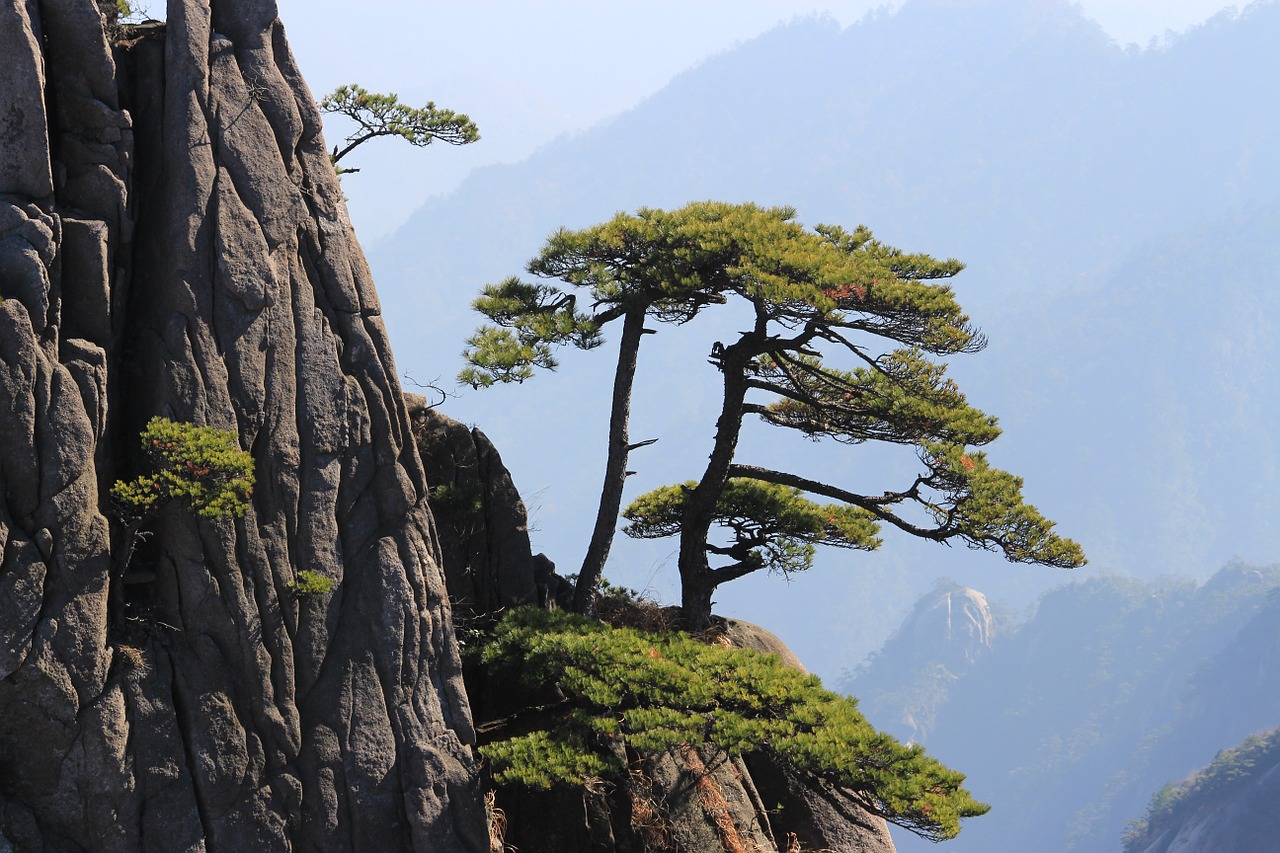
The Karasaki pine tree – Karasaki no matsu

Lake Biwa, Pine tree of Karasaki

The Karasaki pine tree is mistier than the cherry blossoms

Karasaki no matsu/ wa hana yori/ oboro nite

辛崎の松 は花より朧にて

Karasaki Pine Tree

“The Karasaki Pine Tree (Karasaki no matsu) stands on a walled esplanade in Karasaki village, 5 MN of Otsu near the steamer landing. Its 300 or more immense horizontal boughs, upheld by wood crutches or stone pillars, curve awkwardly, and at the top – 25 ft or more from the ground – tin and wood copings have been placed as a protection against the weather. These arms, some of which measure 200 odd ft. from point to point, reach out like those of a gigantic and repulsive spider, and are almost bare of foliage.”
Terry’s Japanese Empire, T. Philip Terry, 1914

In the eighth moon of 1684, Matsuo Basho left Edo to visit his birthplace in Ueno. The occasion was the death of his mother in 1683. As journeys go, this one involved many stops and visits along the way. Previously, we left Basho on the path from Kyoto to Otsu, on Lake Biwa. On the mountain path, Basho discovered a violet growing in the grass, and took the occasion to write a haiku.

Now he was nearing Lake Biwa.

Lake Biwa, Pine tree of Karasaki

Descending from his mountain path to the lake, he views Otsu and its well-known pine tree in the distant mist. The ancient horizontal limbs are supported by pillars. Otsu also offers many sublime cherry blossom trees for viewing. For practical reasons, Basho found the pine tree more to his liking. Or maybe he just found it a bit hazier or mistier, oboro , if he arrived in the early foggy April morning.

Meaning of the poem

The meaning of the haiku is itself obscure on its face.

Likely, Basho is making a reference to the poem by Prince Konoe Masaie (1444-1505).

In the night rain its green fades
Serene in the evening breeze
Stands the pine tree
Of Karasaki.
— Prince Konoe Masaie (1444-1505)

That however does not explain the mention of the cherry blossoms.

There is a well-known idiom, hana yori dango, which translates as preferring dumplings over flowers. This also means to prefer the practical over the beautiful. A secondary meaning is that viewers of the cherry blossoms prefer the wine and food over the blossoms themselves. A pine tree, it seems to me is more practical than a cherry blossom. It provides protection from the elements and material for building.


Like California’s Sequoia’s the Karasaki pine tree is ancient. Even in Basho’s day, it was believed to be one thousand years old. A new pine tree has since been planted from a cutting of the old Karasaki pine tree.

For reference, see: Basho’s Journal of 1684, translated by Donald Keene (page 143)

old pine of karasaki
old pine of Karasaki

A cloud of cherry blossoms – Hana no kumo

A cloud of cherry blossoms
The chime of a temple bell
Is it Asakusa, is it Ueno?

Hana no kumo   Kane ha   Ueno ka Asakusa ka

花の雲    鐘は上野か   浅草か

Cherry blossoms on a branch

1680

In 1680, Basho moved from Edo across the Sumida River to Fukagawa to escape the noise of Nihonbashi, near the city center, where he had lived for nine years.

Hana no Kumo

Spring, cherry trees in full blossom, the sound of a temple bell, is it the Temple at Asakusa or Ueno? Hana means flowers in the general sense, but also the cherry blossom in this haiku. Kumo means cloud. Matsuo Basho has gone for a walk in Fukagawa in April, and in the midst of the blossoms of the cherry trees he experiences what it feel like to walk among the clouds. Perhaps a gentle breeze comes along and petals are scattered about, heightening the ethereal experience.

Suddenly, he hears the chime (kane), the sound of a temple bell. It comes from across the Sumida River that separates Basho’s neighborhood of Fukagawa from Edo (Tokyo).

Is the sound Asakusa or Ueno, two well-known temples?

senso-ji temple
Senso-ji temple, Asakusa

An Early Summer Rain – Samidare no

An early summer rain
Falling on this and that
And the Temple of Light

An early summer rain
Does not dim
The Temple of Light 

Samidare no/ Furinokosite ya/ Hikari-do

五月雨の 降のこしてや 光堂

rain-lights

May, 1689

It is an early summer rain in Kansas, some three hundred thirty one years since Matsuo Basho wrote this haiku. At the time, Basho and his traveling companion Sora were on the famous Journey to the North. Visiting Hiraizumi, Basho would have taken the pathway on Tsukimi-zaka slope to Chuson-ji Temple and its golden hall of Hikare-do (Konjiki-do).

[Note on translation. Furinokosite ya, 降のこしてや. The second line of the haiku is a turn of a phrase. The first character in the line indicates a fall, as in the rain falling, but also to subdue, to lessen or decrease in stature, hence the verb “dim”.]

Prior translation

Yoshitsune

Basho had come not only to see Hikare-do, the Temple of Light dedicated to the Buddha, but also to reflect on the the rise and fall of the northern Fujiwara clan, and the tragic end of the samurai Yoshitsune, an event that took place some five hundred years previously.

Of Yoshitsune, Basho wrote another well-known haiku; one that seems to express a contrasting emotion.

The summer grass is all that remains of  a warlord’s dreams.

Natsukusa ya / tsuwamono domo ga / yume no ato.

Wind in the Pine

松風の   落葉か水の音   涼し
matsukaze no ochiba ka mizu no oto suzushi

The wind in the pines
And falling leaves
Cool is the sound of water

Like the wind that sighs in the pines
Like the leaves that rustle and fall
Refreshing is the sound of the waves

Autumn, 1684, in the hills above Suma Bay near Kobe, overhearing the waves on the beach


Utagawa Hiroshige (1797-1858) – Suma Beach at Night

Autumn 1684

In the autumn of 1684, Matsuo Basho begins a western journey that will give rise to his first travel journal, Nozarashi kiko, Journal of Bleached Bones in a Field. The trip took him from Edo to Mount Fuji, to Kyoto, where he had studied as a young man, and finally to Ueno, his mother’s grave and home.

With a simple walking stick and a backpack containing pen and paper, he set off, traveling on average 20 miles a day, resting underneath a shady willow beside a stream when he wanted, sleeping amid the flowers when alone, lingering awhile when he encountered friends.

Passing Osaka and Kobe, Basho descends from the hills that surround Suma Bay. A cool wind stirs in the pine trees, the white sandy beach stretch out before him. It is fall and so the red and yellow leaves of the deciduous trees rustle and begin to fall. All along Osaka Bay, the waves gently lap the shore. Even after his day’s journey, Basho feels refreshed.

Matsukaze

Matsukaze (Pining Wind, Wind in the Pines) is a well-known Noh play by by Kan’ami, revised by Zeami Motokiyo. Matsukaze and Murasame (Autumn Rain) are two sisters who ladled brine to make salt by the sandy shore of Suma. The story is about long lost love and heartbreak. Love grown cold.

Notes on Translation

I find sonorous, the sounds matsu and mizu; no ochiba and no oto. Suzushi is an example of onomatopoeia, it sounds like it means.

松風, Matsukaze is a combination of , matsu, pine, and , kaze, wind. Pine may be the noun as in pine tree, or the verb, as in to pine for a long lost lover. Kaze, wind, is probably familiar to those who have heard of kamikaze, divine wind.

落葉, Ochiba, falling leaves place the haiku in autumn, the seasonal word.

水, Mizu, is water; 涼し, suzushi, cool, refreshing. In this case, Basho meant the sound of the waves at Suma Bay.

china-hungshan

A world turned upside down

withered and bowed
a world upside down,
as bamboo to snow

shiore fusu ya yo wa sakasama no yuki no take

萎れ伏 すや世はさかさまの 雪の竹

bamboo-snow-1

Bashō’s Early Haiku

In 1666, after the death of his samurai master, Matsuo Bashō, age 24, moved to Kyoto to study haiku. That winter Bashō visited the home of a young couple whose child had died. Bowing in respect, he entered, and saw the parents’ tear-streaked faces.

The scene reminded Basho of a Nōh play by Zeami Motokiyo (c. 1363 – c. 1443), Take no Yuki, Snow on Bamboo. In the play, a father rids himself of his wife for a “trifling” reason. He sends his daughter to live with he mother and keeps his son to be the heir to his fortune, and takes a new wife. When the father goes on a pilgrimage, the step-mother sends her step-son into a bamboo grove and the freezing snow. He dies, but the gods, moved by the grief of his father and real mother, bring him back to life.

In the play, Tsukiwaka, the young boy, is given these lines just before he dies:

The wind stabbed him, and the night wore on,
The snow grew hard with ice, he could not brush away.
“I will go back,” he thought, and pushed at the barred gate.
“Open!” he cried, and pounded with his frozen hands.
No one heard him, his blows made no sound.
“Oh the cold, the cold! I cannot bear.
Help, help Tsukiwaka!”
Never did the wind blow more wildly!

Notes on Translation

Shiore fusu, 萎れ伏 , withered and bent down.  , fusu, bowing down, a mark of respect Bashō gave the grieving couple on entering their home.

Sakasama, 逆さま, literally upside down, inverted; yo wa, 世は, the world, but a word play on being unsteady or tipsy.

Yuki no Take, 雪の竹, snow to bamboo

Black Crow on a Snowy Morning

Normally,
A black crow is detestable –
But on a snowy morning?

higoro nikuki karasu mo yuki no ashita kana

ひごろ    にくき烏も   雪の朝哉

snowy-morning
Koishikawa yuki no ashita, Snowy morning at Koishikawa

A haiku about nothing

Before there was Jerry Seinfeld, there was Matsuo Basho. Jerry Seinfeld was an American comedian who made observational humor. He had a long-running television show, whose moniker was, ” a show about nothing”, where the nothings consisted of the daily doings of Jerry and his friends. These events somehow became funny.

Like Seinfeld, Basho’s haiku often concerned everyday events that in one way or another took on meaning.

This poem was written in 1691, at Gichu-ji, a Tendai temple in Otsu on Lake Biwa, where Basho often stayed in a cottage called Mumyo-an, “Nameless Hut”. Basho was there with Mizuta Masahide, and with little to do replied to a friend who had written him a letter.

“Yesterday, it snowed and was terribly cold. I was in my hut and so, did not go anywhere. Then I had this thought. ‘Normally, a black crow is a detestable thing, but what about on a snowy morning?'”


Translating the Haiku

Higoro, ひごろ, normally, daily.

Karusu, 烏, crow or raven. These big black hungry birds in flocks of hundreds often make an early morning noisy nuisance.

Yuki no ashita, 雪の朝, a snowy morning.


About the Image

“Snowy Morning from Koishikawa” (Koishikawa yuki no ashita), circa 1830, by Katsushika Hokusai, 葛飾 北斎, from the series “Thirty-six Views of Mount Fuji (Fugaku sanjurokkei)”. This image may be found at the Art Institute of Chicago and elsewhere.

Sonome – White Chrysanthemum

白菊の   目に立てゝ見る    塵もなし

shiragiku no / me ni tatete miru / chiri mo nashi

in the eye of a white chrysanthemum
there is not a speck of dust

gazing intently
at a white chrysanthemum
— and not a speck of dust 

Matsuo Basho’s homage to the female poet, Shiba Sonome (斯波 園女).

chrysanthemums-white

November 1694

In 1694, Bashō left Edo (Tokyo) for one last trip south to his place of birth and to the Ise Shrine. Arriving in Osaka, where he had studied as a youth, he visited the poetess, Shiba Sonome, who was born in Ise, the daughter of a priest from the Ise Shrine, and later the wife of a doctor. Both Sonome and her husband had been students of Bashō. Later, after the death of her husband, she became well known for her poetry, her care for others, and her beauty.

Dust on Chrysanthemums, Kiku no Chiri, 菊の塵 was one of her published works.

Bashō did not live to make it to the Ise Shrine. Within a month, as the chrysanthemum flower began to fade, he died. The date, November 28, 1694.

Notes on translation

This haiku is often translated from the point of view of the poet gazing at the chrysanthemum. I prefer a more objective view. The eye of the white chrysanthemum exists without dust.

白菊, shiragiku, the first two characters of the haiku, translate as white chrysanthemum. , literally, to live, to exist, suggests, at least to me, the Zen idea that no dust exists in the eye of the chrysanthemum.

Matsuo Basho by Hokusai
Matsuo Basho by Katsushika Hokusai

Has Spring come? 春や来

春や来     し年や行きけん     小晦日

haru ka koshi     toshi ya yukiken      kotsugomori

Has Spring come,
Is the Old Year gone,
This New Year’s Eve?

Iga region, 1663

noodles

New Year’s Eve, 1662

In the second year of Kanbun, the Shogun is Tokugawa Ietsuna. Matsuo Kinsaku is a servant to the samurai Tōdō Yoshitada (藤堂 良忠). He is not yet 20, and not yet the accomplished poet the world knows as Matsuo Basho.

Looking Back, Looking Forward

New Year’s Eve is a good time to look both ways.

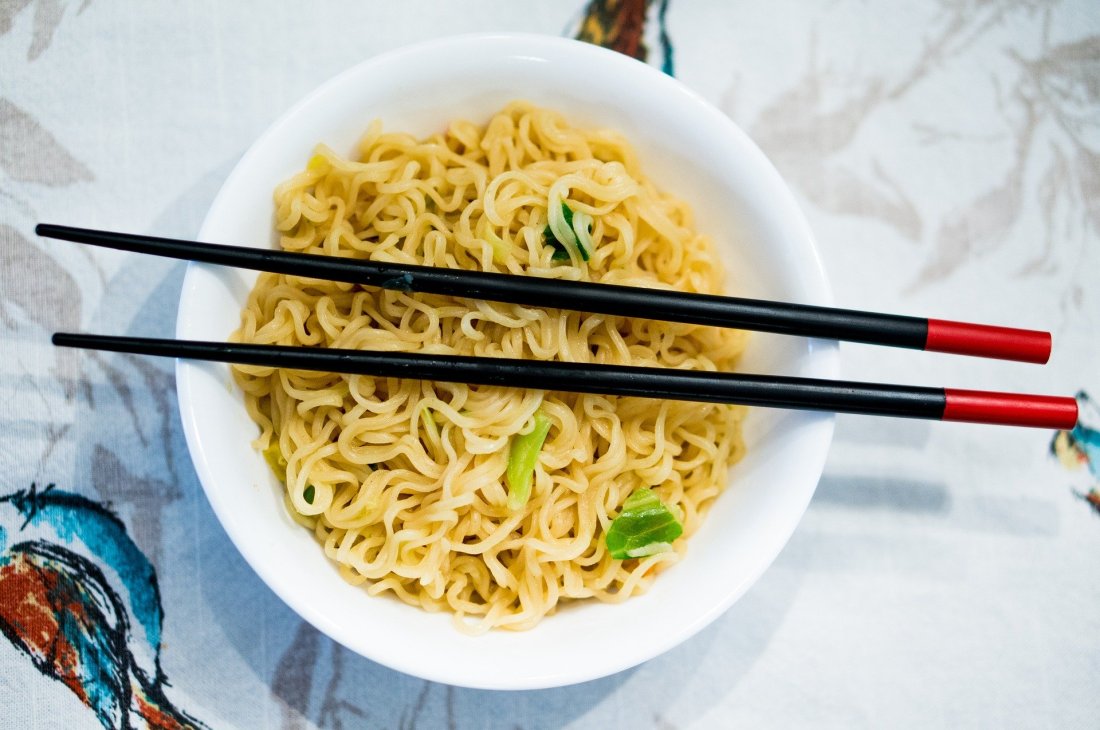
Perhaps, young Matsuo and a few friends are having a traditional fare, eating a steaming hot bowl of noodles called Toshi koshi soba (年越し蕎麦), literally, the New Year’s Eve noodle. A traditional fare usually accompanied by generous helpings of Saki.

Because Spring in 1663 started on the 29th of the new year, and not the 30th or the 1st day, Basho wrote this amusing conundrum. Amusing to the diners. For buried within the haiku are the rhyming words “koshi toshi,” a play on the name of the dish, Toshi koshi soba.

Noodles — because last year’s hardships are easily broken up, and worries are swallowed and washed away with Saki.

Matsuo Kinsaku inspired

All poets copy, the great ones are inspired.

This  is thought to be Matsuo Basho’s earliest dated haiku, referring to 1662-1663, the 29th day of the lunar month before the Lunar New Year.

The inspiration and wording is based on an earlier poem by Ariwara Motokawa (888–953).

if during the old year
spring has come and
one day is left;
should we call it
last year or this year?

年のうちに
春は来にけり
一年を
去年とやいはむ
今年とやいはむ

toshi no uchi ni
haru wa ki ni keri
hitotose o
kozo to ya iwan
kotoshi to ya iwan