Gazing at morning glories eating breakfast – Basho

hiroshige, 1866 morning glories

I am one
Who eats his breakfast
Gazing at morning glories

朝顔に
我は飯食ふ
男かな

asagao ni / ware wa meshi kû / otoko kana

hiroshige, 1866 morning glories
hiroshige, 1866 detail

Being Matsuo Bashō

Takarai Kikaku (宝井其角, 1661–1707) was one among the most accomplished disciples of Matsuo Bashō. One day, Kikaku composed a haiku, “by the grassy gate, a firefly eats nettles – that is what I am”.

A firefly lights up the night. Basho thought about this and concluded. I am a serious kind, like the asagao (morning glories), I open by day and wither at night. Each to his own. Thus, he composed this intentionally plain haiku.

Both haikus are clever reworkings of the Japanese proverb – “Some worms eat nettles”: Tade kuu mushi, or “every worm to his taste, some eat nettles”. Figuratively, each to his own, or there is no accounting for taste.

蓼食う虫も好き好き
tade kuu mushi sukizuki

Notes on translation

Basho’s play on words, meshi kû, and the proverb’s, kuu mushi. The Japanese character mushi is broadly speaking a bug or insect. My guess is that the proverb refers to nettle eating caterpillars.

In line with Kikaku’s haiku, one could and possibly should translate as,

Watching morning glories, eating rice cakes – that is who I am

朝顔に asago ni, “gazing” at morning glories is a poetic choice, Basho could also have been “sitting”, “watching” or simply being “surrounded by” the flower. It is a Zen thing – to be or do.

Who are you?

Summer Grass 夏草 natsuka

summer grass
all that remains
of a Samurai’s dream

夏草や 兵どもが 夢の跡

Natsukusa ya/ Tsuwamonodomo ga/ Yume no ato

battle

June 29, 1689

Having left Edo in late spring of 1689, Matsuo Basho and Sora travel north, arriving at Hiraizumi on June 29th.  Once the seat of the Northern branch of the Fujiwara family, it was destroyed in 1189. As the poet gazes down at the old battlefield, he hears in his head the words of the ancient Chinese poet Du Fu and explains:

“In the space of a dream, three glorious generations of Fujiwara vanished; two miles in the distance are the remains of the Great Gate. Hidehira’s headquarters have turned into rice paddies and wild fields. Only Kinkeizan, the Golden Fowl Hill, remains as it once was.

First, we climbed Takadachi, Castle-on-the-Heights, from where we could see the Kitakami, a broad river that flows from the south. Nearby, Koromo River rounds Izumi Castle and at a point beneath Castle-on-the-Heights, it drops into Kitakami. The ancient ruins of Yasuhira and others, lying behind Koromo Barrier, appear to close off the southern entrance and guard against the Ainu barbarians.

With his most loyal retainers, Yoshitsune fortified himself in the castle, but his dreams of glory quickly turned to grass.

“The state is destroyed, / rivers and hills remain. / The city walls return to spring, / grasses and trees are green. “

With Du Fu’s lines in my head, I lay down my bamboo hat and let time and tears flow.”

Notes on translation

夏草 natsuka, summer grass

兵 tsuwamono, warrior, soldier, more specifically a brave and strong soldier, a Samurai 侍 which Basho once was. Basho’s use of the older term 兵 tsuwamono, is suggestive of a lowly soldier or pawn, someone utilized by others

夢の跡 yume no ato, the trace, mark of a dream. Compare Basho’s idea with William Shakespeare’s “We are such stuff / As dreams are made on.” (The Tempest, 1610/1611)

More thoughts on Basho’s Summer Grass

The grass of summer
And warriors’ dreams
Are all that’s left.

The grass of summer, the only trace of a Samurai’s dreams

Summer grass! All that left of a Samurai’s dream.

samurai helmet

The Tale of Genji

Whereby Matsuo Basho sees a woman making rice cakes and envisions a scene from The Tale of the Genji.

Tying a rice cake / Held with one hand / Oh, the strands of my hair

粽結ふ 片手にはさむ 額髪

Chimakiyufu katate ni hasamu hitaigami

rice dumpling, chimaki
chimaki


The Tale of Genji

We have all played this game – summarize a complicated story in a few words. Perhaps, one of Matsuo Basho’s disciples issued the challenge for the 11th century masterpiece, The Tale of Genji is an 11th century tale of the son of an ancient Japanese emperor and a low-ranking concubine. She dies and the Genji (Hikaru Genji, “Shining Genji”) is removed from the line of imperial succession and made a commoner.

Matsuo Basho’s word picture portrays a woman, no doubt she is lovely, wrapping and knotting () a chimaki ( a sweet and savory rice cake) with a bamboo leaf. With one hand she ties it with a string while with the other hand she brushes a strand of her hair behind her ear.

Notes on Translation

粽 Chimaki, or Zongzi, a rice dumpling wrapped in palm leaves. In Japan this is traditionally prepared on Children’s Day, thus, for Basho, it describes Kiritsubo Consort’s love for her son Hikaru Genji.

結 yui, tie, to fasten, hold, a knot.

片手 katate, one hand.

む mu, used for inflection.

額髪  hitaigami, the hair on the forehead, bangs.

Japanese girl at work

Do cherry blossoms wonder

Cherry blossoms on a branch

I remember many, many things,
do cherry blossoms,
I wonder?

さまざまの事おもひ出す櫻かな

Samazama no  koto omoidasu  sakura kana

Cherry blossoms on a branch

Sakura matsuri

In Japan, in late March and early April, they celebrate the Sakura matsuri, or cherry blossom festival.

All eyes will be on the light pink florets as they fill the city sidewalks, public parks, and temple gardens with quivering bursts of color in the gentle breeze of early spring. Picnicking under the blossoms is an ancient tradition. Then, all too soon, the petals begin to fall, and the scene becomes a distant memory.

One explanation of Basho’s haiku is that he is recalling that he abandoned the way of samurai and decided to live the way of haiku. Or simply that cherry blossoms encourage random thoughts.

Memories

さまざまのこと思い出す桜かな
Samazama no koto omoidasu sakura ka na

The sibilant repetition of the “s” and “z” sounds (samazamaomoidasu, sakura). The repeated consonants of  “k” (koto, sakura, kana) produce a melodic sound to Basho’s phrase. “Do you remember many things?” is today’s colloquial understanding of the phrase. A more literal translation is, “Various things, they call to mind, ah, cherry blossoms!”

Notes on translation

さまざま  samazama, various, many, many
事 koto, thing, matter
櫻 sakura, cherry blossoms
かな kana, I wonder

peach-blossom

In the morning calm

In the morning calm
Only the sound of the rock
And the voice of the cicada

閑けさや 岩にしみいる 蝉の声

shizukasa ya / iwa ni shimiiru / semi no koe

china-hungshan

Journey to the Deep North, Summer of 1689

The clouds were drifting along, and the wind stirred a wanderlust.

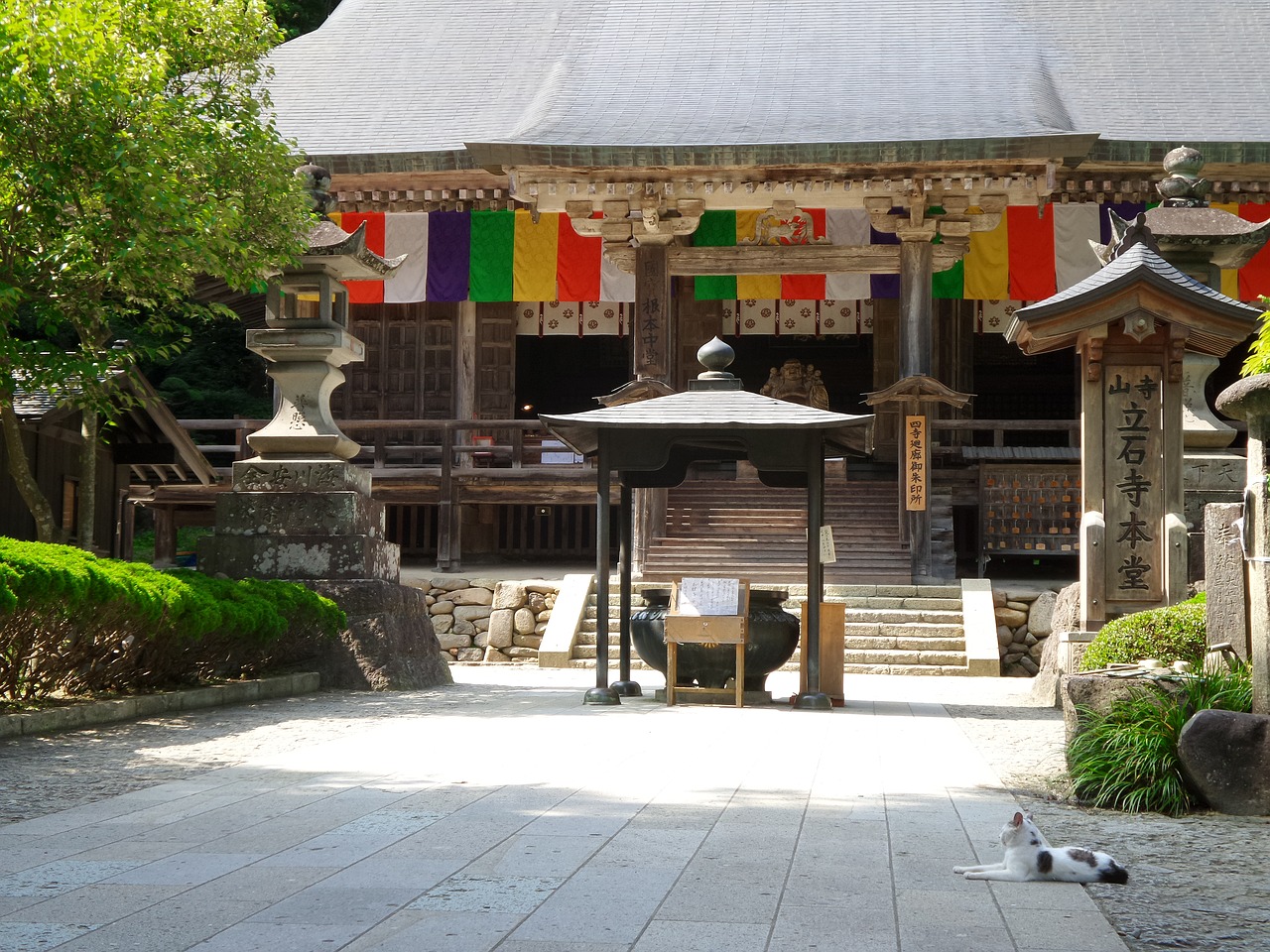
Thus it was that Matsuo Bashō decided in the spring of 1689 to journey to Japan’s north. By summer, Matsuo Bashō arrived at the Ryushakuji Buddhist temple on Yamadera (山寺 literally, Mountain Temple), northeast of Yamagata in Japan’s far north.

In his travel diary, Basho explains:

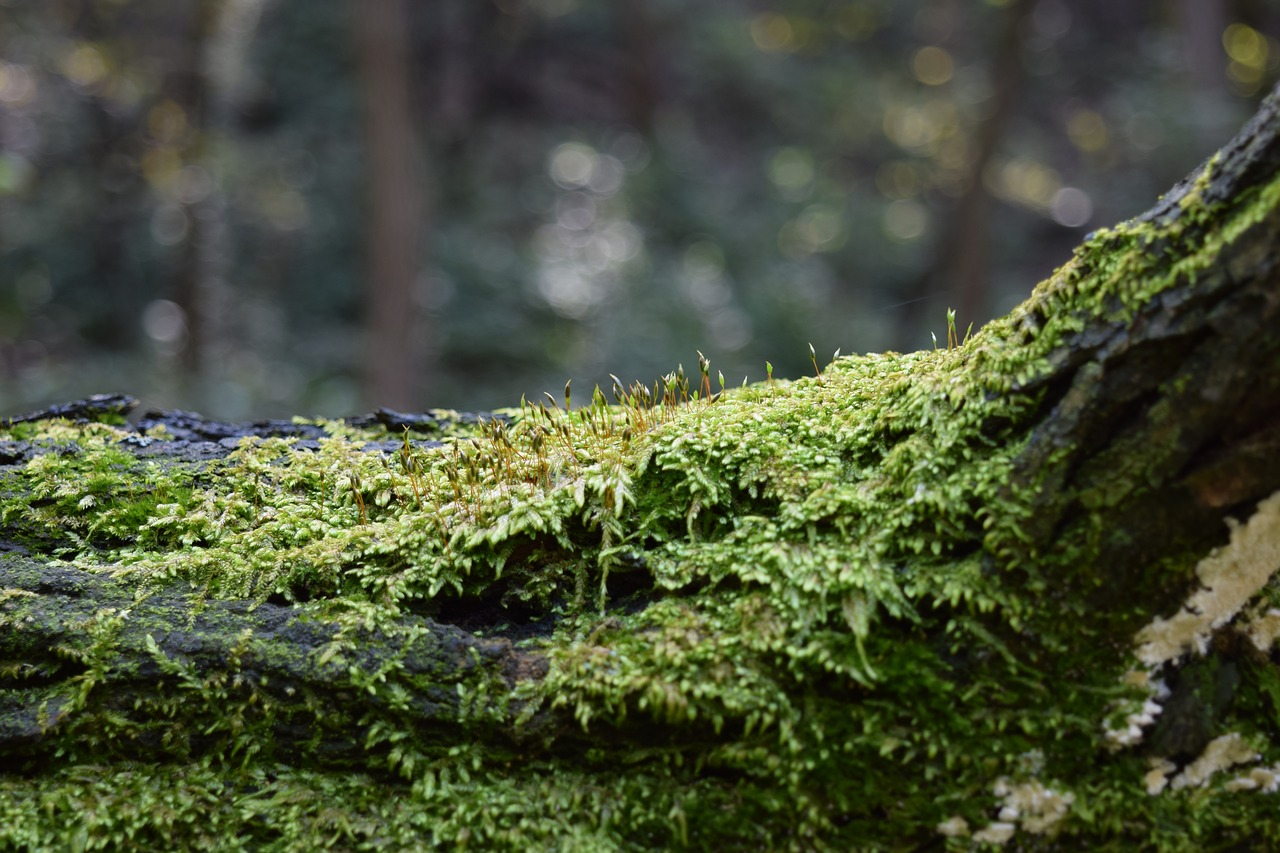
“In Yamagata province, there is a temple called Ryushakuji, founded by the great priest Jikaku. This temple is known for the absolute tranquility of its holy grounds…. The rocks on which the temple is built bear the color of eternity. They are covered with tender moss. The shrine doors are firmly barred and not a sound can be heard. As I move on hands and feet from rock to rock, bowing at each shrine, the purifying power of this sanctuary pervades my being.”

Sibilance

One guesses, I suppose, that Matsuo Basho tries to imitate the cicada’s shrill sound through the technique of sibilance,  shizukasaya / iwa nishimiiru / semi no koe.

I will also propose paraphrased variations inspired by other translators (one example and another one). So, you can decide what works best for you. All of which proves to me, if not to you, that the no haiku is perfect.

In the utter silence
Of the temple grounds,
A cicada’s voice alone
Penetrates the rocks

In the quiet
The shrill sound of cicadas
Seeps into the rocks

tree moss

Notes on translation

閑 kan, peace, calm
けさ kesa, this morning
や ya, and

岩 iwa, rock
み mi, only

蝉 semi, cicada
の no, of
声 koe, voice

yamadura mountain temple

Like a cloud in the wind

like clouds in the wind
a wild goose and his friend
depart

or,

like a cloud in the wind
like a wildgoose and his friend
life departs

雲とへだつ友かや雁の生き別れ

kumo to hedatsu tomo ka ya kari no ikiwakare

Descending Geese at Katata, Eight Views of Ömi Province, 1957, Utagawa Hiroshige
Geese descending at Katata on Lake Biwa by Utagawa Hiroshige, 18th c.

Master Basho explains

A summer’s day near Lake Biwa, the clouds drift by and at sunset the wildgeese descend to the lake. Master Basho and his friend watch the setting sun. “Look at the cloud in the wind, like a wild-goose from the flock, my friend we all too soon depart.”

Lake Biwa

Matsuo Bashō had several connections with Lake Biwa and the surrounding area. He was born in nearby, in Iga Province, and may have studied in nearby Kyoto, Japan’s ancient capital. Basho is know to have visited Lake Biwa in 1684 and again during the summer of 1690, enjoying the scenic views, the wild life, and nearby temples.

Basho departed this world in November of 1690.

Notes on translation

雲 kumo, cloud
雁 kari, wildgoose
や ya, kana word used to connect wildgoose and friend
友 tomo, friend, companion
生 yǒu, life
別れ wakare, farewell, depart

lake biwa, japan

Sleeping away from home

lake biwa, japan

like a sick goose
on a cold night I fell ill and went to bed
sleeping away from home, alas

病雁の夜寒に落ちて旅寝哉
Yamukari (byōgan) no yosamu ni ochite tabine Kana


lake biwa, japan

Matsuo Basho (芭蕉) explains

I had gone to see Lake Biwa and then to travel to the island of Awaji to visit friends. It was late on an autumn night.

I get sick and go to bed. Above me, I hear the honking and flapping of a flock of wild geese heading south. One among them drops out and falls to the lake. He must have gotten sick and found flying unbearable. For me, the trip is likewise unbearable. Sleeping impossible. Getting sick is bad enough.

Alas, being away from home, it’s worse.

Descending Geese at Katata, Eight Views of Ömi Province, 1957, Utagawa Hiroshige
Descending Geese at Katata, Utagawa Hiroshige, 1857


Notes on translation

病雁, Yamukari, sick goose
夜寒 yosamu, cold night
旅寝 Tabine, trip sleeping, sleeping away from home
哉 kana, alas

The translator Gabi Greve dates this haiku to 1689, explaining that “Basho was visiting friends at the temple 本福寺 Honpuku-Ji [near Awaji] in Katata (Katada)  and fell ill himself. His disciple Mikami Senna 三上千那 cared for him.” From Sarumino (猿蓑 Monkey’s Raincoat), a 1691 anthology, the date is given as 1670, which is quite a discrepancy.

cropped-basho.jpg

Butterfly dreams?

Fukagawa, the cottage, Edo
Spring, 1690, age 46

Matsuo Basho had just finished writing a letter. He put down his pen and closed his eyes. He dosed for a minute, half dreaming he supposed, then he awoke with a start, and wrote again.

Were you a butterfly,
and I Zhuangzi,
dreaming this thought

or,

You are a butterfly,
I am Zhuangzi,
But am I Dreaming

君や蝶我や荘子が夢心
kimi ya chō ware ya Sōji ga yume-gokoro
kimi ya choo ware ya Sooji ga yume-gokoro

Matsuo Basho, Spring 1690

kimi (you) ya (exclamation) cho (butterfly) ware (I, me) ya (exclamation) Sooji (Zhuangi) ga (but) yume (dream) gokoro (spirit, thought, feeling)

Zhuangzi

Soogi, the Japanese name for Zhuangzi, a Chinese philosopher (4th century BC). He is thought to have lived a century after Laozi, author of the Tao de Ching. There is a well known story told of Zhuangzi:

One day he dreamed that he was a butterfly. And when he woke, he did not know whether he really was a man who dreamt that he was a butterfly or a butterfly now dreaming he was a man.

Ware, i or me, emphasizing one’s own existence. The internet describes this character (我) as being literary, philosophic, Shakespearean-like, suggestive of something ancient like Zhuangzi.

Koro, heart, mind, spirit, thought.

Note. The authoritative site by Gabi Greve says that this haiku was written in a letter to Dosui Takahashi, a disciple who looked after Basho.

butterfly-drop
kimi ya choo ware ya Sooji ga yume-gokoro

First Snow, Great Buddha

First snow and
there stands the great Buddha
a pillar of strength

初雪や
いつ大仏
の柱立

Hatsu yuki to
Itsu daibutsu
No hashiradate

snow-cabin

The Great Plains in March

It snowed last night in early March. Not an entirely unusual occurrence on the Great Plains, but unwanted to those who long for spring. The morning was gray and bitter cold. Even the dog would not go out willingly or for long. My calico cat stood at the door, looking about, then turned and ran away.

Todai-ji Temple

When Master Basho visited the Todai-ji Temple in Nara, he found the monastery in disrepair. There in an uncovered courtyard, he found the statue of the Great Buddha exposed to the wind and the snow, standing upright.

The meaning of Basho’s haiku is, seemingly elusive. It snows and there silent and stoic stands the Great Buddha in the midst of the snow and cold.

Why not go inside?

Matsuo Basho describes Buddha as “Pillar-like” (の 柱立, standing like a pillar, 柱). Society is supported by principles in the same way that a building is supported by upright pillars and columns.

buddha-snow

We can not fathom the Way, just as we can not fathom the mysteries of Nature. The master of the Way fights neither his own body, nor Nature. The forces of Nature are greater than one person. We must adapt to survive.

Master Basho instructs us by example. The Great Buddha does not complain when it snows, nor should we. The virtuous are upstanding.


Tōdai-ji (東大寺, Eastern Great Temple), located in the city of Nara, contains the Great Buddha Hall which houses the world’s largest bronze statue of the Buddha. At the time of Basho’s visit (1689-1670), the Buddha was still without its head and cover.

Lessons from the Dao

― Lao Tzu, Tao Te Ching, Chapter 37


The Tao never does anything,

yet through it all things are done.


If powerful men and women

could center themselves in it,

the whole world would transform

into its natural rhythms.

People would be content

with their simple, everyday lives,

in harmony, and free of desire.

The Journey Begins

“The journey itself is my home.”

“Do not seek to follow in the footsteps of the wise. Seek what they sought.”

Matsuo Basho

Hello World

Thanks for joining me on a journey to who knows where!

Let me begin by introducing our guide and companion, Matsuo Bashō (松尾 芭蕉, 1644–1694). He was and is Japan’s most famous poet of the Edo period (1603-1867). While this may sound like literary hyperbole, the kind of praise found on the dust jacket of a new book, consider this: Matsuo Basho refined the poetic form into the haiku we continue to use today.

It is a three part poem – typically, containing a subject, an action, and an explanation that incorporates surprise, all of this usually rendered in 17 syllables. What was refreshing then and now about Basho’s haiku is that they captured the essence of moment in simple words that everyone could appreciate. Many of the haiku have an air of Buddhism to them. That is they strive towards “enlightenment.” Such is the aim of Basho’s well-known frog splashing in the pond haiku.

Becoming Basho

He did not begin life as Matsuo Basho. That was a pen name he acquired after many years of study and writing. And this name by which we know him today was taken only after Matsuo (his family name) moved from his home in Ueno to Kyoto, then to Edo, the capital of the Shogunate, and from the bustling city center of the Edo to Fukagawa, where Basho took up a humble residence in a cottage. A disciple gave him a house warming gift of a banana tree (芭蕉, bashō), which when planted grew up beside the cottage, surviving many storms, giving him shade in the summer.

Thus, like Jim Croce’s singin’ bird and the croakin’ toad, our poet had a name for the ages.

On the Road

Matsuo Basho followed in the footsteps of others. The 12th century Buddhist monk Saigyo is one, but as Basho explains, he sought to experience what they sought, and he sought his own unique experiences.

To better see the world, Basho and his neighbor and friend Kawai Sora took to Japan’s dangerous back roads in the spring of 1689 with little more than writing supplies, writing his most famous haiku, Oku no Hosomichi, a travelogue that would not be published until after Basho’s death.

Beware, the journey is not always pretty, not always fun, but hopefully witty, and full of surprise.

蚤虱  馬の尿する  枕もと
nomi shirami/ uma no shito suru/ makura moto

Among fleas and lice,
a horse pissing
next to my pillow.
— Matsuo Basho, Oku no Hosomichi, Summer 1689