Kisagari

My wish, to disappear
Under the flowers.
Let it be a Spring death,
In Kisagari (that changing month),
That Bright Moon time of year
.

bright moon, man walking on beach, ukiyo-e 浮世絵, floating world

Farewell to February, 2021

Before the month of February has passed, I thought it fitting to add one more poem on the subject of Kisigari.

This poem is written not by Basho, but by Saigyō Hōshi (西行法師, 1118 -1190) a poet of the Heian period who lived to the age of 72. His life as a monk and his frequent journeys inspired Basho’s many journeys.

February is a month often overlooked because of its shortness, but also its in-betweenness, caught as it is between winter and spring. Nineteenth century American poet Henry David Longfellow gave us his thoughts on a February Afternoon, which begin like this: The day is ending, The night is descending; The marsh is frozen, The river dead. Matsuo Basho also gave us some thoughts on February (Kisagari). Both are a bit depressing.

Saigyō’s poem, on the contrary, is more uplifting, at least in the Buddhist sense of regeneration with Saigyō imagining that he is reborn as an early spring flower , Hana. The third line is particularly poignant. 春死なむ, Haru shinan conbines the idea of a death in spring and なむ which I understand to be “let it be,” and a reference to the Buddhist concept of Namu 南無.

Kisigari, 如月 is the Japanese lunar name for the month of February. It suggests the changing of the seasons, Spring approaching, a month with spring-like days. Sometimes written as Kinusaragi (衣更着, “Changing Clothes”) .

Yesterday, February the 24th, in Kansas it was 70 degrees, two days before that it was 0. What a difference a day or two makes.

I have one final comment to make on Saigyō’s use of , no through out the poem. This personalizes, for me, the thought. Not being a native Japanese speaker it is just my personal thought.

My wish, to disappear
Under my flowers.
Let my death be in Spring,
In Kisagari (that changing month),
My Bright Moon time of year
.

Original Japanese

願はくは
花の下にて
春死なむ
その如月の
望月のころ

Negawaku wa
Hana no moto nite
Haru shinan
Sono kisaragi no
Mochizuki no koro

At Home, Spring 1678

Master of Hokku
Matsuo Tosei
At home on the First Day of Spring

The Sound of Hokku
Matsuo Tosei
At home on the First Day of Spring

発句なり   松尾桃青   宿の春

Hokku nari       Matsuo Toosei    Yado no haru.

Matsuo Toosei

Becoming a Master of Haiku

Spring 1678, a new year, a new beginning. Matsuo was not yet Matsuo Basho, not quite yet. First he would proclaim himself “master of the haiku”. 発句なり, Hokku nari.

Notes on Translation

The two characters なり, nari, literally translate as “to be” or “the sound of” haiku. The second translation (the sound of haiku) reminds one of Basho’s famous haiku about the frog and the sound of water.

One should not be surprised that there are at least two translations of the same words and the same poem. Basho was student of The Dao (The Way), which teaches that the Way is eternal and changing, that words have more than one meaning. This is literally expressed as, “The name (word) that can be named is not the eternal name.” Tao de Ching.

Toosei

Matsuo Toosei, Basho’s moniker before he became Basho. Toosei means “green peach”. The peach was a symbol of immortality and a long life, but a “green” peach is one not quite famous, a “newby” hoping to achieve fame and immortality as a poet. Basho would not ripen into “Basho” banana until two years later when he moved from Edo to the Fukagawa neighborhood. There he lived in a hut next to a banana tree given to him as a gift by a student.

Yado no haru, 宿の春. Haru, 春, literally “Spring,” but also either the first of the year or New Year. Yado, literally, lodging.

A Pillow of Grass

Come
Let us dine on barley grain
On a journey nowhere

(kusa makura)

come, together
let us eat barley grain
on a grass pillow

iza tomo ni/ homugi kurawan/ kusa makura

いざともに穂麦喰はん草枕

barley field, 麦畑

Summer 1685

On “a journey of a thousand leagues,” one that began in the autumn of 1684, a trip in which Basho would enter “into nothingness under the midnight moon,” and now, in the summer of 1685, was near its end, a chance meeting took place. It was a meeting that meant everything and nothing, remarkable enough to inspire a haiku, to remember, but nothing else.

The poet from Edo and the priest from Hirugakojima met somewhere near Nagoya in Owari province. Let us imagine the introduction:

“Come let us go together. As you see, you and I have no place to be. Asking for very little, eating a simple fare of barley grain, ‘neath the stars at night, sleeping on a pillow of grass until we say our goodbyes.”

We learn little of the priest other than the fact that he hails from the island of Hirugakojima (蛭が小嶋) in Izu. The significance becoming apparent only when we realize that the shrine and the temple on the island was built by Yoritomo Minamoto (1147-1199), who established the Kamakura shogunate, a play on words with kusamakura (草枕), the grass pillow.

In 1689, pursuant to his last wishes, Basho would be buried next to Minamoto no Yoshinaka, a member of the Minamoto samurai clan.

Journal of Bleached Bones in a Field

It was the first of Matsuo Basho’s major wanderings, a trip that took him from Edo to Mount Fuji, then on to Ueno, Nara, Kyoto, and Nagoya, a trip begun in uncertainty for Basho made trip alone without provisions. Basho was 41, old enough to have achieved fame as poet and teacher, still uncertain about where life was leading him.

We need not tarry too long on this journey. David Landis Barnhill has given us a translation online of the Journal of Bleached Bones in a Field, (Nozarashi kiko).

Dewa Province Mogami River

Sources:

David Landis Barnhill gives us a chronological translation online of the Journal of Bleached Bones in a Field, (Nozarashi kiko) .

WKD – Matsuo Basho Archives, Gabi Greve, Iza, let’s go

The Route, Nozarashi Kiko (野ざらし紀行), Several sources indicate that Basho was accompanied on the journey by his disciple Chiri. Chiri (塵) is an interesting moniker for it means dust. Dust was on occasion a subject of Basho’s haiku.

blossoms falling, birds startled by the harp’s dust
chiru hana ya / tori mo odoroku / koto no chiri
散る花や鳥も驚く琴の塵

I love the plum blossom – Ume koite

Spring 1685

In Shiga province, Basho met up with a priest from Hiru in Izu who traveled with him all the way to Owari province. Along the way, the priest told Basho of the death of Abbot Daiten of Enkaku Temple at Kamakura.

I love the plum blossom
But the deutzia flower
Brings me to tears

Longing for plum blossoms,
Bowing before the deutzia –
Eyes full of tears

One loves the plum
But worships the deutzia –
With tears

ume koite / unohana ogamu / namida kana

梅恋 ひて卯の花拝む 涙哉

plum tree flowers
plum tree flowers

Enkaku Temple at Kamakura

Enkaku, Engaku-ji (円覚寺), a Zen Buddhist temple in Kanagawa prefecture south of Edo (Tokyo). The name translates to “perfect enlightenment”. Daiten, Daitō, meaning long sword, appears to be the honorary title given to the abbot, possibly to the chief monk of temples practicing Zen Buddhism.

Notes on translation

There are multiple translation of Basho’s homage to Abbot Daiten of Enkaku Temple. The blog, WKD, Matsuo Basho Archives provides several. Like the hydrangeas one sees blooming along the northwestern coast of the United States, the deutzia is a bushy plant with multiple flowering heads. When the deutzia blossoms in Japan, generally, after the plum and cherry trees blossoms, the skies turn gray, not really rain, but not sunny and bright.

Misty days are abundant.

Unohana – the white snowbell-like flower of the Deutzia, part of the hydrangea family

Ogamu – to worship, to assume the posture of praying, to press the palms and fingers of both hands together, to do reverence.

hydrangea

Our two lives – inochi ni

Cherry blossoms on a branch

Lake Biwa, Shiga Province, Spring 1685

For millions of Japanese, the annual cherry blossom viewing is a time of surprise and delight. After an absence of 20 years, Matsuo Basho came across his friend and disciple, Hattori Dohō (服部土芳), and composed this haiku.

Our two lives coming together at Cherry Blossom time!

Inochi Futatsu no Naka ni Ikitaru Sakura kana

命二つの中に生きたる桜かな

Hattori Dohō

Hattori Dohō (服部土芳) was younger than Basho by a dozen years. After Basho’s death, Dohō composed Sanzōshi, Three Books, ca. 1702, a poetic treatise on Bashō’s haikai. Haikai meaning the linked verse, commentary, and poetry that Basho popularized.

Haiku came to mean standalone poems. Haibun came to mean multiple verses.

In one of his haibun, Bashō states, “Only when one identifies with the feelings of the things in nature and can express them in words, only then is he a master of poetry.”

Our two lives, inochi ni, is a wistful recollection of a friend.

In this haiku, Basho combines the two lives, his and Dohō’s, from inochi 命 life, to be alive, plus futatsu 二 two. These lives separated by time and place come together at Lake Biwa during sakura cherry blossom festival . Basho adds the kireji, the cutting word in the double kana, かな, expressing the joy of meeting such a friend.


On the subject of separate lives

Our two separate lives, as Phil Collins and Marilyn Martin put it bluntly in a song from 1985, is a sadder version about the separation of former lovers. Cher gave us a similar sentiment in 1988, “… sooner or later we all sleep alone.”

Until then, enjoy the cherry blossoms. Sakura kana! 

Cherry blossoms on a branch

Read about the entire journey in Donald Keene’s translation of Journey of 1684.

An azalea, dried cod and a woman

On Lake Biwa, sitting down at an inn for lunch:

Azaleas arranged in a pot,
Chopping cod in the shade –
A woman

tsutsuji ikete sono kage ni hidara saku onna

躑躅 生けてその陰に干 鱈 割く女

azalea-pink

Thusness

Was she young, was she pretty, or dried up and old? Did she blossom like a flower? Or merely exist?

One should be careful of reading too much into a haiku.

Matsuo Basho himself observed that a haiku may be neither objective or subjective. It merely is what it is. This quality of “thusness” or “suchness” is a principle of Buddhism called Tathātā. It represents the base reality. Thus, there in the corner of the inn, Basho spies an azalea, and a woman tearing up dried cod.

Imagery, Kigo, Kireji, and a Twist

The essence of a haiku is its imagery. The image conveys a message, the characters and words are merely the conveyance of the image.

Most haiku will contain a kigo word. This helps to set the season and so the setting of the poem. Kigo words do not need to be the actual season – spring, summer, fall or winter. Instead, as in this case, the azalea that blooms in spring becomes the kigo word.

Having created the image, the poet must carve his or her haiku up into a sequence of images to create the synthesis of images forming one idea. Kireji are called “cutting words” and act like punctuation, a comma, a dash, a question, and exclamation, and so forth. But kireji may also make their appearance in the verb form, for instance, in change the present to the past

In this haiku, the verb that appears after azalea is ikete, past tense of ikeru. By itself, the “Te Form” links the two thoughts of the azalea and the woman chopping cod together.

A good haiku should also try to create a twist in thought, where sound may suggest a shift in thought. Hidara saku, the cod is split by the woman, but shifting the phrase to saku onna, gives the listener impression of a woman blooming.

azalea-forest


The Karasaki pine tree – Karasaki no matsu

Lake Biwa, Pine tree of Karasaki

The Karasaki pine tree is mistier than the cherry blossoms

Karasaki no matsu/ wa hana yori/ oboro nite

辛崎の松 は花より朧にて

Karasaki Pine Tree

“The Karasaki Pine Tree (Karasaki no matsu) stands on a walled esplanade in Karasaki village, 5 MN of Otsu near the steamer landing. Its 300 or more immense horizontal boughs, upheld by wood crutches or stone pillars, curve awkwardly, and at the top – 25 ft or more from the ground – tin and wood copings have been placed as a protection against the weather. These arms, some of which measure 200 odd ft. from point to point, reach out like those of a gigantic and repulsive spider, and are almost bare of foliage.”
Terry’s Japanese Empire, T. Philip Terry, 1914

In the eighth moon of 1684, Matsuo Basho left Edo to visit his birthplace in Ueno. The occasion was the death of his mother in 1683. As journeys go, this one involved many stops and visits along the way. Previously, we left Basho on the path from Kyoto to Otsu, on Lake Biwa. On the mountain path, Basho discovered a violet growing in the grass, and took the occasion to write a haiku.

Now he was nearing Lake Biwa.

Lake Biwa, Pine tree of Karasaki

Descending from his mountain path to the lake, he views Otsu and its well-known pine tree in the distant mist. The ancient horizontal limbs are supported by pillars. Otsu also offers many sublime cherry blossom trees for viewing. For practical reasons, Basho found the pine tree more to his liking. Or maybe he just found it a bit hazier or mistier, oboro , if he arrived in the early foggy April morning.

Meaning of the poem

The meaning of the haiku is itself obscure on its face.

Likely, Basho is making a reference to the poem by Prince Konoe Masaie (1444-1505).

In the night rain its green fades
Serene in the evening breeze
Stands the pine tree
Of Karasaki.
— Prince Konoe Masaie (1444-1505)

That however does not explain the mention of the cherry blossoms.

There is a well-known idiom, hana yori dango, which translates as preferring dumplings over flowers. This also means to prefer the practical over the beautiful. A secondary meaning is that viewers of the cherry blossoms prefer the wine and food over the blossoms themselves. A pine tree, it seems to me is more practical than a cherry blossom. It provides protection from the elements and material for building.


Like California’s Sequoia’s the Karasaki pine tree is ancient. Even in Basho’s day, it was believed to be one thousand years old. A new pine tree has since been planted from a cutting of the old Karasaki pine tree.

For reference, see: Basho’s Journal of 1684, translated by Donald Keene (page 143)

old pine of karasaki
old pine of Karasaki

A cloud of cherry blossoms – Hana no kumo

A cloud of cherry blossoms
The chime of a temple bell
Is it Asakusa, is it Ueno?

Hana no kumo   Kane ha   Ueno ka Asakusa ka

花の雲    鐘は上野か   浅草か

Cherry blossoms on a branch

1680

In 1680, Basho moved from Edo across the Sumida River to Fukagawa to escape the noise of Nihonbashi, near the city center, where he had lived for nine years.

Hana no Kumo

Spring, cherry trees in full blossom, the sound of a temple bell, is it the Temple at Asakusa or Ueno? Hana means flowers in the general sense, but also the cherry blossom in this haiku. Kumo means cloud. Matsuo Basho has gone for a walk in Fukagawa in April, and in the midst of the blossoms of the cherry trees he experiences what it feel like to walk among the clouds. Perhaps a gentle breeze comes along and petals are scattered about, heightening the ethereal experience.

Suddenly, he hears the chime (kane), the sound of a temple bell. It comes from across the Sumida River that separates Basho’s neighborhood of Fukagawa from Edo (Tokyo).

Is the sound Asakusa or Ueno, two well-known temples?

senso-ji temple
Senso-ji temple, Asakusa

Has Spring come? 春や来

春や来     し年や行きけん     小晦日

haru ka koshi     toshi ya yukiken      kotsugomori

Has Spring come,
Is the Old Year gone,
This New Year’s Eve?

Iga region, 1663

noodles

New Year’s Eve, 1662

In the second year of Kanbun, the Shogun is Tokugawa Ietsuna. Matsuo Kinsaku is a servant to the samurai Tōdō Yoshitada (藤堂 良忠). He is not yet 20, and not yet the accomplished poet the world knows as Matsuo Basho.

Looking Back, Looking Forward

New Year’s Eve is a good time to look both ways.

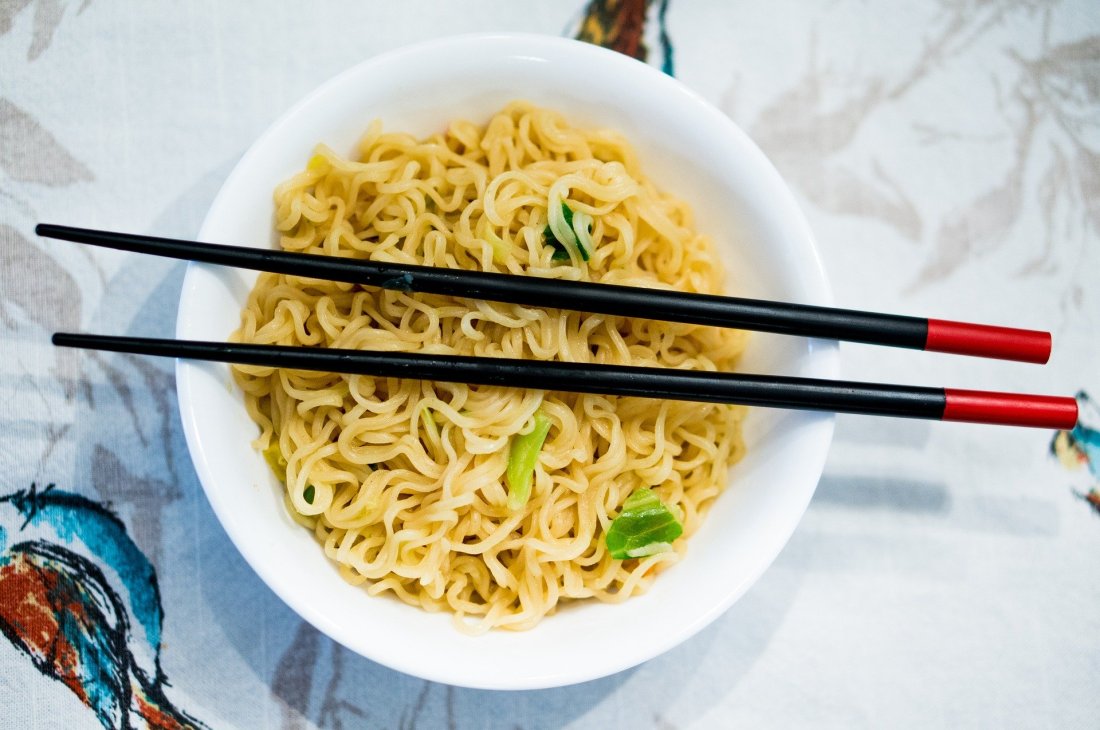
Perhaps, young Matsuo and a few friends are having a traditional fare, eating a steaming hot bowl of noodles called Toshi koshi soba (年越し蕎麦), literally, the New Year’s Eve noodle. A traditional fare usually accompanied by generous helpings of Saki.

Because Spring in 1663 started on the 29th of the new year, and not the 30th or the 1st day, Basho wrote this amusing conundrum. Amusing to the diners. For buried within the haiku are the rhyming words “koshi toshi,” a play on the name of the dish, Toshi koshi soba.

Noodles — because last year’s hardships are easily broken up, and worries are swallowed and washed away with Saki.

Matsuo Kinsaku inspired

All poets copy, the great ones are inspired.

This  is thought to be Matsuo Basho’s earliest dated haiku, referring to 1662-1663, the 29th day of the lunar month before the Lunar New Year.

The inspiration and wording is based on an earlier poem by Ariwara Motokawa (888–953).

if during the old year
spring has come and
one day is left;
should we call it
last year or this year?

年のうちに
春は来にけり
一年を
去年とやいはむ
今年とやいはむ

toshi no uchi ni
haru wa ki ni keri
hitotose o
kozo to ya iwan
kotoshi to ya iwan

Basho’s New Year Haiku

monkey on motorcycle in front of nuclear plant

William Shakespeare, Basho’s near contemporary, thought of theater as life, and life as theater: “All the world’s a stage, And all the men and women merely players.” (As You Like It, 1603). Matsuo Basho too, was fond of theater, in particular Noh theater in which the main players wore masks to represent emotions. For Basho, the year 1694, the play comes to an end.

年々や     猿に着せたる      猿の面

Toshi doshi ya/ saru ni kisetaru/ saru no men

Year after year, it’s a monkey in a monkey’s mask
— Matsuo Basho, December 1693

monkey on motorcycle in front of nuclear plant

1693 – 23 months to go

[Revised January 2020, revised December 2020]

1693 has ended, 1694 has arrived. In Buddhism, there is no self in any being, nor any essence in any thing. Still a monkey still wears a monkey face.

Toshi doshi, year after year. If we count by the Gregorian calendar, Matsuo Basho had 23 months to live when he wrote this haiku. If we count by the lunar calendar which Basho followed, then it was less. Remember, in 17th century Japan, New Year was based on a lunar calendar. It was the first day of spring, and the rebirth of life after winter’s slumber.

The end of 1693, we find Matsuo Basho, age 49, back in his familiar Banana Hut (bashoan), in the Fukagawa District across the Sumida River from Edo. In August he takes no visitors. The year 1694 arrives and he finds “no peace of mind”.

Of this haiku Basho remarked:

“I jotted down this haiku because I was sad to see people stuck, struggling in the same way, year in and year out.”

Notes on Translation

Toshi doshi, 年々や, year after year. Basho would repeat this sentiment in another haiku.

Toshi doshi ya / sakura o koyasu / hana no chiri.
Year after year, falling blossoms nourish the cherry tree.
Spring, 1691.

Saru no men, 猿の面, could easily be translated as monkey face or mask. The phrase is phonetically similar to the idiomatic saru mane, 猿真似, “monkey imitation,” “monkey see monkey do”.

Noh Theater and Sarugaku

In Noh Theater masks expressed human emotions and a monkey mask represented someone acting foolishly. Sarugaku, 猿楽, “monkey music” was also a popular form of entertainment consisting of acrobatics, juggling, and pantomime, sometimes combined with drum dancing, later including word play reminiscent of Basho’s own haiku.

banana-leaves