The Chrysanthemum – 菊の花

mass of white chrysanthemums

Drinking his morning tea calms the monk – Chrysanthemum

朝茶飲む 僧静かなり 菊の花

Asa cha nomu / sō shizukanari / kiku no hana

mass of white chrysanthemums

The Chrysanthemum

Matsuo Bashō (松尾 金作), Japan’s most famous poet of the Edo period, made the chrysanthemum the subject of several haiku. In Japanese the flower is called Kiku-no-hana, literally blossom of the chrysanthemum, or Kiku for short.

As early as the 5th century, it was imported from China into Japan by Buddhist monks, originally as medicine then becoming an object of beauty and admiration. Japanese royalty came to love the flower because they believed it had the power to prolong life. In 1183, the sixteen petal chrysanthemum became the imperial symbol. In November Chrysanthemum Festivals across Japan celebrate the many varieties of the late blooming flower.

As medicine, chrysanthemums are used to treat chest pains and high blood pressure, as well as fevers, colds, headaches, and dizziness.

The delicate petals are brewed into tea, which in our case calms the nervous monk in the morning.

Gazing at morning glories eating breakfast – Basho

hiroshige, 1866 morning glories

I am one
Who eats his breakfast
Gazing at morning glories

朝顔に
我は飯食ふ
男かな

asagao ni / ware wa meshi kû / otoko kana

hiroshige, 1866 morning glories
hiroshige, 1866 detail

Being Matsuo Bashō

Takarai Kikaku (宝井其角, 1661–1707) was one among the most accomplished disciples of Matsuo Bashō. One day, Kikaku composed a haiku, “by the grassy gate, a firefly eats nettles – that is what I am”.

A firefly lights up the night. Basho thought about this and concluded. I am a serious kind, like the asagao (morning glories), I open by day and wither at night. Each to his own. Thus, he composed this intentionally plain haiku.

Both haikus are clever reworkings of the Japanese proverb – “Some worms eat nettles”: Tade kuu mushi, or “every worm to his taste, some eat nettles”. Figuratively, each to his own, or there is no accounting for taste.

蓼食う虫も好き好き
tade kuu mushi sukizuki

Notes on translation

Basho’s play on words, meshi kû, and the proverb’s, kuu mushi. The Japanese character mushi is broadly speaking a bug or insect. My guess is that the proverb refers to nettle eating caterpillars.

In line with Kikaku’s haiku, one could and possibly should translate as,

Watching morning glories, eating rice cakes – that is who I am

朝顔に asago ni, “gazing” at morning glories is a poetic choice, Basho could also have been “sitting”, “watching” or simply being “surrounded by” the flower. It is a Zen thing – to be or do.

Who are you?

The Tale of Genji

Whereby Matsuo Basho sees a woman making rice cakes and envisions a scene from The Tale of the Genji.

Tying a rice cake / Held with one hand / Oh, the strands of my hair

粽結ふ 片手にはさむ 額髪

Chimakiyufu katate ni hasamu hitaigami

rice dumpling, chimaki
chimaki


The Tale of Genji

We have all played this game – summarize a complicated story in a few words. Perhaps, one of Matsuo Basho’s disciples issued the challenge for the 11th century masterpiece, The Tale of Genji is an 11th century tale of the son of an ancient Japanese emperor and a low-ranking concubine. She dies and the Genji (Hikaru Genji, “Shining Genji”) is removed from the line of imperial succession and made a commoner.

Matsuo Basho’s word picture portrays a woman, no doubt she is lovely, wrapping and knotting () a chimaki ( a sweet and savory rice cake) with a bamboo leaf. With one hand she ties it with a string while with the other hand she brushes a strand of her hair behind her ear.

Notes on Translation

粽 Chimaki, or Zongzi, a rice dumpling wrapped in palm leaves. In Japan this is traditionally prepared on Children’s Day, thus, for Basho, it describes Kiritsubo Consort’s love for her son Hikaru Genji.

結 yui, tie, to fasten, hold, a knot.

片手 katate, one hand.

む mu, used for inflection.

額髪  hitaigami, the hair on the forehead, bangs.

Japanese girl at work

In the morning calm

In the morning calm
Only the sound of the rock
And the voice of the cicada

閑けさや 岩にしみいる 蝉の声

shizukasa ya / iwa ni shimiiru / semi no koe

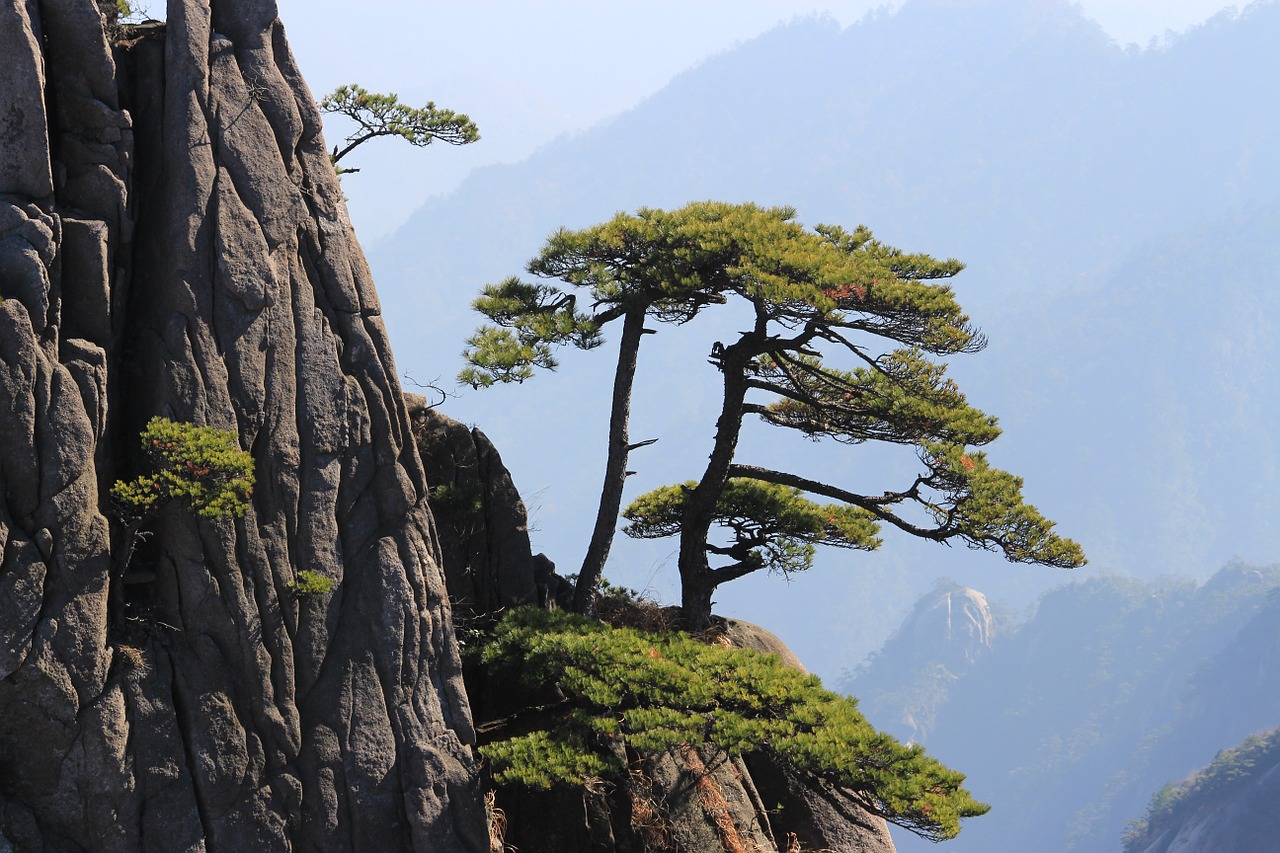
china-hungshan

Journey to the Deep North, Summer of 1689

The clouds were drifting along, and the wind stirred a wanderlust.

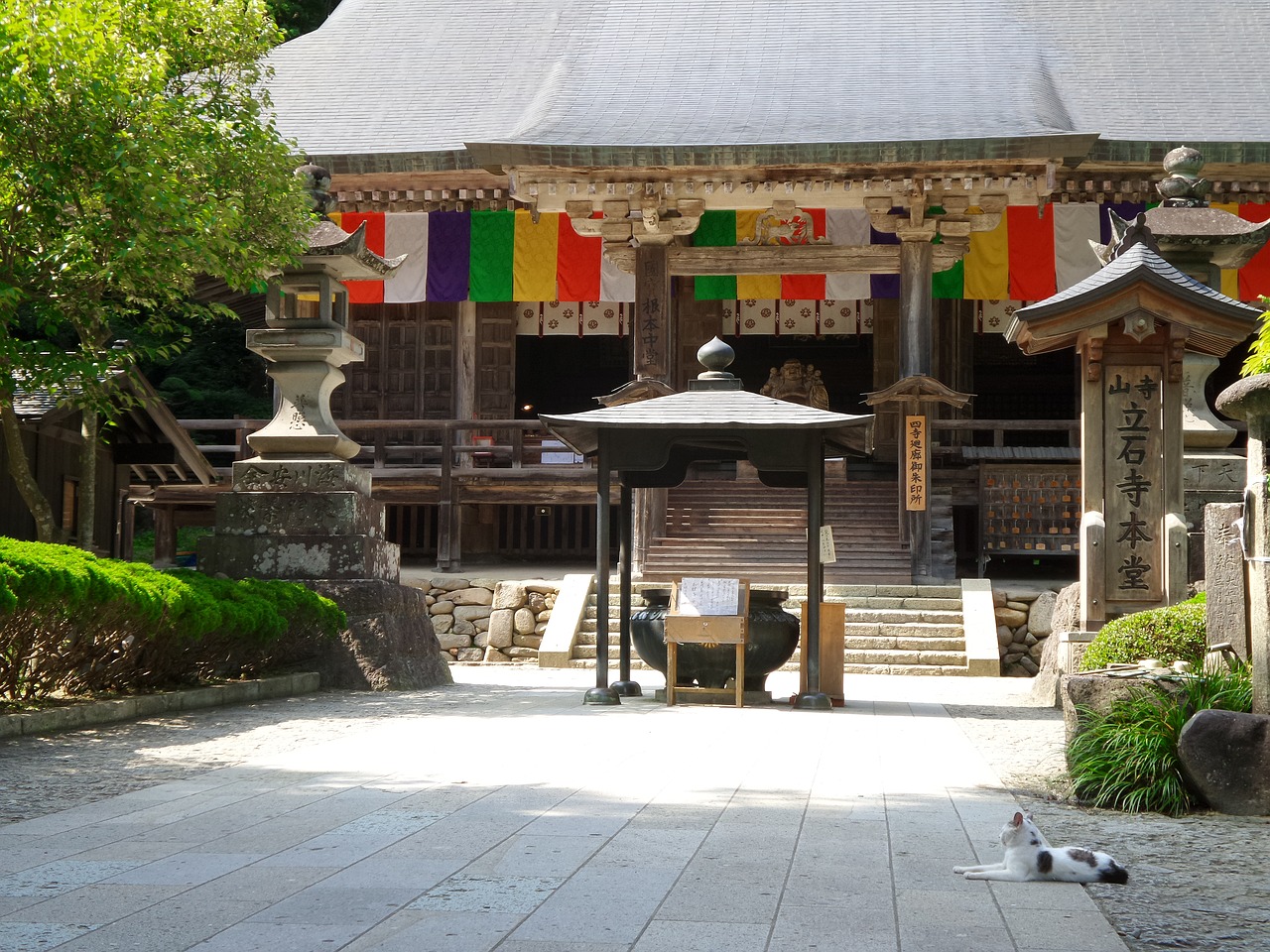
Thus it was that Matsuo Bashō decided in the spring of 1689 to journey to Japan’s north. By summer, Matsuo Bashō arrived at the Ryushakuji Buddhist temple on Yamadera (山寺 literally, Mountain Temple), northeast of Yamagata in Japan’s far north.

In his travel diary, Basho explains:

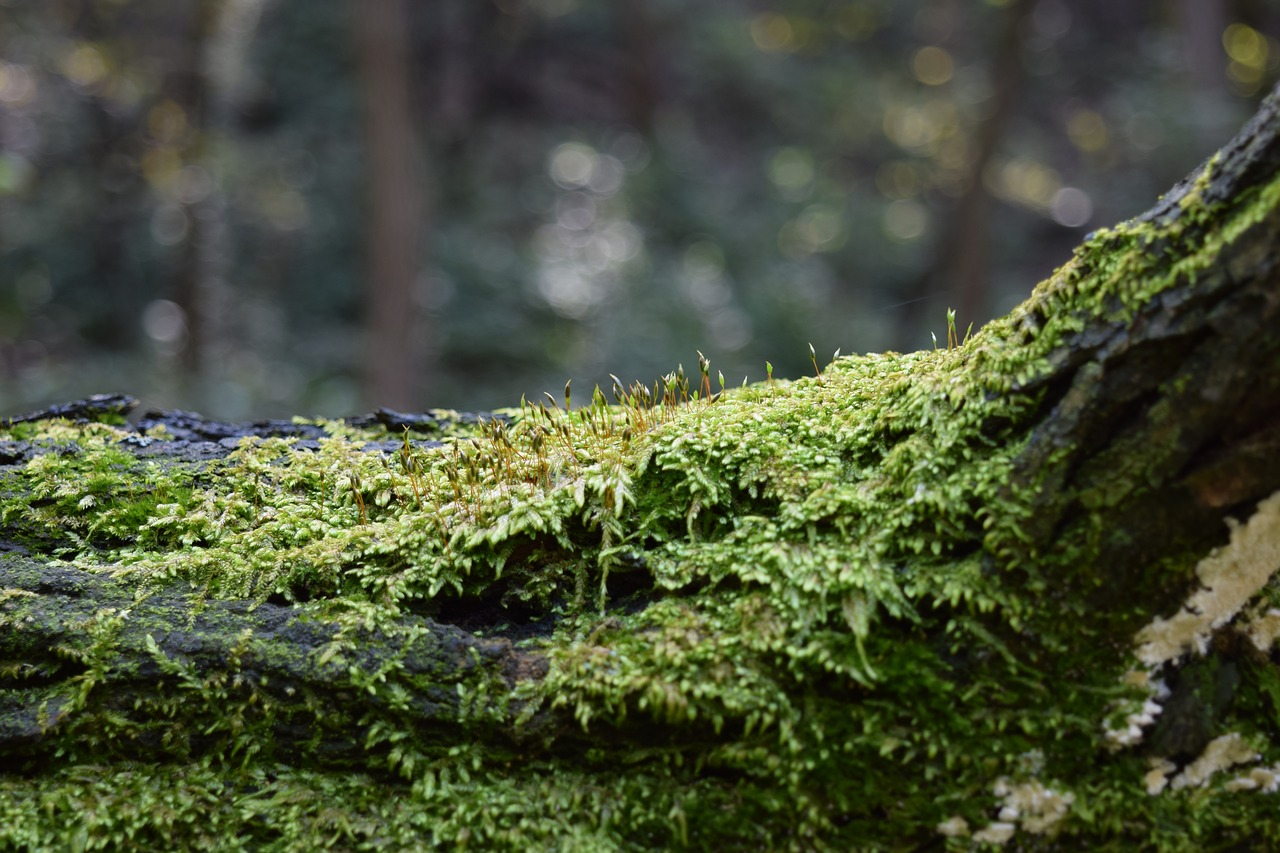
“In Yamagata province, there is a temple called Ryushakuji, founded by the great priest Jikaku. This temple is known for the absolute tranquility of its holy grounds…. The rocks on which the temple is built bear the color of eternity. They are covered with tender moss. The shrine doors are firmly barred and not a sound can be heard. As I move on hands and feet from rock to rock, bowing at each shrine, the purifying power of this sanctuary pervades my being.”

Sibilance

One guesses, I suppose, that Matsuo Basho tries to imitate the cicada’s shrill sound through the technique of sibilance,  shizukasaya / iwa nishimiiru / semi no koe.

I will also propose paraphrased variations inspired by other translators (one example and another one). So, you can decide what works best for you. All of which proves to me, if not to you, that the no haiku is perfect.

In the utter silence
Of the temple grounds,
A cicada’s voice alone
Penetrates the rocks

In the quiet
The shrill sound of cicadas
Seeps into the rocks

tree moss

Notes on translation

閑 kan, peace, calm
けさ kesa, this morning
や ya, and

岩 iwa, rock
み mi, only

蝉 semi, cicada
の no, of
声 koe, voice

yamadura mountain temple

Butterfly dreams?

Fukagawa, the cottage, Edo
Spring, 1690, age 46

Matsuo Basho had just finished writing a letter. He put down his pen and closed his eyes. He dosed for a minute, half dreaming he supposed, then he awoke with a start, and wrote again.

Were you a butterfly,
and I Zhuangzi,
dreaming this thought

or,

You are a butterfly,
I am Zhuangzi,
But am I Dreaming

君や蝶我や荘子が夢心
kimi ya chō ware ya Sōji ga yume-gokoro
kimi ya choo ware ya Sooji ga yume-gokoro

Matsuo Basho, Spring 1690

kimi (you) ya (exclamation) cho (butterfly) ware (I, me) ya (exclamation) Sooji (Zhuangi) ga (but) yume (dream) gokoro (spirit, thought, feeling)

Zhuangzi

Soogi, the Japanese name for Zhuangzi, a Chinese philosopher (4th century BC). He is thought to have lived a century after Laozi, author of the Tao de Ching. There is a well known story told of Zhuangzi:

One day he dreamed that he was a butterfly. And when he woke, he did not know whether he really was a man who dreamt that he was a butterfly or a butterfly now dreaming he was a man.

Ware, i or me, emphasizing one’s own existence. The internet describes this character (我) as being literary, philosophic, Shakespearean-like, suggestive of something ancient like Zhuangzi.

Koro, heart, mind, spirit, thought.

Note. The authoritative site by Gabi Greve says that this haiku was written in a letter to Dosui Takahashi, a disciple who looked after Basho.

butterfly-drop
kimi ya choo ware ya Sooji ga yume-gokoro