By the summer of 1694, Basho was not feeling well and he knew the end was near. As if to sum up his life, he wrote this haiku.
making my way in life, in a small rice patch, back and forth . 世を旅に代かく小田の行戻り yo o tabi ni shiro kaku oda no yuki modori — Matsuo Basho, late summer, 1694
As you like it:
traveling this world, a lifetime working a rice patch, back and forth — Bashō no yōna, Thoughts on Basho while walking, Summer 2025
世を旅に
Yo o tabi ni
making my way in life,
代かく小田の
shiro kaku oda no
in a small rice patch
行戻り
yuki modori
back and forth
Back and forth, Sowing and reaping, Seeking answers never found. — Bashō no yōna, Thoughts on the Dao, 2025
After the rain, little Japanese umbrellas, everywhere, planted in my garden.
After completing his epic journey into Japan’s northern interior (1689), Matsuo Basho spent several years visiting old friends in Kyoto where he spent his youth, and in and around Lake Biwa for some solitude like his mentor Saiygo, and in Ueno, the place of his birth. This was the last period of his life.
Matsutake mushrooms, ah, clinging precariously to a tree
松茸や . 知らぬ 木の葉の . へばり付く matsutake ya . shiranu konoha no . hebaritsuku
Matsuo Basho, Fall 1691
Basho returned to Edo as winter came on. It was a melancholy time as his nephew who he would care for was ill.
Matsutake mushrooms favor pine trees. They are known for their thick, fibrous white flesh and earthy, spicy flavor and aroma. Matsu松 meaning pine. Basho’s surname Matsu 松尾, a pine tree at the base of the mountain. In Japan, the pine tree symbolizes many things including longevity, steadfastness, and renewal.
Parasol Mushrooms, in contrast, love the grass and the garden where mulch abounds. I’ve seen them as far south as Dallas, Texas on walks through the woods, and in Kansas in my yard and garden. Always, after it rains.
Bashō no yōna (the author of this blog) lost an oak tree a month ago. What remains is the mulch. Perhaps that is why, after it rains, tiny umbrella like mushrooms have peppered my lawn for over a month. The Latin name is Parasola plicatilis. Popular names include: Pleated Inky Cap, Parasol, and Little Japanese Umbrellas.
After it rains, Sprouting up all over, ooh! Little Japanese umbrellas
— Bashō no yōna, Summer 2024
Sprouting up all over, ooh! Little Japanese umbrellas
Leaving Lake Kahola, Chase County Kansas, driving along an old country road, the dogs, too exhausted from their run, lie down in the back of the car, and sleep, hardly a peep can be heard, dreaming of rabbits. I wonder, do they catch their prey, and if they do, then what?
[Note. 風羅, literally, the wind that shifts; 坊, monk. Basho idolized Saigyo, a 12th century monk who wandered.]
The thought first appeared to Matsuo Basho in Oi no Kibumi (1688). That he, Matsuo Basho, like Saigyo, had become a wanderer with no fixed home. Furabo appears in the introduction, in the first line.
百骸九竅の中に物有、かりに名付て風羅坊といふ。 “Somewhere within my body of 100 bones and 9 orifices is something I call Furabo (風羅坊).”
The thought became an idea that reappeared not too far into Basho’s Journey into the Northern Interior (Oku no Hosomichi, 1689). Basho and his companion Sora spent a couple of days in Nasu, at the home of Takaku Kakuzaemon, the village headman. The village had hot springs which must have come as a relief to the two travelers. Nearby were several volcanic mountains, and a place called seessho-kiki, the killing rocks, so named because the sulfuric fumes were poisonous. Perhaps, Basho heard the familiar sound of the cuckoo bird, “kakkou kakkou” and compared that to the name of his host, Takuku. Taking this call as a warning to “rest.”
Basho wrote, 落ち来るや高久の宿の郭公.
ochikuru ya | falling down from high takaku no shuku no | at Takaku’s inn hototogisu | a cuckoo bird
Matsuo Basho, Oku no Hosomichi, Nasu, Summer 1689
and signed his name as Furabo.
If Basho was thinking of changing his pen-name to Furabo, it was too late.
Surely, Matsuo was thinking of himself when he wrote this haiku.
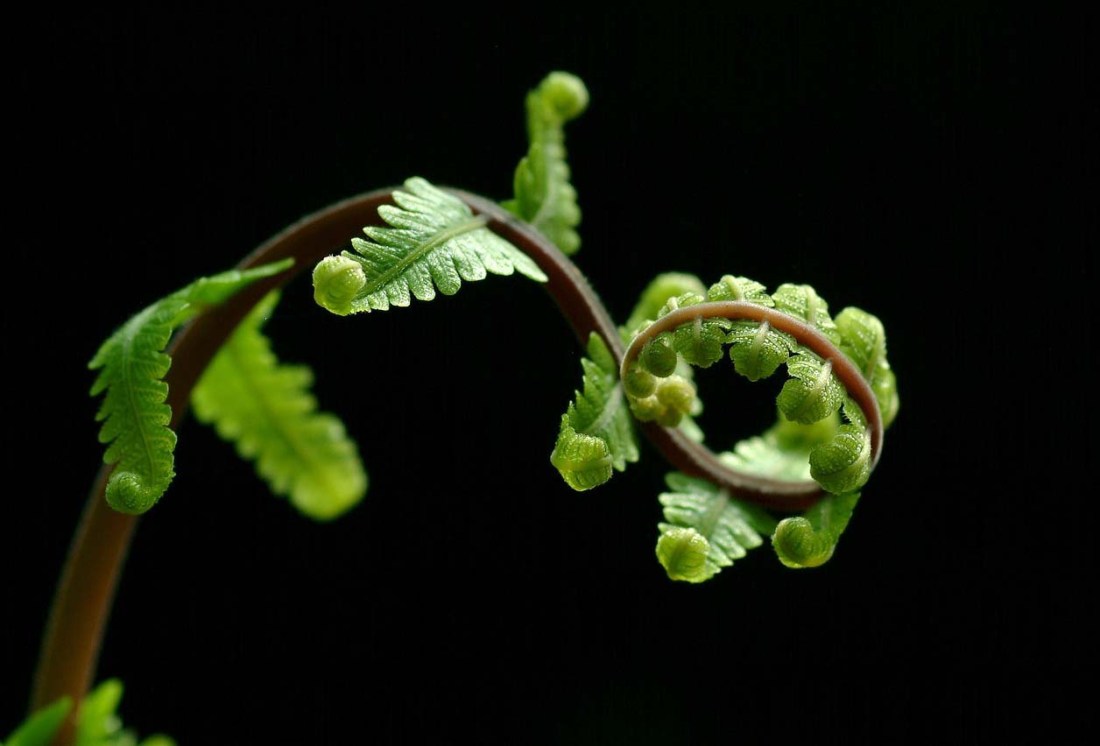
In May it rains and Ferns unfurls in light green color, But when?
五月の雨岩檜葉の緑いつまでぞ satsuki no ame iwahiba no midori itsumade zo
Matsuo Basho, Spring, Summer 1680
The fern becomes a metaphor for Matsuo. In May of 1680, he was not yet “Basho.” Rather, he was, to his friends and students, “Tosei,” the unripe peach. But he was about to change his color, to blossom, to ripen, to become a mature poet. First, to move to Fukagawa, then to travel, and along with the banana plant (basho) beside his simple cottage, become the beloved Basho, by which the world knows him.
But When
“But when?” or “How long?” This question Matsuo asks is personal. How long before Tosei ripens into a mature poet? How long does Matsuo stay in Edo, when other poets have struck out to explore Japan?
Notes on Translation
satsuki (May, or early Summer) no ame iwahiba (moss) nomidori (of green, “midori” is the light green color of early summer, spring) itsumade (until when) zo (emphasis)
Satsuki, fifth month which in the Japanese lunar calendar makes it June or early summer
Iwahiba, a type of fern resembling cypress in appearance that turns brown in winter and with the early rain unfurls into a light green color deepening to dark green as summer comes. It grows in heavily forested mountains and secluded valleys. In drought it closes into a ball.
Itsumade, an interrogative statement meaning “until when.” There is also an old Japanese story of a scavenging bird called “Itsumade” that descends on the dead and cries “itsumade, itsumade” meaning how long until the dead and rotting corpse becomes something else.
Summer, Genroku, 4th year. May 5, 1691, age 47, Maybe, Otsu, Japan
Recalling his mother, on Children’s Day?
Seeing a woman wrap sticky rice dumplings in a bamboo leaf and tie it with a string, tucking her hair behind her ear. Did Basho recall his mother?
Holding a dumpling in one hand, she tucks her hair behind her ear
粽ゆう 片手にはさむ 額髪 Chimaki yuu katate ni hasamu hitaigami
Matsuo Basho, May 5, 1691
[In Japan, Children’s Day is celebrated on May the 5th. That is close to the celebration of Mother’s Day in America on the second Sunday in May. ]
Summer of 1691
By the summer of 1691, Basho had left the Hut of the Phantom Dwelling, on the shores of Lake Biwa, but he was not yet back in Edo. One imagines he was saying farewells to friends in Otsu or nearby Kyoto before going home to Edo. Home, that is what Edo had become. And the little cottage in Fukagawa, a familiar place to return to.
Three years later, Basho would be dead. He chose to be buried at the Buddhist temple of Gichū-ji (義仲寺) in Otsu.
Notes onTranslation
The Japanese traditionally serve and eat Chimaki during the Tango no Sekku (端午の節句, Children’s Day) on the fifth day of May. Another reason to suppose Basho was thinking of his own mother and childhood.
Chimaki (a sticky rice dumpling wrapped in a leaf) yuu (expresses volition, the desire to do something) katate (one hand) ni (particle for indirect objects) hasamu (insert, place) hitaigami (bangs, forehead hair)
A father’s take on making chimaki:
Making Chimaki Drinking sake and beer, But, where are the kids?
I’ve tried, I’ve tried again, I suppose, I’ll try again
Bashō no yōna, New year, 2024
On Sisyphus, the Greek who would roll an immense boulder up a hill only for it to roll back down again; on Albert Einstein, who defined insanity as doing something over and over again expecting a different result; on writing the perfect haiku. Matuso Basho composed tens of thousands of haiku in his lifetime, a thousand or so were recorded.
His most famous haiku, the one that made him famous, is about a frog, a pond, and the sound of water.
古池や蛙飛こむ水のをと
Furuike ya | an old pond kawazu tobikomu | a frog, any frog, big or small mizu no oto | sound of water
Matsuo Basho, 1686
Funny that, it has been translated in so many ways and languages.
une petite grenouille, un vieil étang, qu’est-ce que c’est, que j’entends l’eau parle
ein Frosch, ein alter Teich, das Wasser spricht
una rana un viejo parca et el agua habla
Basho in other voices
“ein Frosch, ein alter Teich, das Wasser spricht,” but not for the snail who has no eyes or ears
It was 106 degrees in the shade yesterday in Kansas.
Hotter than Hades, is Kansas in August, Good grief, no relief?
Bashō no yōna
Summer, the rainy season. The Mogami River, swollen with rain. The end of July, Basho and Sora arrived in Sakata, on Japan’s western coast, after a thrilling ride down the river. Sora wrote, “It is very hot.” Matsuo Basho did not often complain about the heat. Heat was, I suppose, a fact of life. Deal with it.
The best thing to do on a hot day is to jump in the river or the sea, as the case may be.
The hot sun Splashes in the sea — Mogami River (The best thing to do!)
暑き日を 海に入れたり 最上川
Atsuki hi wo Umi ni iretari Mogamigawa
Matsuo Basho, Sakata, late summer, 1689
Atsuki (hot) hi (sun, day) wo (particle relating to cause, ‘hot was the day’) Umi (sea, ocean) ni (at, to, in) iretari (to put in) Mogamigawa (Mogami River). If we dissect ‘Mogamigawa‘ (最上川) to mean ‘best’ or ‘greatest’; (最) plus in (上); ending with gawa (川), we have ‘the best thing is to jump in the river’.
Otsu, Shiga province, Summer 1690. One wonders if death was on his mind:
やがてしぬ けしきはみえず 蝉の声 yagate shinu keshiki mo miezu semi no koe
Before long the sounds of cicadas will cease
Matsuo Basho, Otsu, Summer-Fall, 1690
At the conclusion of his nine month journey into the northern interior (Oku no Hosomichi), Matsuo Basho visited friends around Kyoto. He delayed his return to Edo, in the summer and fall of 1690, staying for almost four months at Otsu on Lake Biwa in a cottage known as Genju-an (the Unreal Cottage).
Yagate (before long) shinu (to die, pass away, cease) keshiki (scene, landscap) mo miezu (not hear or see) semi no koe (the voice of a cicada)
Then, as autumn approached he went to the fish market for dinner.
A fisherman’s shop, hmmm Shrimp is mingled with a camel-cricket, so what
海士の屋は小海老にまじるいとど哉
ama no ya wa koebi ni majiru itodo kana
Matsuo Basho, Sarumino, Otsu, Autumn, 1690
Shrimp is still served at Otsu’s restaurants in Shiga province. The shrimp are river and lake shrimp, so it is easy to see how a cricket can make its way into the fisherman’s catch.
Ama no ya (a fish shop) wa (possibly meaning hmmm or yes) koebi (small river shrimp, but I am not a culinary expert) ni majiru (mixed or mingled) itodo (a camel cricket — it looks like shrimp, picture a hump back cricket hiding in a basket of shrimp) kana (interrogative, well? or, what do you make of that?)
[Note. Matsuo Basho is buried in Otsu, on the ground of a Buddhist temple, Gichū-ji (義仲寺).]




 matsuo-basho-haiku