two lost souls swimming in a fishbowl year after year how I wish you were here
Pink Floyd, Wish You Were Here
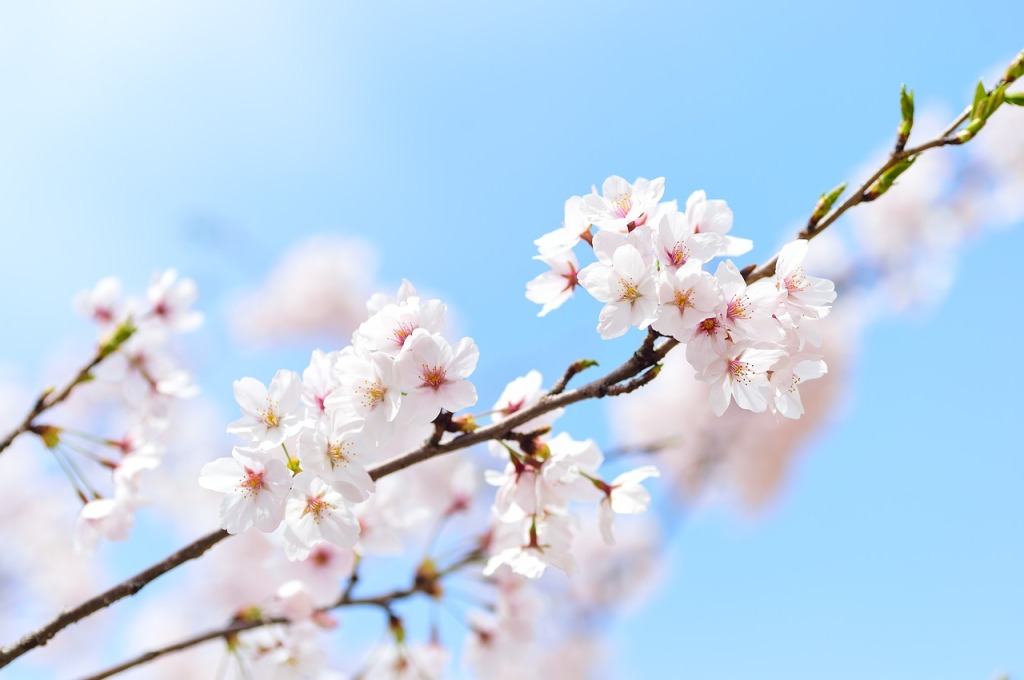
On the occasion of the final illness and imminent death of Toin, Matsuo Basho’s nephew, Basho wrote a letter to his friend and disciple Torin. It was spring, Toin was slowly dying of tuberculosis. But the cherry trees were in full blossom.
Basho took Toin to see cherry blossoms one last time. He was happy at the sight of the fleeting beauty.
Torin came to Basho’s Fukagawa hut and sat up with Toin as he lay dying. After Toin’s death, Basho and Kyosho, another friend, made the trip to Basho’s home to deliver the news. Kyoriku made the journey as far as the Kiso Valley, leaving Basho alone.
Basho wrote two haiku on the occasion of the trip with Kyoriku — two lost souls swimming in a fishbowl.
The hearts of two wayfarers, too soon comes the hour, we are saddened by parting, and death’s flower.
Resembling the heart of a wayfarer, a Chinquapin flower A wayfarer’s heart resembles, a Shinohana 旅人の 心にも似よ 椎の花 Tabibito no Kokoro nimo niyo Shinohana
Note – Shi, 死 the Japanese word for death. Shinohana, a homophone, death’s flower.
A sorrowful person will learn from the trip, taught by the flies of Kiso 憂き人の旅にも習へ木曽の蝿 uki hito no tabi ni mo narae Kiso no hae .
Matsuo Basho, Summer 1693, Kiso Valley
For Matsuo Basho, the end is near. It is the summer of 1693. His nephew Koin, who was staying with him in his Fukagawa hut, had died. Basho is on the Nakasendo Road to his home. Perhaps to deliver the news. Perhaps, Kyoriku, an artist friend accompanied him, part way, or the two met along the way. Then parted, wayfarers on life’s short journey.
Horse Chestnut flowers fallen on the ground
Much like the Horse Chestnut (Ozark chinquapin) that blooms in my backyard, in June, the Castanopsis flowers, or Chinquapin, too, are blooming in Japan’s Kiso mountains. The long cattail-like flowers falling and littering the ground.
The wabi-sabi, 侘び 寂び of the moment moves Matsuo Basho. On the one hand, the flower falling to the ground comforts him with its fleeting beauty.
On the other hand, the flies give him no peace.
Found on the Internet
Letter to Kyoroku, late April, 1693.
For five or six days now, his misery has been intense,
Toin appears close to death. Last evening, Torin came over to nurse him all night long. But this is tuberculosis, there is no quick end. The beauty of cherry blossoms dwell in my heart, and as this was Toin’s last season, I took him to see the blossoms, and he was happy.
Note. Taihakudo Torin (d. 1719), Basho’s friend and disciple, who retraced Basho’s 1689 journey three years after his death, preparing the way for the publication of Oku no Hosomichi.
Zen humor times two — Basho and Buccho. A woodpecker can shake a tree but not Buccho’s hut. Buccho would gladly leave his hut, but it won’t stop raining. Rain or shine, there is always something to write about.
woodpeckers, can’t shake this hut in its summer grove
木啄も庵はやぶらず夏木立 kitsutsuki mo io wa yaburazu natsukodachi
Oku no Hosomichi, Matsuo Basho, June 1689
Note. Kitsutsuki, 木啄も, woodpecker using kanji (Chinese) characters. Yaburazu, やぶらず, can’t shake, disturb, meaning to break Buccho’s meditation.
yaburazu, a woodpecker can’t shake the serenity of this place
June, 1689, Togachi prefecture
Leaving Kurobane, Basho and Sora walked seven miles into the mountains to visit Unganji temple, known for the practice of Zen meditation. The purpose of his visit was not the temple itself, but the abandoned hut of the poet Buccho. He was Basho’s Zen master and teacher from Edo.
With charcoal made from burnt pine, and with a touch of wry humor, Buccho had written about this about the hut:
My Grassy Hut, Hardly more than five feet square, Gladly, I’d quit, If only it didn’t rain.
Basho’s notes:
… The priest Buccho used to live in isolation in the mountains behind the temple. He once told me that he had written the following poem on the rock of his hermitage with the charcoal he had made from pine.
By Matsuo Basho’s reckoning, it was the 9th day of the 4th lunar month (Shigatsu). He and Sora were visiting Joboji, the overseer of the Castle of Kurobane, in Tochigi Prefecture, north of Edo. His younger brother Tosui came over and took them to his home to visit his family.
So the days passed…. One day we went for a walk in the outskirts [of Kurobane] to where the ancient archers practiced the art of Inuoumono (犬追物, mounted archers shooting at dogs), then past a bamboo grove to the tomb of Lady Tamamo (玉藻前, the fox spirit who caused chaos and corrupted emperors); we then paid our respects at the Hachiman Shrine (dedicated to the divinity of archery and war), where Yoichi, the samurai archer, prayed before he was challenged to shoot a flag fluttering over a drifting boat. As darkness fell, we came home.
On the mountain is a temple called Komyo with a hall dedicated to En no Gyoja (the founder of Shugendo, Buddhist/Shinto ascetics who believe in two realms of existence).
夏山に足駄を拝む首途哉 natsuyama ni ashida o ogamau kadode kana
in the summer mountains we worshiped in rain clogs before departing
Matsuo Basho, Oku no Hosomichi, May 1689
ashida, 足駄, Japanese clogs
May 28, 2022
Memorial Day is celebrated in America on the last Monday in May. Ostensibly, it is about those who have given their lives serving in the military, but it has come to mean much more. It is about memories, of loved ones and long ago places, of near ones and dear ones, of happy times and sad times, of the good life we’ve shared.
“What is a witness if not someone who has a tale to tell and lives only with one haunting desire: to tell it. Without memory, … there is no culture, no civilization, no society, no future.”
After dreamy Matsushima, Matsuo Basho and Sora are off to Hiyoriyama, home to the lost glory of the Fujiwara clan.
But before that it is Ishinomaki. By some accounts, station 22 on the Oku no Hosomichi, Matsuo Basho’s best known travelogue, in English, The Narrow Road to the Deep North.
Journalists and historians write what they remember, poets dream.
Basho recalls that he and Sora had taken a path used only by woodcutters and hunters and had gotten lost on their way to Hiraizumi. The path was difficult and somehow they got ost. Then on a hilltop at Hiyoriyama, in the midst of colorfully blooming azaleas, they were able to see a bird’s eye view of the port city of Ishinomaki.
Sora says in his journal that they were never lost.
Basho says it was the 12th day (十二日) of the fifth lunar month, June 29 by today’s reckoning.
From the hilltop at Hiyoriyama, Basho saw “hundreds of ships, large and small, entering the harbor, and the smoke rising from countless homes that thronged the shore.”
Chance brought him to this village. Tired from his arduous trip, longing for a comfortable place to stay, but no one offered him any hospitality. A search produced a miserable house and an uneasy night.
Hoping never to see Ishinomaki again, Basho and Sora set off the next morning on a difficult two day journey to their destination, the small village of Hiraizumi.
Hiraizumi, 平和泉, its very name means the village of Peace and Harmony, a place of gardens and Buddhist temples centered on the idea of Peace in a Perfect World. That it was not easy to find, would call to mind the following story.
Peach Blossom Spring
Peach Blossom Spring, Tao Yuanming (陶淵明), written in 421.
It is the story of a chance discovery of an imaginary place where, for centuries, villagers have live in harmony, unaware of the outside world. In Tao Yuanming’s story, a fisherman sails on a stream in a forest of blossoming peach trees, where even the ground is covered by peach petals. At the source of the stream is a grotto. Though narrow, he can squeeze through and this passage leads to an undiscovered village.
The villagers are surprised to see an outsider, but they are friendly and kind. They set out wine and chicken for a feast and explain that their ancestors came here to escape the war and unrest during the troubles in the age of Ch’in (2nd c. BC), living in peace ever since. The fisherman stays for a week.
Leaving, he marks his route, but can never discover the village again.
The 21st Century Wanderer
Who has not dreamed of a place somewhere over the rainbow where blue birds sing, of a Brigadoon or Shangri-la, a lost Atlantis? Reality, sadly, often shows us life can be, a frightening Brave New World. And if not frightening, then mundane, until we are once again surprised.
Utopias are the dreams of novelists, philosophers and poets. And it is okay to dream.
Prospero:
Our revels now are ended. These our actors, As I foretold you, were all spirits, and Are melted into air, into thin air: And like the baseless fabric of this vision, The cloud-capp’d tow’rs, the gorgeous palaces, The solemn temples, the great globe itself, Yea, all which it inherit, shall dissolve, And, like this insubstantial pageant faded, Leave not a rack behind. We are such stuff As dreams are made on; and our little life Is rounded with a sleep.
William Shakespeare, The Tempest Act 4, scene 1, 148–158
Bashō’s parting haiku is playful in which even the wildlife in the local market is moved by the sadness of separation.
行く春や鳥啼き魚の目は涙 yuku haru ya tori naki uo no me wa namida spring is passing –birds are crying and the eyes of fish are filling with tears
Matsuo Basho, May 1689
Spring is Passing
Yaku Haru, 行く春, spring is passing, や, ya is added for emphasis to express sorrow.
Bashō started walking 333 years ago today (May 16), leaving from Senju (now Kita-Senju) on a journey that would become the basis of his famous travelogue, Oku no hosomichi, Travel to the Northern Interior. After leaving his home and traveling with friends by boat up the Sumida River, it was time to say farewell to friends.
Note. Oku no Hosomichi (奥の細道), translated as The Narrow Road to the Deep North or the Northern Interior. Hosomichi is literally narrow path, what we might call the back roads in America. Oku is literally the interior, although Basho spent much of his route on both the eastern and western shores of Japan. The book was published in 1702 after Basho’s death.
It is everyone’s favorite season. The willow trees are turning green, the cherry trees blossom, and the birds sing their joyful songs. Let us compare several Spring haiku written decades apart.
Spring budding, 春のつぼみ, harunotsubomi
Haru kaze, 春風
First, 1668, the poet, simply known as Matsuo Munefusa, age 24.
春風に吹き出し笑ふ花もがな haru kaze ni / fukidashi warau / hana mogana A Spring breeze is blowing I’m bursting with laughter — wishing for flowers
Matsuo Basho, Spring, 1668
Next, Matsuo Basho, now three decades old, has changed from a joyous expectation to a mournful recognition of the passing seasons. Names must have been on his mind. In 1680, he was known as Tosei, the unripe peach. By now, 1684, he had gained a following in Edo. He had moved from the city-center to the more rural Fukagawa District, taken up residence in a simple cottage. A banana plant (Basho) was given to him as a housewarming gift, and this was the inspiration for his new name Matsuo Basho.
春なれや名もなき山の薄霞 haru nare ya / na mo naki yama no / usugasumi Is it already Spring? In these nameless mountains And misty haze
Matsuo Basho, Nozarashi kikō, Spring, 1685
I have included the following (undated) haiku because it speaks of sakura, cherry blossoms, the one true sign of Spring. In Edo (Tokyo), Basho often went to the temple grounds of both Ueno and Asakusa to enjoy the cherry blossoms. Likewise, around Japan and on Lake Biwa there are spectacular displays of the popular spring blossom.
春の夜は桜に明けてしまひけり haru no yo wa / sakura ni akete / shimai keri This Spring Night Ending with dawn And cherry blossoms
Matsuo Basho, Spring, date unknown
Harusame, 春雨
The following haiku reminds one of Henry Wordsworth Longfellow’s “Into each life some rain must fall.”
Spring 1694, Matsuo Basho, now 51 years old, has returned to his cottage in the Fukagawa District in Edo. Basho wonders what he has to look forward to. Little does he know, it is his last spring. Matsuo Basho will die in November of 1694.
春雨や蜂の巣つたふ屋根の漏り harusame ya / hachi no su tsutau / yane no mori Spring rain Dripping from a wasp nest And a leaky roof
Matsuo Basho, Spring, 1694
Ukuraina ni heiwa o
The world over one experiences Spring with reverence, with hope for new beginnings, for peace the world over.
the summer grass is all that remains of a soldiers’s dream
the summer grass the splendid dreams of Samurai warriors
夏草や 兵どもが 夢の跡
Natsukusa ya/ Tsuwamono domo ga/ Yume no ato
Matsuo Basho, Oku no Hosomichi, 1689
Note. Basho uses Tsuwamono (兵), an old term for a soldier and not Bushi, 武士, samurai warrior.
Ukraine, February 2022
As I write this, Russian military forces are invading the Ukraine. Vladimir Putin who ordered the invasion has bemoaned the collapse of the Soviet Union as the demise of “historical” Russia and dreams of returning the Ukraine to Russian rule.
Kobayashi Issa, 小林一茶, (1763 -1828) followed in the footsteps of Matsuo Basho.
雀の子 そこのけそこのけ お馬が通る Suzume noko/ Sokonoke sokonoke/ Ouma ga tooru
Baby sparrow, Step aside, My horse is passing by
The Spring of My Life, Kobayashi Issa, 1819
Version two
Sparrow’s child Retreat, retreat Here comes a horse
The Spring of My Life, Kobayashi Issa, 1819
Issa’s Meaning
Step aside.
The internal rhyme alliteration and repetition, Suzume noko, Sokonoke sokonoke, “child, retreat, retreat,” appeal to child and adult alike. That retreat sounds like “tweet” is a bonus for English readers. Issa’s tender haiku advises one to care for the very, very weak.
But, it also serves as a warning — when the big one speaks, little ones should scatter and not be seen. A horse, of course, the all-powerful Shogun.
It snowed last night, several inches, which is unusual in southern Kansas. Snow, snow, snow, let it snow, we used to say as kids, hoping that school would be cancelled, which is what happened today, February, o2, 2022.
Or 2/2/22, a palindrome date.
Looky, looky, looky Yuki, yuki, yuki We’re playing hooky
Bashō no yōna, February 2, 2022
Note. Hooky, skipping school without permission. Tom Sawyer and Huck Finn often played hooky.
yuki, snow
Basho on Snow and Winter
From the book Oi no kobumi, Winter 1687-8:
いざ行かむ 雪見にころぶ 所まで Iza yukan / yukimi ni korobu / tokoro made
Let’s go out And see the snow Until we slip and fall.
Matsuo Basho, Oi no kobumi, Winter 1687-8
A child grow up and the snow is not his friend. Still, snow on Mt. Fuji is a thing of beauty.
冬の日や馬上に氷る影法師 fuyu no hi ya / bashō ni kōru / kagebōshi
A winter’s day me and my shadow frozen on horseback
一尾根はしぐるる雲か 富士の雪 hito one wa / shigururu kumo ka / Fuji no yuki
over the ridge Winter showers is there’s snow on Mount Fuji?
Matsuo Basho, Oi no kobumi, early Winter 1687-8
Oi no kobumi
In English, Notes from my Knapsack, or BackpackNotes, 笈の小文, October 25, 1687 to June 1688. Matsuo Basho was 44 when he began this round-Robin trip, reciting verse, from Edo to Iga, then Nagoya, to the grand Ise shrine, and from Nara to Otsu, and home again. Like a child going to school he carried a knapsack, oi 笈, usually made of bamboo.
Snow on Mt. Fuji
There are many translations of Matsuo Basho’s haiku. Not surprisingly they do not all agree. Many a slip twixt the cup and the lip, said Robert Burns. In our case, between pen, the word, and the ear.
In the last haiku, being away form Edo, I suspect Matsuo was wondering if the snow had yet appeared at Mt. Fuji. In late fall, snow flurries make their first appearance at Mount Fuji. And, typically, Fuji is snow-capped five months out of the year. Traveling by horse over the hills in a winter storm, wondering is there snow on Mt. Fuji. This question arises because the character か, ka appears prior to snow on Mt. Fuji (shigururu kumo ka / Fuji no yuki).




 matsuo-basho-haiku