The wintry wind, Swelling cheeks and throbbing pain on Peoples’ faces
Kogarashi ya/ Hoobare itamu/ Hito no kao
こがらしや 頬腫痛む 人の顔
Though we don’t know, let us imagine that the year is 1672, Basho at age 28, has moved to Edo (now Tokyo), the seat of the newly established Tokugawa shoguns. He is there to make his career as a professional haiku poet. Picture a street in Edo, it is winter, the trees have been striped of their leaves by a strong wind blowing out of the North. Men and women, old and young, pull up their collars and tighten their scarves and scurry down the street trying to avoid the bitter wind that bites their cheeks.
In the words of Lao Tzu, “Those who know do not speak. Those who speak do not know.” And those who feel know how truly cold it is. Normally, a face reveals nothing, but a bitterly cold wind reveals the pain one feels on a winter’s day.
Kogarashi is a marker for the start of the winter season. According to the Japan Meteorological Agency, the wind must blow from the north at a speed of 28.8 kph (18 mph) and be capable of stripping leaves from the tree.
withered and bowed
a world upside down,
as bamboo to snow
shiore fusu ya yo wa sakasama no yuki no take
萎れ伏 すや世はさかさまの 雪の竹
Bashō’s Early Haiku
In 1666, after the death of his samurai master, Matsuo Bashō, age 24, moved to Kyoto to study haiku. That winter Bashō visited the home of a young couple whose child had died. Bowing in respect, he entered, and saw the parents’ tear-streaked faces.
The scene reminded Basho of a Nōh play by Zeami Motokiyo (c. 1363 – c. 1443), Take no Yuki, Snow on Bamboo. In the play, a father rids himself of his wife for a “trifling” reason. He sends his daughter to live with he mother and keeps his son to be the heir to his fortune, and takes a new wife. When the father goes on a pilgrimage, the step-mother sends her step-son into a bamboo grove and the freezing snow. He dies, but the gods, moved by the grief of his father and real mother, bring him back to life.
In the play, Tsukiwaka, the young boy, is given these lines just before he dies:
The wind stabbed him, and the night wore on, The snow grew hard with ice, he could not brush away. “I will go back,” he thought, and pushed at the barred gate. “Open!” he cried, and pounded with his frozen hands. No one heard him, his blows made no sound. “Oh the cold, the cold! I cannot bear. Help, help Tsukiwaka!” Never did the wind blow more wildly!
Notes on Translation
Shiore fusu, 萎れ伏 , withered and bent down. 伏, fusu, bowing down, a mark of respect Bashō gave the grieving couple on entering their home.
Sakasama, 逆さま, literally upside down, inverted; yo wa, 世は, the world, but a word play on being unsteady or tipsy.
Normally, A black crow is detestable – But on a snowy morning?
higoro nikuki karasu mo yuki no ashita kana
ひごろ にくき烏も 雪の朝哉
Koishikawa yuki no ashita, Snowy morning at Koishikawa
A haiku about nothing
Before there was Jerry Seinfeld, there was Matsuo Basho. Jerry Seinfeld was an American comedian who made observational humor. He had a long-running television show, whose moniker was, ” a show about nothing”, where the nothings consisted of the daily doings of Jerry and his friends. These events somehow became funny.
Like Seinfeld, Basho’s haiku often concerned everyday events that in one way or another took on meaning.
This poem was written in 1691, at Gichu-ji, a Tendai temple in Otsu on Lake Biwa, where Basho often stayed in a cottage called Mumyo-an, “Nameless Hut”. Basho was there with Mizuta Masahide, and with little to do replied to a friend who had written him a letter.
“Yesterday, it snowed and was terribly cold. I was in my hut and so, did not go anywhere. Then I had this thought. ‘Normally, a black crow is a detestable thing, but what about on a snowy morning?'”
Translating the Haiku
Higoro,ひごろ, normally, daily.
Karusu, 烏, crow or raven. These big black hungry birds in flocks of hundreds often make an early morning noisy nuisance.
Yuki no ashita, 雪の朝, a snowy morning.
About the Image
“Snowy Morning from Koishikawa” (Koishikawa yuki no ashita), circa 1830, by Katsushika Hokusai, 葛飾 北斎, from the series “Thirty-six Views of Mount Fuji (Fugaku sanjurokkei)”. This image may be found at the Art Institute of Chicago and elsewhere.
in the eye of a white chrysanthemum there is not a speck of dust
gazing intently at a white chrysanthemum — and not a speck of dust
Matsuo Basho’s homage to the female poet, Shiba Sonome (斯波 園女).
November 1694
In 1694, Bashō left Edo (Tokyo) for one last trip south to his place of birth and to the Ise Shrine. Arriving in Osaka, where he had studied as a youth, he visited the poetess, Shiba Sonome, who was born in Ise, the daughter of a priest from the Ise Shrine, and later the wife of a doctor. Both Sonome and her husband had been students of Bashō. Later, after the death of her husband, she became well known for her poetry, her care for others, and her beauty.
Dust on Chrysanthemums, Kiku no Chiri, 菊の塵 was one of her published works.
Bashō did not live to make it to the Ise Shrine. Within a month, as the chrysanthemum flower began to fade, he died. The date, November 28, 1694.
Notes on translation
This haiku is often translated from the point of view of the poet gazing at the chrysanthemum. I prefer a more objective view. The eye of the white chrysanthemum exists without dust.
白菊, shiragiku, the first two characters of the haiku, translate as white chrysanthemum. 立, literally, to live, to exist, suggests, at least to me, the Zen idea that no dust exists in the eye of the chrysanthemum.
Has Spring come, Is the Old Year gone, This New Year’s Eve?
Iga region, 1663
New Year’s Eve, 1662
In the second year of Kanbun, the Shogun is Tokugawa Ietsuna. Matsuo Kinsaku is a servant to the samurai Tōdō Yoshitada (藤堂 良忠). He is not yet 20, and not yet the accomplished poet the world knows as Matsuo Basho.
Looking Back, Looking Forward
New Year’s Eve is a good time to look both ways.
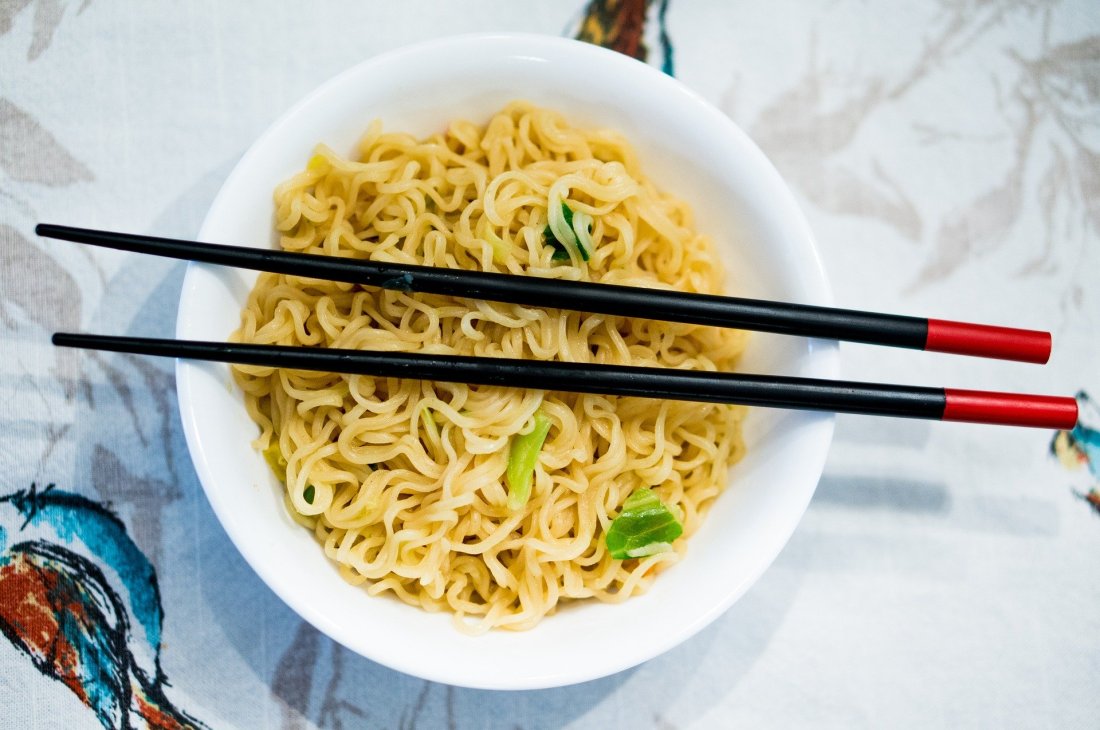
Perhaps, young Matsuo and a few friends are having a traditional fare, eating a steaming hot bowl of noodles called Toshi koshi soba (年越し蕎麦), literally, the New Year’s Eve noodle. A traditional fare usually accompanied by generous helpings of Saki.
Because Spring in 1663 started on the 29th of the new year, and not the 30th or the 1st day, Basho wrote this amusing conundrum. Amusing to the diners. For buried within the haiku are the rhyming words “koshi toshi,” a play on the name of the dish, Toshi koshi soba.
Noodles — because last year’s hardships are easily broken up, and worries are swallowed and washed away with Saki.
Matsuo Kinsaku inspired
All poets copy, the great ones are inspired.
This is thought to be Matsuo Basho’s earliest dated haiku, referring to 1662-1663, the 29th day of the lunar month before the Lunar New Year.
The inspiration and wording is based on an earlier poem by Ariwara Motokawa (888–953).
if during the old year spring has come and one day is left; should we call it last year or this year?
年のうちに 春は来にけり 一年を 去年とやいはむ 今年とやいはむ
toshi no uchi ni haru wa ki ni keri hitotose o kozo to ya iwan kotoshi to ya iwan
冬枯れ や 世は一色に 風の音 Fuyugare ya / yo wa isshoku ni / kaze no oto
Winter’s withered plants A World of One Color The Sound of Wind
Bleak is the Winter White is the Color And the Sound of Wind
Winter’s Solitude A World of one color — The Sound of Wind
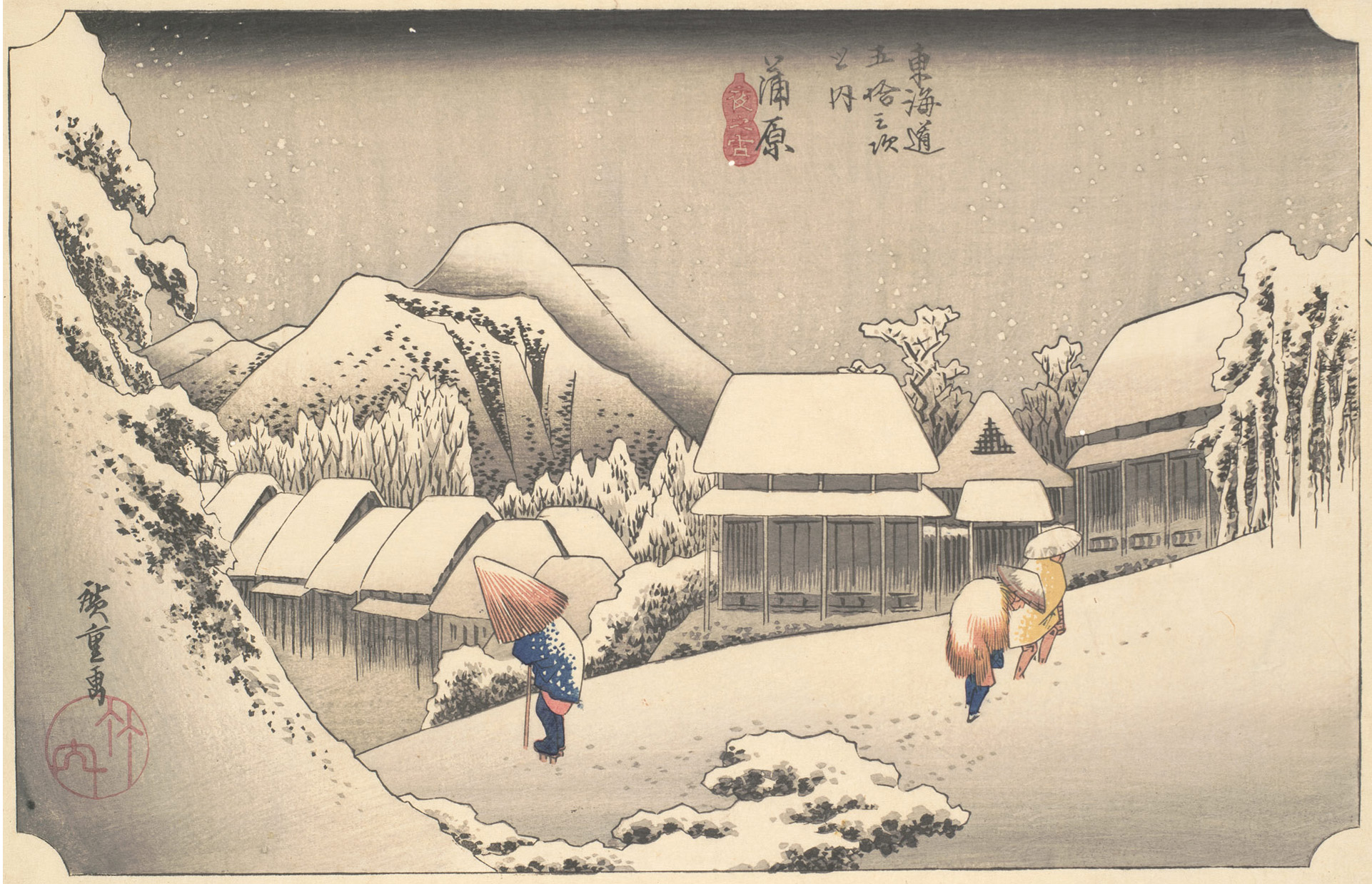
Night Snow, Utagawa Hiroshige, circa 1833, The Met
World of One Color
It is bitter cold, one can see nothing but white, and hear nothing but the sound of wind.
One could imagine Antarctica in the winter, or a Siberian scene in Dr. Zhivago. For me it was a “white-out” in eastern Colorado, early January of 2020.
I was driving my son’s ancient Camry from Ft. Collins, Colorado to Wichita. Being an intrepid soul, I avoided the quicker Interstate 25, and instead headed east early in the morning, driving through Windsor, Colorado, on to Highway 34, then picking up Interstate 76 to Fort Morgan, before switching back to US Highway 34, then south on lonely Colorado Highway 59, and finally, at Seibert, on to Interstate 70 for the majority of the trip.
Interstate 76 and 70 in the winter are both windy, but one has the company of other trucks and cars being buffeted about. If the snow and wind are too great, then the interstate is shut down and one stays in a hotel room if one can be found.
Out on the two lane Highway 34 and the side roads like Colorado 59, the experience is quite different. There are few trees, few towns, and few houses. In places where the land has been plowed for hay, or corn, or wheat, the winter brings on vast fields of snow that when the wind blows, makes the world one solid color of white. It is frightening to drive in such conditions.
Slowing down or stopping, one hears the sound of wind, a high pitched whistle, that along with the bitter cold cuts to the bone.
Notes on translation
fuyugare,冬枯れ, is literally the withering winter. One can infer from this that Bashō was referring to the bleakness of winter or winter’s desolation or isolation. One could also use the cliche “dead of winter,” but cliches should be avoided. Some translators speak of winter’s solitude, and that works too. Solitude, however, may suggest serenity, and that is not what I choose to take away from my experience in eastern Colorado.
Ah, is not the beauty of poetry that it expresses something unique to each of us? Or does it depend on the moment? Dr. Zhivago is shivering away trudging through the snow, but quite happy in his frozen palace.
ya, や, is similar to “and” in English
wa isshoku ni, 世は一色に, is literally a world of one color, which, in this case, is white.
kaze no oto, 風の音, the sound of wind, or the voice of wind, if one wishes to hear the wind speak.
The banked fire The guest’s shadow on the wall – A silhouette.
Uzumi-bi ya/ Kabe niha kyaku no/ Kageboushi
埋火や 壁には客の 影法師
Meaning of Matuso Basho’s haiku
A banked fire is like the guest’s shadow, is like a silhouette. A silhouette, the essence of a human being reduced to its most basic form. A shadow without substance.
A banked fire, 埋火, literally, a buried ember. The banked fire is built around rocks or stones and protected from the wind. Thus, we find Matsuo Basho and his disciples on a cold winter’s night sitting around a fire with their backs facing the wall of the inn or the home, their face and hands warmed by the fire’s heat, until the flames die down and it is time to go to bed.
If the coals from the fire are protected, there will usually be enough heat in the embers to start a fresh fire the next day. The first character 埋 also implies the quality of being buried or hidden, a fire that lies within the embers.
Kageboushi, 影法師, literally “shadowman,” refers to a silhouette, and to Shadow Theater, and indirectly to Puppet theater which became popular during the Edo Period.
On everyone
It sleets, you know, even the inn
Becomes cold
On everyone
It sleets, you know, even the inn
Is freezing
Hitobito wo Shigureyo yado wa Samuku tomo
人々を しぐれよ宿は 寒くとも
Hiroshige (1797–1858), Meguro Drum Bridge, 1857
Winter of 1689
If this was (as I suppose it was) written in the winter of 1689 at a poetry gathering with Bashō’s disciples and friends in Ueno, Bashō’s hometown, then I suppose the general feeling was both warm and chilly as the winter sleet made even the inn where they had gathered cold. The timing of the gathering was the culmination of Basho’s celebrated Journey to the North. It was not a journey that Matsuo Bashō believed that he would survive, and no doubt the friends at the gathering were eager to hear the details.
So much so that the sleet and the cold sharpened the tales that Bashō told.
Thoughts on English translation
Shigure 時雨 (しぐれ) may mean a driving rain, sleet. There is a thorough discussion on the World Kigo Database. The addition of the suffix yoよ is a nuanced “I say” or “you know”. The sleet, as you know, is so cold even the inns and houses feel it too.
Samuku tomo 寒くとも becomes cold, is freezing.
One is tempted to interpolate at this point. Shigure might also mean to figuratively shed tears at the coming together of the friends at the inn after Basho’s long journey to the north. One is also tempted to think of the symbolism of the quick winter rains as a metaphor for Thomas Hobbes’ (1588 – 1679) expression that life is “nasty, brutish, and short”.
Snow and more snow, On this December night Is there somewhere a bright moon?
Snowing This winter’s night So much for the full moon
Yuki to yuki/ Koyoi shiwasu no/ Meigetsu ya
Matsuo Basho, Wandering south towards Kyoto, Winter 1684
Hiroshige (1797–1858), Meguro Drum Bridge
Winter’s Night, 1684
In the Japanese calendar, the Japanese refer to the 12th lunar month as shiwasu. At a renga party where poets compete to form haiku with complementing verses, not everyone has arrived. Meanwhile, the conversation centers on the snowy weather and who is late.
Should they start reciting haiku? After all, there is a lot to do before the Lunar New Year arrives.
Matsuo Bashō begins:
I run, you run, the days are brief, so we all run, shiwasu, even the priests run to complete their tasks.
Snow and more snow, On this December night Is there a beautiful bright moon?
Notes on English translation
Yuki to yuki (雪と雪) snow and more snow, snow upon snow, something approaching a blizzard.
Koyoi (今宵) tonight, this evening
Shiwasu (師走の), the 12th lunar month, December. Literally, it means “priests run”, implying that even Buddhist monks and Shinto priests also have to run around, as they are very busy for the yearend. Shiwa (師走) may also refer to a teacher or master, meaning that Bashō is also running at this time of year.
Meigetsu (名月) often refers here to a bright moon or to a full moon, which according to the old Japanese lunar calendar, appeared on the fifteenth night of each month. This is similar to the Roman “ides”, marking the first appearance of the full moon.
Most translators add the following information to this haiku, that it was written in Edo in honor of the Buddhist priest Genki (元起) on the occasion of his presenting Basho with a bottle of Saki, no doubt to help get through a long winter’s night.
Perhaps the two of them had been to see a Noh play in the theater district. Perhaps they were walking back to Bashō ‘s hut across the Sumida River. Perhaps they were discussing the similarity of the art of Zen and haiku, delving into the subtle difference of meditation and sleep when Genki stopped to buy a bottle of saki from a street vendor. Perhaps Basho caught the sight if a seagull in the near frozen river water and wondered how it would sleep through the night.
Kana! I wonder!
Notes on translation
Misu samuku水寒く, cold water
Neiri kane taru寝入りかねたる, can’t sleep
Kamome kana 鴎かな, kamome seagull (鴎) plus kana (かな), I wonder






 matsuo-basho-haiku