Ask Matsuo Basho how a pond becomes a poem, he’ll respond:
How can a pond become a poem, because it’s muddy because it’s clear because it’s cold because it’s there because a frog decides to jump and make a splash.
Maybe, you had to be there. I acknowledge, it’s not much, — but still, that’s how a pond becomes a poem.
I’ll close with this, it’s February. There are no frogs.
In summer, Matsuo Basho’s frog is plopping in a pond, making all sorts of noise. Does the water speak? Let’s imagine Matsuo Basho’s frog in November when the pond is quiet.
Falling leaves drift down— the old pond’s quiet and calm the frog is sleeping — Bashō no yōna, November 2025
Frogs overwinter underwater, buried in mud or resting on the pond bottom, if needed freezing their bodies solid.
An old pond A frog jumps in The sound of water 古池や 蛙飛び込む 水の音 Furu ike ya, kawazu tobikomu, mizu no oto
Let us speak of forms and shapes, of the fluidity of life, of being and being gone. Of warm summer days, of turtles and frogs, of walks with the dogs down by the creek…
Matsuo Basho’s famous frog haiku has been translated ten thousand times (万 wàn, also meaning “many” or, so many, one looses count). The words have been parsed, the meaning interpreted a thousand ways (千 sen, also meaning many in countless ways). Its parts dissected like that poor old frog in a high school biology class.
I like to go for walks with my two small dogs to Pawnee Prairie Park in Wichita, Kansas. There is a spot where we round the corner and approach the creek high up on the bank. Most days, I hear the plop of the turtle as it slips off a log into the water. I try to be silent, but somehow the turtle knows I am coming.
Am I hearing the sound of the creek or the turtle? Am I witnessing a magical change of form, the fluidity of turtle and the water?
In one sense Basho gives voice to the old pond that is otherwise silent. Is the pond offended by the interfering frog? Or does it welcome the abrupt change to an otherwise dull existence? One wonders.
Other philosophical questions to ponder:
One wonders, if a banana, is still a banana, when it is eaten?
If not, when does it cease to be a banana and become me? — Bashō no yōna
Along the same lines:
Are the bricks in a building One and the same If the building falls down? — Bashō no yōna
These amusing musings all deal with Plato’s Theory of Forms. The physical world we soon learn is not the ultimate reality, as Basho discovered at the Old Pond.
There are endless variations on Matsuo Basho’s frog/pond/sound of water haiku. Here is one more.
古池や蛙飛こむ水のをと
Furu ike ya | In an old pond kawazu tobikomu | a frog leaps, mizu no oto | — “Plop!” the sound of water
Matsuo Basho,
Scholars Say
Scholars say this haiku marked Basho’s coming of age. Written in 1686, Basho was now 46 years old, a mature poet, comfortable in his name, Basho, chosen because of the weather beaten banana tree that stood outside his cottage in the Fukagawa District, outside Edo.
Why We Love It
Maybe, the love of the puzzle lies in the fact the frog lets the water talk.
The fascination with Basho’s frog/pond haiku is never ending. A child is delighted with the surprise of walking along a pond and hearing the splash of water. A linguist considers the transformation of action into language, the water speaks. A physicist sees the transformation of matter into energy. A poet finds sonorous, the repetition of sound combined with the clear visual image. The spiritually inclined (both the Buddhist and the Christian, indeed all religion) finds something meaningful in the idea that life is ephemeral like a frog jumping into a pond, making a small splash, and disappearing. Basho could not know, but he had four more short years to live.
The Vocabulary of Water
Onomatopoeia — a word that sounds just like the thing it is describing. From the Greek, literally, ‘name’ plus ‘making’.
One listens to water coming out of the sink or shower; water boiling; water in a gentle creek, or roaring river; the sound of rain on the roof of a car as you drive; water in a puddle as you try to muddle along.
I’ve tried, I’ve tried again, I suppose, I’ll try again
Bashō no yōna, New year, 2024
On Sisyphus, the Greek who would roll an immense boulder up a hill only for it to roll back down again; on Albert Einstein, who defined insanity as doing something over and over again expecting a different result; on writing the perfect haiku. Matuso Basho composed tens of thousands of haiku in his lifetime, a thousand or so were recorded.
His most famous haiku, the one that made him famous, is about a frog, a pond, and the sound of water.
古池や蛙飛こむ水のをと
Furuike ya | an old pond kawazu tobikomu | a frog, any frog, big or small mizu no oto | sound of water
Matsuo Basho, 1686
Funny that, it has been translated in so many ways and languages.
une petite grenouille, un vieil étang, qu’est-ce que c’est, que j’entends l’eau parle
ein Frosch, ein alter Teich, das Wasser spricht
una rana un viejo parca et el agua habla
Basho in other voices
“ein Frosch, ein alter Teich, das Wasser spricht,” but not for the snail who has no eyes or ears
Reflecting, Being and becoming Matsuo Basho, Haiku
Bashō no yōna, November, 2023
Reflections on Matsuo Basho
Bashō no yōna, the author of this blog on the life and haiku of Matsuo Basho, finds himself reflecting. Reflecting on how a young Japanese boy, the son of a samurai, turned farmer, then became servant to his samurai lord, then student of poetry, disciple, then teacher, and finally master. It is, indeed, a process, becoming Matsuo Basho.
Haiku is a peculiarly Japanese art form that consists of three lines, with five syllables in the first line, seven in the second, and five in the third. Seventeen syllables in all, usually containing a seasonal word (kigo) that serve as a memory allusion. Similar and different from Proust’s Madeline and tea. The seasonal idea is both physical and temporal. We are in the spring, summer, fall or winter of our lives. We are also cold or warm. It may be a bright summer day, or a cold windy day in November, like it is here.
Most importantly, in a well formed haiku, one finds a cutting word, kiru, the juxtaposition of two ideas, that when combined, create a unique sensory experience.
This is demonstrated in Basho’s best known haiku, which combines a leaping frog and and old pond, creating the sound of water.
古池や 蛙飛び込む 水の音
Furu ike ya kawazu tobikomu mizu no oto
A leaping frog, In an old pond, Says, Kerplunk!
Bashō no yōna
[Note. Here, Basho follows the rules of haiku with the five, seven, five pattern. The seasonal word is the summer frog, and the cutting word ‘ya’ gives us an exclamation which I, in my translation, moved to the end. There is also an anthropomorphic process at work, an act of creation, in that Basho makes the water speak, mizu no oto, the sound of water.]
Why Haiku?
Mostly because it is fun. A child can enjoy it, and an adult can once again become a child.
The fun in reading Basho’s haiku is that it causes us to look at our surroundings in a different way. The fun in translating his haiku is that one observes that no two translators look at Basho’s creations in the same exact manner. This shouldn’t surprise us. Basho’s haiku is undoubtedly his work, but it is our unique experience.
Reading and writing, Transforming, creating, ah! — the fun of haiku
Bashō no yōna, on the Great Plains of America, Fall, 2023
It is September. Children all over the world are amazed at the big orange harvest moon that rises over the horizon.
Megitsu and Shangye
Before Netflix and HBO, there was Moon Viewing. Shangyue in Chinese and Meigitsu in Japanese. Moon Viewing typically took place once a month when the moon was full. In China, a full moon took place on the first day of the month. In Japan full moons occurred on the 13th of the lunar month, until, in 1684, this was changed to the 15th. This is perhaps what made the Ides of March so ominous for Julius Caesar.
A Harvest Moon in Japan took place during the eighth lunar month, the ninth month, or September, by modern reckoning. Spectacular, since the harvest was in, or coming in, and people flocked to the fields to enjoy their favorite beverage while watching the greatest show in heaven. The Milky Way taking a back seat at this time.
Matsuo Basho began at least ten haiku with Meigitsu, often adding a ni, no, wa, or ya for emphasis. To me, a full moon is indescribable. It is a moment, a feeling. And you have got to be there to be in the moment.
Maybe that is the point of the following haiku:
Harvest Moon All through the night Round and round the pond.
名月や池をめぐりて夜もすがら meigetsu ya ike o megurite yomosugara
Matsuo Basho, Autumn 1686
[meigetsu (full moon, harvest moon) ya (expressing awe) ike (pond) o (particle that may indicate down by, or around) megurite (around) yomosugara (all night long, all through the night)]
In 1685, Basho began his wandering years, but he was back in Edo, in Fukagawa, in his cottage, near a pond, for the fall of 1686. That fall Basho wrote the above haiku, as well as his famous frog-pond-splash haiku.
Maybe, just maybe, a frog was croaking and keeping Basho awake all night long.
It is June 21. Summer has arrived and everything has changed, or has it? Matsuo Basho is out for a walk, alone, with paper and pen, composing, on a warm day, when suddenly he is startled by a frog jumping into an old familiar pond.
“Poems are never completed — they are abandoned.”
Paul Valery, La Nouvelle Revue Française, 1933
That is close to the truth of what Valery said, but not exactly. Exactly said, it is this: “Aux yeux de ces amateurs d’inquiétude et de perfection, un ouvrage n’est jamais achevé, – mot qui pour eux n’a aucun sens, – mais abandonné.”
In English, it becomes: “In the eyes of these lovers of restlessness and perfection, a work is never finished – a word which for them has no meaning – but abandoned.” As Valery was discussing his poem The Cemetery by the Sea, work becomes “poems”.
Even that, dear friends, is not exact, for Valery goes on to add other words by way of explanation. That is, he adds context. Context is the setting, time, mood, age, feeling, something that clarifies its meaning.
Let us take Matsuo Basho’s well known frog haiku:
Furu ike ya kawazu tobikomu mizu no oto
古池や蛙飛こむ水のおと
Old pond — frogs jumps in — sound of water
Matsuo Basho, Jōkyō 3, 1687, age 43
Does it matter if the pond is large or small, covered in lily pads or algae, the frog is startled, that the frog was croaking, that Basho is startled, that he was walking or sitting, thinking, talking, the sound is splash or kerplunk?
The frog disappears. Is this a spiritual transformation? kawasu — 換える, 替える, 代える, are verbs meaning “exchange” or “substitute”. Suddenly, we are on a metaphysical plain.
What if we think or the haiku as a question: What is the sound of water? Of course, it is many things, the sound of waves on the shore, or a mountain stream that flows upon the rocks. What if we ask a small child?
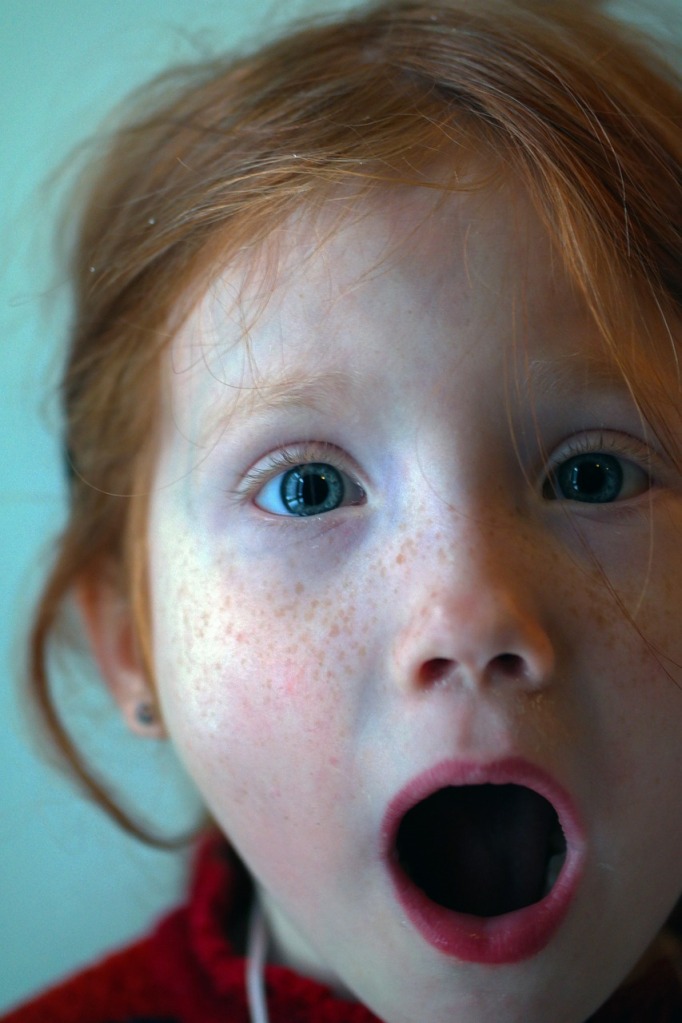
To a frog, she thunk — “kerplunk.”
Thus, to the enlightend Buddhist monk and the delighted little girl, Basho’s haiku is this:
An old pond, the frog that jumps becomes, the sound of water.
Matsuo Basho, revised haiku
Let us write with wild abandon, get lost in thought, never done.
Basho no yona, Summer 2023
An old pond, a frog jumps, the sound of water. To a little girl, she thunk — kerplunk.
An old pond, A frog jumps Makes the sound of the water
An old pond, A frog jumps Water speaks!
Furu ike ya kawazu tobikomu mizu no oto
古池 蛙飛び込む 水の音
Must I explain?
A message so simple, even a child can understand. The frog jumps, the water speaks. Be the frog, be the water, one acts, the other reacts. It is a Zen thing, if you have to explain, you don’t get it. Like a solitary cloud on a summer’s day. Like a blade of grass waving in the wind. Like a buttercup in a sea of green. It is something special that a child understands and an adult forgets.
Matsuo Basho (松尾 芭蕉) lived in the later half of the 17th century when Japan was isolated from Western culture and there was, of course, no Halloween, no Trick or Treat, no masked children laughing and singing, “Smell my feet, Give me something good to eat.” Masks were however used in the ceremonies of Shinto religion (Tengu, 天狗), the plays of Noh theater, and as part of the Samurai military costume.
Noh mask, 3 faces, Wikipedia
Basho’s Halloween Costume
Had he worn one, surely a banana , his self-given moniker, the very meaning of Basho (芭 蕉) and the plant which grew over his hut on the outskirts of Edo. Otherwise, a Noh mask, for Basho loved to attend the plays Lastly as an old and aged frog about to make a splash, for that was the poem that made him famous.
Old pond, frog jumping into water, sound
Furuike ya kawazu tobikomu mizu no oto
ふるいけやかわずとびこむみずのおと
Why is Basho’s frog haiku famous
Water makes many sounds, it ripples on the rocks, splatters as rain falling upon the roof, as the roar of the ocean waves, even the gurgle of water in a drain. But the very best has to be surprise when a frog disturbs the stillness of a pond and we hear kerplop!
Shoda Koho, Frog on Lotus Leaf, detail stylized, source ukiyo-e.org




 matsuo-basho-haiku