October

October 2023, Year 5 Reiwa

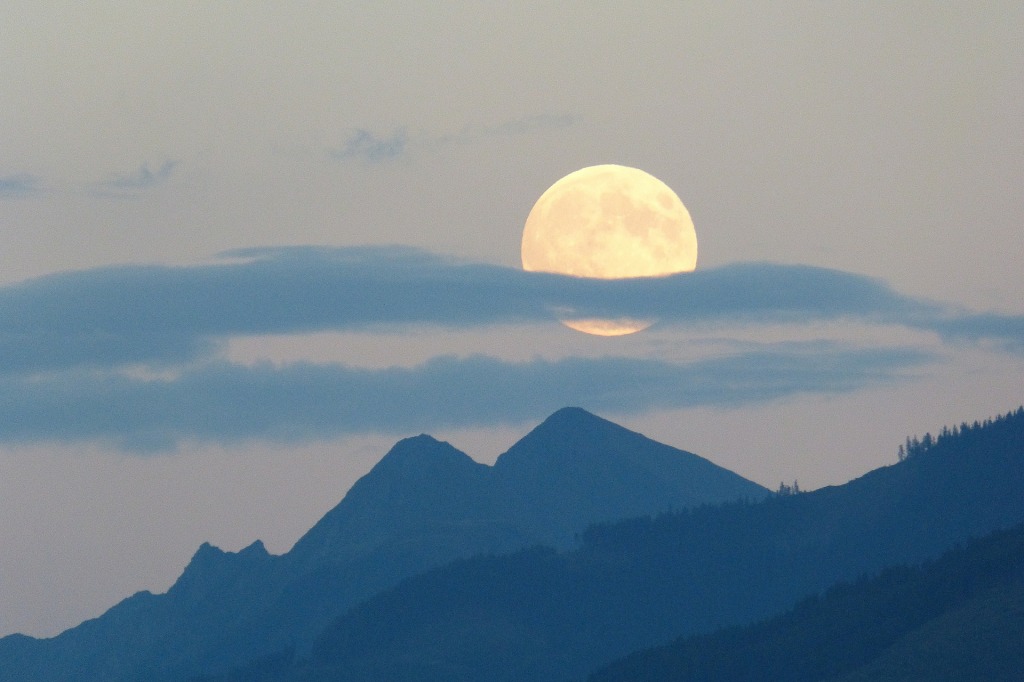
Four inches of rain fell yesterday, Now it is cloudy and cold here in the Arkansas Valley in the Great Plains of America, a hard freeze is expected tonight. The lettuce will wilt, but how about the spinach and radish?

It’s cold and cloudy,
with nothing to do,
— haiku

Bashō no yōna, Arkansas Valley, October

Haiku

OK, this is not traditional haiku in the sense that it’s not three lines of 5 syllables, 7, and 5, nor is this any combination thereof. It does, however, follow Matsuo Basho‘s formula of combining two ideas to create something different.

Arthur Koestler wrote The Act of Creation, a 1964 book that tackles ‘bisociative’ thinking and man’s constant battle between habit and originality. His idea that one plus one can make something unique is like Basho’s haiku. It’s the same concept behind every joke.

What about compound words? A fire house is not a house on fire, it’s a place where fire engines leave to take care of fires.

Germans love compound words. Take, for example, ‘Zeitgeist.‘ (German grammar capitalizes a noun, is it necessary?) that mean spirit (geist) of the times (zeit). In 17th century Japan, war was over, times to have a little fun parsing words, scrambling phrases, composing thoughts.

Taking the Dogs on a Walk

Oh, here comes the sun,
Little darling,
It’s all right!

A riff on the Beatles song Two of Us, 1969

Time to take the dogs on a walk at the park, the park being Pawnee Prairie Park. Here there are open fields and dark woods through which flows a creek. The creek being Chisholm Creek. Cattle heading up the Chisholm Trail once watered here. Today, horses and riders take advantage of the trails. There is a sidewalk for city-folk, but I prefer the woods and fields, where the deer run. The dogs agree.

The sun is setting, it is getting dark, the walk is almost over. The dogs are off the leash and panting. Did not Basho teach us to break rules, make fun. Don’t be a melon split in two.

Rules
Are made and broken,
Making new rules to break.

Pawnee Prairie Park

Rainy Days

雨の日や

Rainy Days in Sakai-cho,
October, 1678

Enpo, 6th year, Basho is 35

Unfamiliar faces, the falling rain, autumn’s falling leaves, it’s a gray day in Sakai-cho, Edo’s theater district. Six autumns have come and gone since our poet first arrived in Edo. Uncertain about his future, even his name, for he was still called Tosei, the unripe peach.

Walking among the ghostly figures in the cold, cold Autumn rain, facing an uncertain future, what could Tosei be wondering?

Rainy days
this Autumn World
— in Sakai-cho
雨の日や世間の秋を境町
ame no hi ya seken no aki o sakai-chō

Matsuo Basho, Edo, Sakai-cho, Autumn 1678

Sakai-chô — Edo’s Kabuki Theater District (Nihonbashi) where dream-like Noh plays were the norm.

The Mortal World

Seken (世間) — this mortal world, ever becoming, ever fleeting, ghostly in its being on rainy days.

Bashō no yōna, the author of this blog, looks out his window at the falling rain, the leaves now scattered on the ground, dreaming, wondering.

Imagine. Like John Lennon said, “nothing to kill or die for, … imagine living in peace.” Sad to say, the world is at war.

It’s late October in middle America. Unlike the Carpenters’ Rainy Days and Mondays, it doesn’t have to be Monday for rainy days to always get me down. Not a light drizzle, but a steady drum-beating downpour, the kind that has the dog hiding under the bed covers.

The poet thinks of becoming and being. Being being made up of things which never change in any way, while becoming consisting of things which constantly change and existing in many ways. Being and becoming is a better way to say it.

Luck,
combining opportunity with preparation,
— good fortune

Bashō no yōna, on a theme of Seneca, October 2023
ame no hi ya seken no aki o sakai-chō

Hearing His Voice

1666

Ueno, Iga Province

The year of 1666 was a turning point in the life of Matsuo Minefusa (as Basho was then known).

In April, Todo Yoshitada (藤堂 良忠) died. Two or three years Matsuo’s senior, he was the third son of a samurai general, lord of the castle in Ueno, Iga Province, near where Basho was born. Matsuo was his servant or vassal. And it was Yoshitada, who adopted the pen name of Sengin (蝉吟, literally ‘chanting cicada’), who introduced Basho to poetry and haiku.

In the sharp sound of the autumn wind coming through an open door, I suspect young Matsuo heard the voice of his master and mentor.

The autumn wind, coming through the sliding door, a sharp voice.

秋風の鑓戸の口やとがり声
aki kaze no yarido no kuchi ya togari-goe

Matsuo Basho, Autumn 1666

Notes on Translation

What Basho meant by togari-goe is unclear. Was it the sharp voice of his master, summoning him? Was it the piercing cry of one who died too soon. Is it Basho himself mourning the loss of his mentor?

aki kaze (秋風) — autumn wind. Basho would begin at least four haiku with aki kaze, one with aki no kaze. Aki, autumn was a seasonal word signifying change and the nearness of winter, or death.

yarido (鑓戸) — A door made of latticed wood. Others, including Frank Watson, suggest that there is a play on words involved here – yari (鑓) also meaning spear. To me, this is suggestive of the wooden strips on the door looking like spears, or the sound of the wind being similar to the sound made by throwing a spear. Assuming, as I do, that his haiku was written after Yoshitada’s death, I think Basho intended to write it as a salute to Yoshitada on the occasion of his death.

kuchi (口), opening, meaning either an open door, or simply that the wind is blowing through the slats.

togari-goe — a screaming voice, togari (とがり) sharpness, piercing; goe (声). Compare Basho’s well known haiku about a frog, an old pond, and the sound of water. Basho uses mizu no oto (水の音), the sound of water.

Note. when koe becomes goe. An example of rendaku (連濁) – repeating a consonant in compound word, gari-goe. Compare the ‘voice of a cicada’, semi no koe.

1689

Mt. Yamadera
A Journey into the Northern Interior

Twenty-three years later, Basho has achieved fame. Along the way, he has taken his own pen name, Matsuo Basho, Basho, meaning ‘banana’ for the banana tree that grew outside his cottage in Edo. Yet, he still hears the distant voice of Sengin (Todo Yoshitada) as he climbs the stone steps on Mt. Yamadera on his way to the Temple of Risshakuji.

A 1,000-step climb on stone steps brings one to the top of Mt. Yamadera and the Zen Buddhist temple of Risshakuji. Along the way, Basho hears a cicada’s voice deep within the stones. Perhaps, it is Sengin, still chanting after all these years. One supposes that Basho had a Noh play on his mind in which a spirit comes back to bring a message.

Ah, in stillness, deep within the stones — the cicada’s voice

閑けさや 岩にしみいる 蝉の声
Shizukesa ya iwa ni shimiiru semi no koe

Matsuo Basho, Oku no Hosomichi, Summer 1689

Notes on Translation

shizukesa, quietness, stillness, serenity, tranquility; ya, emphasis

iwa, rock, stone; ni, indicating within; shimiiru, soaking in, seeping

semi no koe, cicada’s voice

The sutra repository of Risshakuji Temple on Mt. Yamadera (original image from Wikipedia)

As Autumn Ends

Ogaki, Japan
Mid-October, 1689

Parting from friends

One always has to fill in the details.

At Ogaki, there is a 16th century castle. The area surrounding the castle played a pivotal role in Battle of Sekigahara that brought the Tokugawa clan to power. Basho does not mention the castle or the battle. One imagines that he is still recovering from his Journey to the Northern Interior (Oku no Hosomichi), meeting old acquaintances in Osaka, Kyoto, and Nagoya.

By October, he is ready to leave again. This time to the Grand Shrine at Ise. So, I imagine that he is at a lovely restaurant on the Makida River, joined by some friends for one final farewell, sharing sake, some clams, no doubt taken from Futami, a coastal village on the way.

As Autumn ends
We are parting
Like clam shells (of Futami)

蛤のふたみにわかれ行秋ぞ

Matsuo Basho, Autumn 1689

Notes on Translation

Futami, means ‘parting.’ It is also the beach where the Isuzu River enters the Ise Bay. Nearby, are the Wedded Rocks (Meoto Iwa, 夫婦岩), two sacred rocks in the ocean. The artist Utagawa Toyokuni I recreated a scene of Along the Seashore at Futami. In the background, men can be seen gathering clams.

Hamaguri clams are considered a symbol of friendship and harmony because the shells symbolize a joined pair. Perhaps, the unexpressed thought is the difficulty of separating the shells, and the pain in parting.

hamaguri (clams) no (of) futami (breaking up, forked place in a river, also a place name — Futami, Mie Prefecture, a town Basho would travel to on his way to the Grand Shrine of Mie) ni wakare (farewell) yuku (leave, go, but don’t come back) aki zo (wow, it’s autumn, or autumn’s over)

Autumn Ends

October is a good time to revisit Basho’s haiku on Autumn ending. The leaves are falling. The heat has finally broken. A cold wind is blowing.

Picking Clams, Utagawa Toyokuni I, ca. 1791, The Met Collection

Three Friends

Three Friends under the Moon

A moonlit night, the countryside outside Edo,
Age 41, Fall, 1685.

Matsuo Basho, the wine, and Li Bai, three friends to share the moon tonight.

With this saki cup,
to three friends
I drink tonight!

盃に 三つの名を飲む 今宵かな
sakazuki ni mitsu no na o nomu koyoi kana

Matsuo Basho, Fall, 1685

Matsuo Basho’s haiku refers to the well-known Chinese poet Li Bai, who lived in the 8th century. Li Bai wrote the popular Under the Moon.

Under the Moon
Among the flowers
I am alone with my pot of wine
drinking by myself;
then lifting my cup
to ask the moon
to drink along with me,
its reflection and mine,
together in the cup of wine,
just the three of us;
when I sigh,
for the moon cannot drink,

Li Bai, Under the Moon, Tang dynasty

Three

Is three the magical number, representing Buddha’s three marks of existence; impermanence, suffering, and not self; harmony, wisdom, and understanding; birth, life and death; past, present, and future; three lines in a haiku — beginning, middle and end?

Perfect, but the moon cannot drink, and Li Bai is not there!

Previously translated

Radishes

It’s late September, in my garden, as the flowers are fading, radishes are all that are left. Here are two haiku by Matsuo Basho on the subject of daikon, 大根 a Japanese white radish.

Samurai
bitter as radishes,
when they
speak!


もののふの大根苦しき話哉
mononofu no daikon nigaki hanashi kana

Matsuo Basho, Edo, Fall 1693

mononofu (samurai) no (used here for emphasis, samurai and radishes, what do you make of that?) daikon (white radish) nigaki (bitter) hanashi (to talk or speak, story) kana (I wonder)

Daikon radishes that Basho speaks of are milder than red radishes. The young leaves add zest to a salad. Cooking softens the bitterness.

The Last Flower

In Kansas, Sunflowers bloom late, Chrysanthemums later.

The date of the following haiku is uncertain. We can guess that it was written after the Kiku no Sekku Festival that takes place on the 9th day of the 9th lunar month (now on September 9th). This would be late in the year when frost had killed all the plants excepting the radishes.

Artists and poets admired chrysanthemums and were saddened by their disappearance, thinking the last flower has blossomed. In one sense, Basho is asking, isn’t there the radish?

When the chrysanthemums are gone,
radishes
are all that are left

菊の後 大根の外更 になし
kiku no ato daikon no hoka sara ni nashi

Matsuo Basho, Fall 1691?

kiku no ato (kiku, chrysanthemums, no ato, after) daikon (radishes) no hoka (outside of) sara (to experience) ni nashi (to nothing)

Indeed, here is a poem by a Chinese poet of the Tang dynasty, Yuan Zhen:

Chrysanthemums
Around my cottage, like Tao Qian, autumn flowers grow,
The fence around falling down day by day.
Among my flowers I love the chrysanthemum best,
Once you bloom, nothing follows.

秋叢繞舍似陶家,
遍繞籬邊日漸斜.
不是花中偏愛菊,
此花開盡更無花.

Qiū cóng rào shě shì táo jiā,
biàn rào lí biān rìjiàn xié.
Bùshì huā zhōng piān’ài jú,
cǐhuā kāi jìn gèng wú huā.

Yuan Zhen, 779-831, late Tang dynaty

Tao Qian, a poet of Jin Dynasty (4th and 5th century).

Chrysanthemums, 菊