

Ogaki, Japan
Mid-October, 1689
Parting from friends
One always has to fill in the details.
At Ogaki, there is a 16th century castle. The area surrounding the castle played a pivotal role in Battle of Sekigahara that brought the Tokugawa clan to power. Basho does not mention the castle or the battle. One imagines that he is still recovering from his Journey to the Northern Interior (Oku no Hosomichi), meeting old acquaintances in Osaka, Kyoto, and Nagoya.
By October, he is ready to leave again. This time to the Grand Shrine at Ise. So, I imagine that he is at a lovely restaurant on the Makida River, joined by some friends for one final farewell, sharing sake, some clams, no doubt taken from Futami, a coastal village on the way.
As Autumn ends
Matsuo Basho, Autumn 1689
We are parting
Like clam shells (of Futami)
蛤のふたみにわかれ行秋ぞ
Notes on Translation
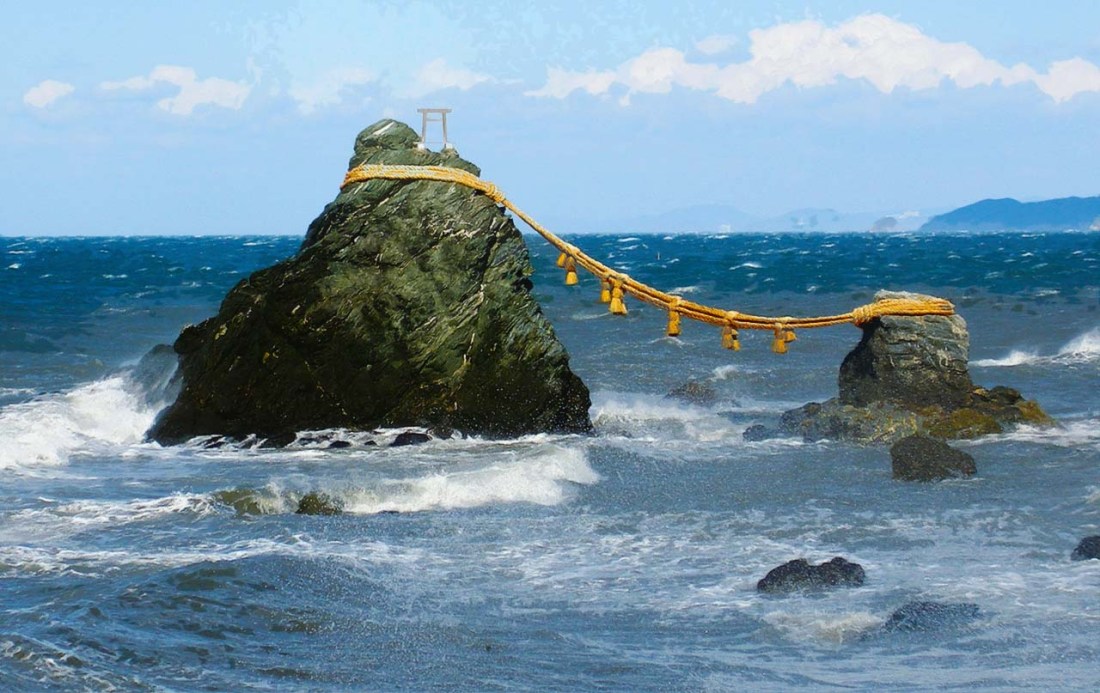
Futami, means ‘parting.’ It is also the beach where the Isuzu River enters the Ise Bay. Nearby, are the Wedded Rocks (Meoto Iwa, 夫婦岩), two sacred rocks in the ocean. The artist Utagawa Toyokuni I recreated a scene of Along the Seashore at Futami. In the background, men can be seen gathering clams.
Hamaguri clams are considered a symbol of friendship and harmony because the shells symbolize a joined pair. Perhaps, the unexpressed thought is the difficulty of separating the shells, and the pain in parting.
hamaguri (clams) no (of) futami (breaking up, forked place in a river, also a place name — Futami, Mie Prefecture, a town Basho would travel to on his way to the Grand Shrine of Mie) ni wakare (farewell) yuku (leave, go, but don’t come back) aki zo (wow, it’s autumn, or autumn’s over)
Autumn Ends
October is a good time to revisit Basho’s haiku on Autumn ending. The leaves are falling. The heat has finally broken. A cold wind is blowing.



 matsuo-basho-haiku