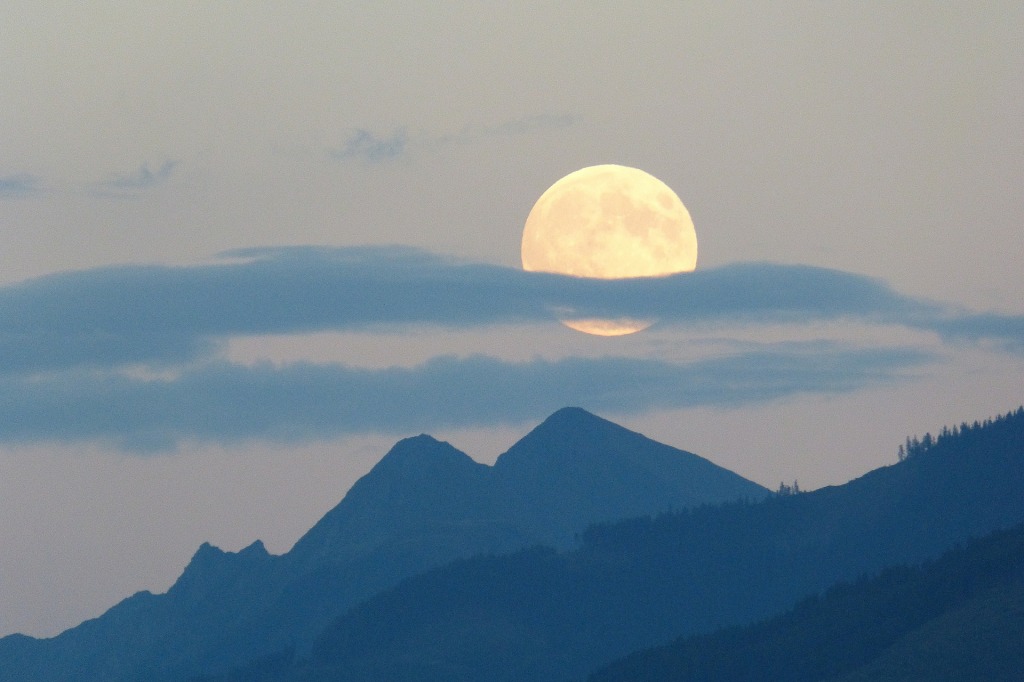
Shiwasu

The Full Moon of December

Japan’s Full Moon of December is scheduled to appear on the 27th of December, 2023. That is, unless it is snowing and snowing.

雪と雪今宵師走の名月か
Yuki to yuki koyoi shiwasu no meigetsu ka

It snows and snows.
Tonight’s the full moon of December,
One wonders

Matsuo Basho, Winter 1684

Comedians say jokes with k sounds, sound funnier and funnier the more k’s you say. Basho’s haiku has four k’s. Ka, I wonder.

December, 1684

Home for the Holidays
Ueno, Mie province
Basho, age 40

In 1684, Basho returned to Ueno in Mie province, the place of his birth. There he and some of his disciples work on a collection of haiku, published under the name Winter Collection.

[Yuki (snow, snows) to (and) yuki (snows) koyoi (tonight) shiwasu (December by the lunar calendar) no (possessive particle, of) meigetsu (full moon) ka (interrogative, one wonders)]

Shiwasu

Because its December,
I am rushing,
getting my shopping all done.

Bashō no yōna, December 2023

In the Japanese lunar calendar, the twelfth month is called Shiwasu, literally, the master, the teacher, the monk is running, trying to get everything done.

Holidays

We (here in America) have Christmas, the Japanese have dozens of celebrations during December. One of the most beautiful are the Lantern Festivals (held several times a year). No wonder there is pandemonium in rushing to get everything done.

雪と雪今宵師走の名月か
Yuki to yuki koyoi shiwasu no meigetsu ka

Three Friends

Three Friends under the Moon

A moonlit night, the countryside outside Edo,
Age 41, Fall, 1685.

Matsuo Basho, the wine, and Li Bai, three friends to share the moon tonight.

With this saki cup,
to three friends
I drink tonight!

盃に 三つの名を飲む 今宵かな
sakazuki ni mitsu no na o nomu koyoi kana

Matsuo Basho, Fall, 1685

Matsuo Basho’s haiku refers to the well-known Chinese poet Li Bai, who lived in the 8th century. Li Bai wrote the popular Under the Moon.

Under the Moon
Among the flowers
I am alone with my pot of wine
drinking by myself;
then lifting my cup
to ask the moon
to drink along with me,
its reflection and mine,
together in the cup of wine,
just the three of us;
when I sigh,
for the moon cannot drink,

Li Bai, Under the Moon, Tang dynasty

Three

Is three the magical number, representing Buddha’s three marks of existence; impermanence, suffering, and not self; harmony, wisdom, and understanding; birth, life and death; past, present, and future; three lines in a haiku — beginning, middle and end?

Perfect, but the moon cannot drink, and Li Bai is not there!

Previously translated

Seven Faces of Komachi

Genroku 3rd year, September, 1690
Gichu-Ji (義仲寺, Buddhist temple), Otsu,
Basho, age 47

Harvest moon
facing the lake, and
seven faces of Komachi

a harvest moon
on the lake, welcoming
the seven lovers of Komachi

名月や 海にむかえば七小町
Meigetsu ya umi ni mukaeba nana komachi

Matsuo Basho, Autumn 1690

[Meigetsu (Harvest moon) ya (emphasis, exclamation) umi (sea) ni mukaeba (to face, form an image) nana (seven) komachi (literally “village,” here it is a reference to a Noh character Komachi, a woman who had the power to recapture the hypnotic beauty of her youth and exercise it over her many lovers.)]

Harvest Moon

After completing his Journey to the Northern Interior in the fall of 1689, Basho lingered for awhile in the area near Kyoto, visiting old friends. Then, he went to Otsu, on Lake Biwa. No doubt he was taking time to compile his notes from his nine month journey, but he also took time to compose other haiku.

Moon viewing was always a popular subject.

Note. Basho is buried at the Gichu-ji Temple.

Komachi

Seven faces or seven lovers?

Basho went to the Gichu-ji Temple, Otsu, facing Lake Biwa to view the autumn moon. The hall was lined with the faces of children, but this didn’t quite express the sentiment Basho was feeling. Instead, he recalled an ancient Noh play Nana Komachi, (seven Komachi). She was a beautiful woman with many lovers who had the hypnotic power to recapture her youthful beauty. In the Noh play, Komachi first appears as an old woman. Visited by monks, she recounts her life, but ends by saying one should pray to seek enlightenment.

Nana komachi, seven villages, may refer to the towns around the lake, but that is a guess.

Seven Faces

“Seven Komachis” is what Basho says, so seven faces may be my own interpretation. If so, it is in line with Shakespeare’s seven ages of man. It could also refer to the seven loves of Komachi, seven villages around Lake Biwa, or the fact that the Noh play takes place on the seventh night of the seventh moon. Seven lovers works well too.

P.S. The idea of the seven ages of women was talked about in Europe in the 16th century. Check out the painting, Seven Ages of Woman (1544) by the German painter Hans Baldung. Shakespeare’s comment comes from the play, As You Like It (1599).

Meigetsu ya umi ni mukaeba nana komachi

Let the moon shine in

Unless you have been to a music concert or sporting event, or at a Black Friday event at your favorite store, and waiting patiently for the doors to be unlocked and the gates open, you may not get Basho’s anticipation of getting into the Floating Hall on Lake Biwa during the lantern festival that begins in August of each year.

鎖 (じやう)あけ て月さし入れよ 浮み堂
joo akete/ tsuki sashireyo/ Ukimi Doo

open the gates
let the moon shine in –
Ukimodo (Floating Hall)

Matsuo Basho, August 1691 or 1690
Katata, Lake Biwa, Floating Temple (Ukimodo), geese returning, Hiroshige, Met Museum

August 1690, 1691, Ukimodo Temple

Ten years have passed since Matsuo Basho moved from Edo to Fukagawa. Beside his hut grew a banana plant, a gift, form which he took the name Basho, meaning banana, a frail useless plant blown by the winds. His hut has burned down twice. He has taken many trips, including the Oku no Hosomichi, Journey to the Northern Interior, which is not yet published. His needs are few and financially he seems not to worry.

He continues to journey including this trip to Lake Biwa, north of Kyoto, where he had spent his student days.

Ukimido Temple, beside Lake Biwa in Ōtsu, Buddhist, founded in 995. The official name is Mangetsu-ji (満月寺) Full Moon Temple. It is entered through the “Dragon Gate”. It is called Ukimido, Floating Hall because it appears to float on Lake Biwa as one approaches Otsu.

Joo, じやう chain baring the gate.

Moon Viewing

I recently drove back from the east coast. And, while I was in Central Missouri in the middle of nowhere, an hour or so after dusk, I caught a view of a full moon, large, round and orange, in the rear view mirror of my car. It was a breathtaking sight. My trip, and my moon spotting, corresponded roughly with the traditional day of Japanese moon viewing (Tsukimi, 月見), or September 21, 2021.

That the moon is prettier in Autumn, is, I learned later, due to the astronomical fact that the moon rises sooner in fall and at a narrower angle, making it appear to be fuller and more orange. I also learned that the moon is moving closer to earth, that is, it is in perigee, and will reach its closest on December the 4th.

Yoshitoshi Tsukioka and Noguchi Enkatsu, Engraver. One Hundred Aspects of the Moon: Monkey-Music Moon. Japan, 1892.

The Seasons

The 17th century Japanese operated on a lunar calendar. And each season had its own moon. Spring moon, 春の月, haru no tsuki; Summer moon, 夏の月, natsu no tsuki; Autumn moon, 秋の月, aki no tsuki; and Winter’s moon, 冬の月, fuyu no tsuki.

And here are four haiku by Matsuo Basho with seasonal references to the moon.

Spring

春もやや  気色ととのふ  月と梅
haru moya ya/ keshiki totonou/ tsuki to ume

Barely Spring,
a colorful complexion of
the moon and a plum blossom

Matsuo Basho, 6th year of Genroku, Spring 1693. The plum blossoms in early spring, often when snow is on the ground. An almost too perfect combination of a bright moon and heavenly scented plum blossoms.

Summer

蛸壺やはかなき夢を夏の月
tako-tsubo ya/ hakanaki yume wo/ natsu no tsuki

an octopus pot,
a fleeting dream
under a Summer moon.

Matsuo Basho, at Akashi, a seaside town near Kobe famous for its seafood. When alarmed an octopus will hide in a dark place. Thus, fishermen intentionally make pots black to catch the unwitting octopus.

Autumn

去る引の 猿と世を経る 秋の月
saruhiki no/ saruto yo furu/ aki no tsuki

a street entertainer–
going through life carrying a monkey
— Autumn moon

Basho, The Monkey’s Raincoat, 1691. Basho’s haiku was a response to a linked verse by Boncho. Boncho’s verse was, a new priest hurrying to the temple getting cold.

Winter

冬庭や月もいとなるむしの吟
fuyu niwa ya / tsuki mo ito naru / mushi no gin

In Winter’s garden
when the moon is a thread,
an insect sings

Matsuo Basho, 2nd year of Genroku, 1689, at a tea ceremony with Ichinyū, a tea potter and lay Buddhist teacher . It would be unusual for an insect to find food at this time of year, much less to hear an insect at all.

Note to reader

If you find fault in my translations or have comments, feel free to respond. We are after all, like Basho, students of life.

As season come
And seasons go
The moon will always glow

Bashō no yōna, November, 2021
Matsuo Basho

Three in One

three in one cup,
but I drink to one name,
who am I, this night?

盃に 三つの名を飲む 今宵かな

sakazuki ni mitsu no na o nomu koyoi kana

Oct. 23, 1685, Edo

Everyone likes a good riddle. So who was Matsuo Basho toasting?

On this date in Japanese history, Yamaga Sokō, original name Yamaga Takasuke died. He was a military strategist, Confucian philosopher, and originator of what would become the Bushido Code by which all Samurai would operate.

Three in One conjures up an image of the Holy Trinity, the Father, The Son, and the Holy Spirit. Three for One, makes one also think Alexandre Dumas‘ 19th century novel Three Musketeers, who proclaimed, “Un pour tous, tous pour un. (One for all, and all for one.)”

Sakazuki Takasuke!

No, Basho likely had in mind Takasuke in offering up Sakazuki, a ceremonial cup of wine. This is speculation, but it fits nicely. Basho being descended from a Samurai family would want to honor another. Takasuke Sakazuki! Takasuke Sakazuki! Takasuke Sakazuki! The honorific was said three times.

Li Bai

Matsuo Basho also had in mind 8th century Chinese poet Li Bai (太白,744–762). He of many titles including the Transcendent Poet, Banished Immortal, and Green Lotus House Warrior. The first for his skill as a poet, the second for his prodigious drinking, and the third as an artist.

Basho’s haiku is a response to Li Bai’s well-known poem Under the Moon, Drinking Alone.

In the midst of flowers, with one jug of wine
Drinking alone, and no one else,
I offer up my cup, to the bright moon
My shadows and I, a party of three.

Li Bai

Three

Why three? Things that come in threes are funnier, interesting, and more memorable. Comedians, magicians, and poets know to set up a sequence with three short lines, then the punch line. Three is mystical. The Holy Trinity, as I’ve said. It also creates a unique pattern and a relationship that the brain can understand. The Three Blind Mice, The Three Little Pigs, The Three Stooges. Three is also an odd number, the first Prime number, if one excludes the number “one.” Two fit together nicely, but three rarely do.

Basho explains

By way of explanation, Basho’s haiku came at gathering for moon-viewing (観月) at his home in the fall of 1685. He he had returned to Edo and his Banana Hut after the first of his wanderings. Present were three friends all named Shichiroubei. No doubt Basho founds some humor in the homonyms, zuki, as in cup, and tsuki, moon; as well as the visual similarity of the flat circular cup and the circular full moon.

Basho ends his haiku alliteratively with koyoi kana, 今宵, literally, this night, but also a question, as in, who am I?

Sakazuki

Gentle Reader, nomu, 飲む, let’s drink: Akemashite omedeto gozaimasu

Saki, Sake cup from Wikipedia