
Toki Wa Fuyu
” 時は冬.” Toki wa fuyu, the season is winter. How cold is it? On cold winter days, it is not just me, even my shadow is frozen.
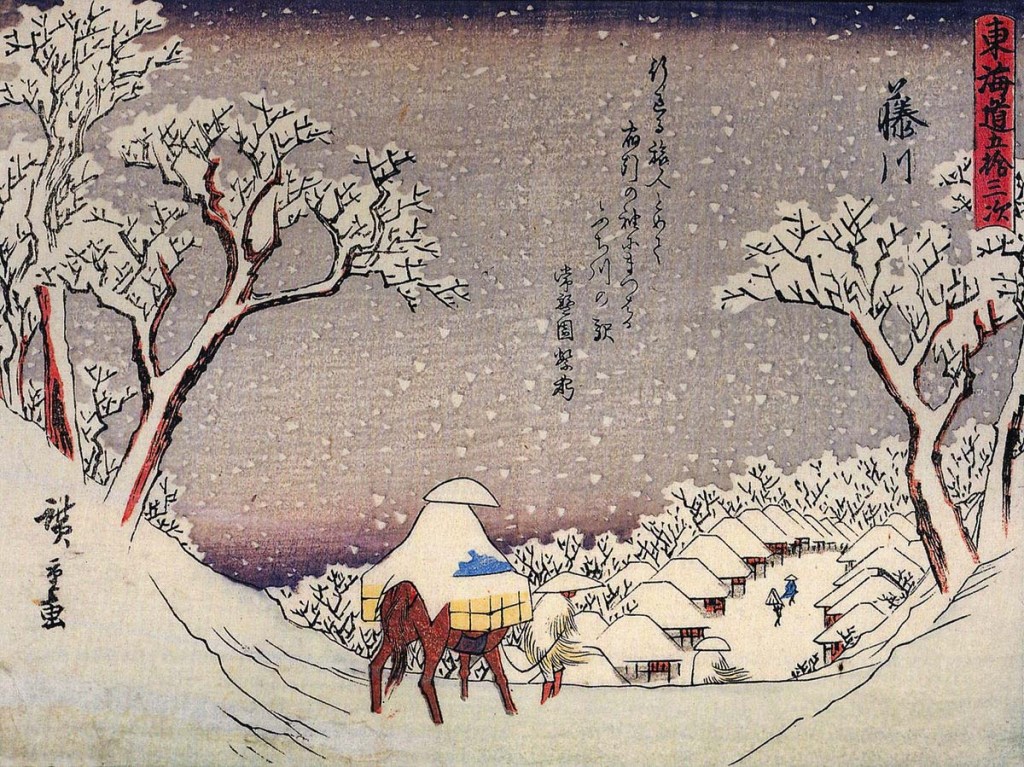
冬の日や馬上に氷る影法師
fuyu no hi ya bajō ni kōru kagebōshi
these cold winter days
Matsuo Basho, Oi no kobumi, Winter 1687
on horseback
— my shadow is frozen
On the Tokaido
From Oi no kobumi, on the Tokaido, en route to Cape Irago, riding on a particularly long stretch between snow covered fields and the bitterly cold sea. Things on Basho’s mind include things from the past — Saigyo’s waka, Sogi’s renga, Sesshu’s landscape painting, and Rikyu’s Way of the Tea; those and the bitter cold.
One of the reasons for reading Basho’s haiku is that they give us “an alternative possibility of being.” (Jane Hirshfield, Seeing Through Words: Matsuo Bashō, interpreting Oi no kobumi)
Notes on Translation
Tokaido – the eastern coastal sea route from Edo to Kyoto. The 19th century artist Utagawa Hiroshige painted the 53 stations of the Tokaido.
Fuyu no hi – winter day, on cold winter days, fuyu no hi ya, where ya is added for emphasis.
Koru – frozen; Kageboshi – shadow
 matsuo-basho-haiku